This is a translation of a foreign article, so there may be translation errors.
https://www.avpasion.com/pelicula-familar-reynolds-krasinski-netflix/
LG Display Prepares for Major OLED Transformation with eLEAP: Higher Brightness, Lower Power Consumption, Better Lifespan
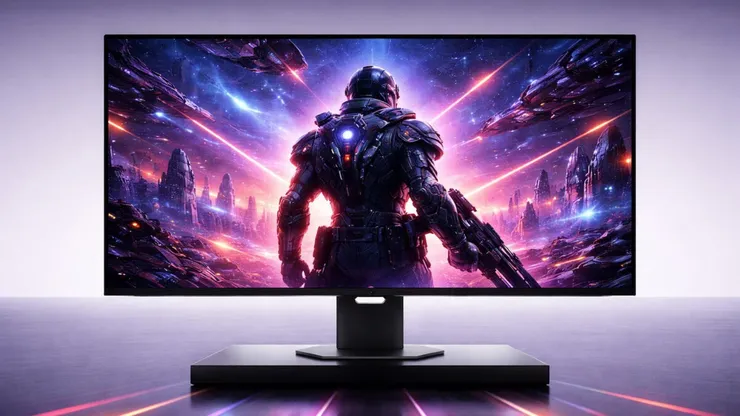
We've been talking about OLED as if we've already seen everything for quite some time now. Now it's about being brighter, reducing power consumption, new materials or thinner panels, and so on. Yes, of course there has been progress. But occasionally, technologies emerge that go beyond simple improvements and signal significant changes in manufacturing technology itself. eLEAP is exactly such a case.
The core of the news is that LG Display is continuing to push forward with plans to introduce eLEAP technology into OLED panels for the IT sector, an area where OLED's presence is rapidly growing, like in notebooks and tablets. This doesn't mean you'll see this technology everywhere starting tomorrow, but the company is considering it very seriously and wants to make a final decision before the end of 2026.
The subtlety of this matter is that it doesn't just amount to "brightness becoming slightly brighter." eLEAP changes the manufacturing method of OLED panels, which can bring quite attractive improvements in very important factors: efficiency, maximum brightness, and durability. In other words, it's precisely targeting the three most critical metrics that are strictly evaluated in this type of display.
What is eLEAP and Why Does It Matter?
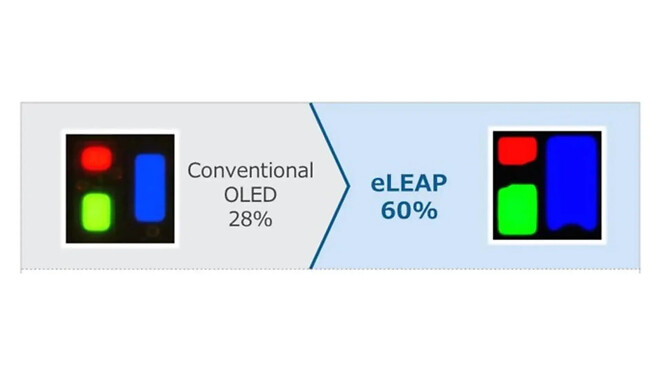
Putting aside the technical complexity and explaining it simply, eLEAP is an OLED manufacturing technology developed by Japan Display that uses a different process instead of the conventional Fine Metal Mask (FMM) method when forming pixels. It may sound like a factory story and not particularly interesting, but in fact it can significantly change the situation.
Why is that? One of the biggest advantages of eLEAP is that it enables much higher aperture ratios. In other words, the part of each pixel that actually emits light becomes larger. This increases the panel's efficiency. It can produce brighter light while using less energy, or if desired, maintain similar brightness while consuming less energy. For notebook and tablet screens, this has value worth its weight in gold.
Additionally, there's the matter of lifespan. This is a really interesting point because one of eLEAP's goals is to improve OLED durability without sacrificing brightness. Theoretically, it sounds truly excellent. This is because the persistent challenge that has followed panels for non-TV devices for years is the struggle to provide sufficient light without straining the panel.
LG Display Isn't Simply Moving On a Whim
The important point here is that eLEAP is not just on the discussion table; LG Display is viewing it as a serious option for future OLED panel manufacturing for notebooks, tablets, and monitors. This is significant. Showing a pretty technology at a tech conference is entirely different from a company of this scale actually considering whether to invest money, time, and factories into that idea.
And frankly, this is a very reasonable progression. IT-oriented OLED is receiving more and more attention, and now it's not enough to just have the display look good in demo videos. Higher brightness and lower power consumption are now required, and the display needs to withstand everyday use environments better. This is because notebooks and monitors are not used like a TV in the living room. Some devices are on for 8, 10, or even more hours a day, and in such environments, practical improvements in efficiency or lifespan have tremendous value.
Additionally, there's a clear strategic aspect here. LG Display is not just looking for better panels but also ways to establish a stronger position in an increasingly competitive market. And ultimately, this carries significant weight. If they can find a process that creates more competitive displays and gives them an advantage over other companies, it's not a small step but securing a position in what will become a fierce battle.
The Idea Is Great, But More Waiting Is Still Needed
Of course, there's no need to get excited too early. This doesn't mean LG Display has already decided to "go all in." What we know is that the company is continuing to push forward with its plans and is currently conducting investment reviews, with the intention to make a final decision before the end of 2026. In other words, they are taking it seriously, but it's not yet completely finalized.
It's important to mention this point because in this industry, it often takes quite a long time for announced content to actually reach the market. There is considerable distance between what technology promises, what works well in the lab, and what is profitable in mass production. A distance that is never short. Making better panels is one thing, but making it work financially while producing it on a large scale is quite another story.
Nevertheless, I think this news is quite powerful. Not because we'll be buying laptops with eLEAP tomorrow, but because a brand like LG Display starting to take such a serious approach to this new OLED manufacturing technology means there's something big in it. If this works out well, we might be standing at a quite important stage in the future of OLED for notebooks, tablets, and perhaps beyond.
After all, the crux of all this lies right here. If any technology promises higher brightness, less energy consumption, and even longer lifespan, then it's no longer a trivial change. It's entering the realm of real improvements that users can actually feel in the final product later on. And in a market where cool names often dazzle, such changes are already worthwhile enough.
▶ Original Source: https://www.avpasion.com/pelicula-familar-reynolds-krasinski-netflix/