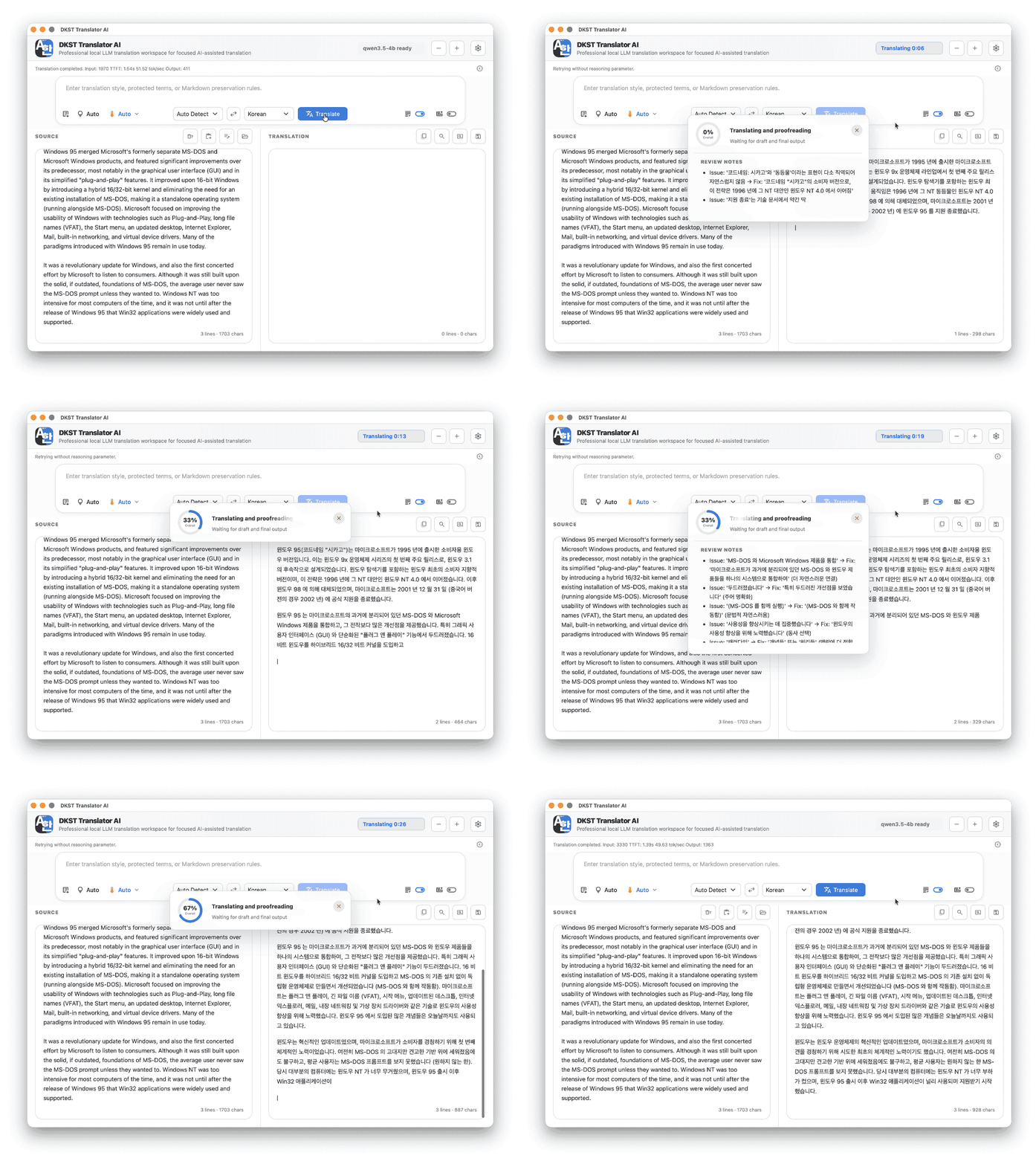
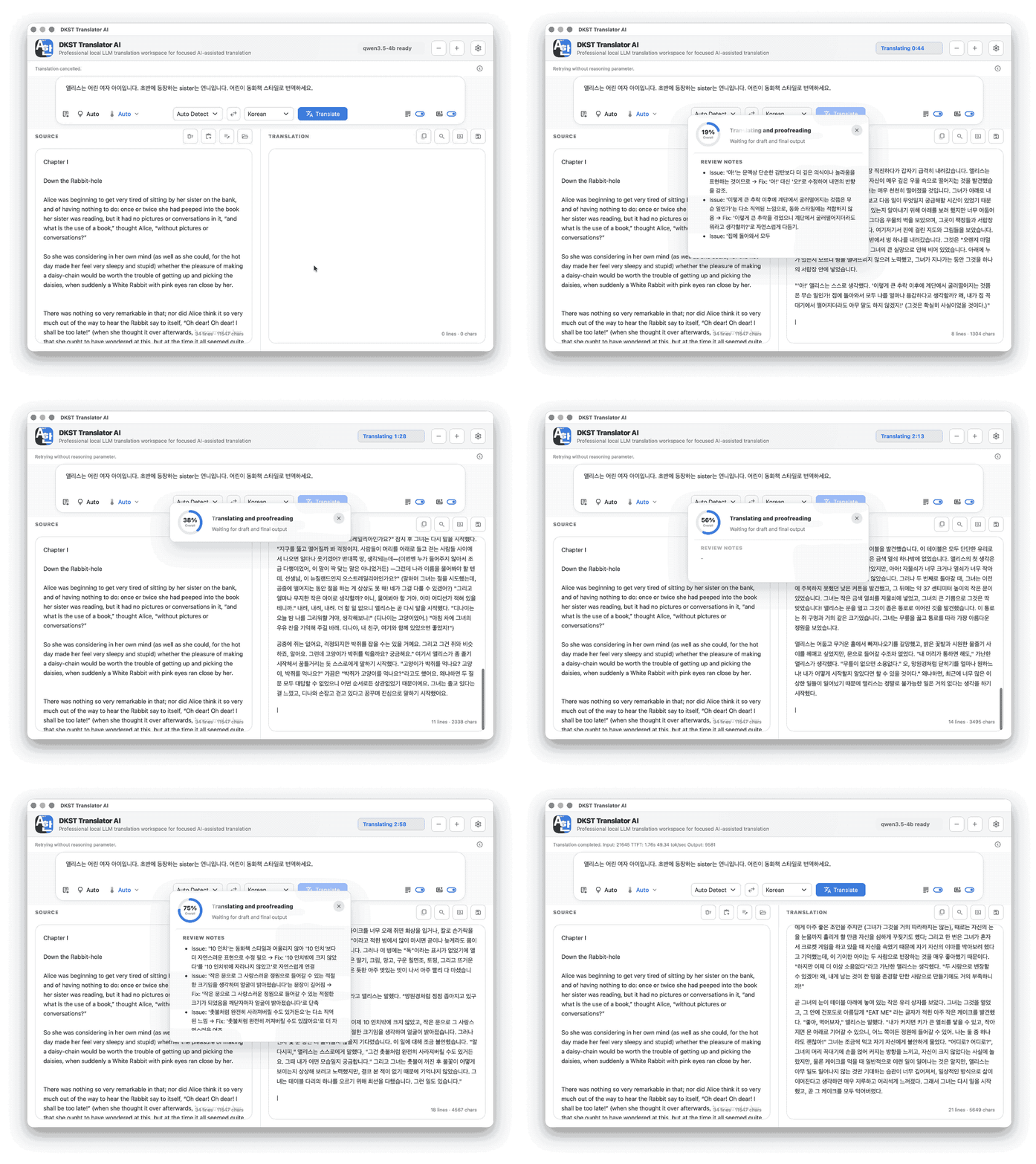
This is an example of rough translation + correction using Qwen3.5 4B and Gemma 4 E4B.
Initially, I was hesitant to approach this method because I wasn't sure if these small models could handle the task.
It turns out they can efficiently structure and process tasks even without external memory (like an external notepad where an LLM can jot things down).
At first, I explicitly defined the TASK and set the Steps, but through continuous improvements,
the prompt that now gets assembled looks like this:
You are a professional [source language] -> [target language] translator. Task: Translate the entire source text into [target language]. No part should be omitted. Internal Workflow: You must go through the draft, review, and final stages without fail. Output Format: Answer only in the format presented below. Never add unnecessary text such as greetings or additional explanations.
{draft: Full draft translation}
{review: Concise revision notes}
{final: Final natural translation}
Compliance Requirements (Hard Requirements):
Must include a complete translation of the entire content, not just part of the input.
Do not summarize. Every paragraph in the source should have a corresponding paragraph in the output.
The first character of the response must start with {draft:.
The last character of the response must end with }.
Do not use introductions, explanations, labels like "Step 1," or markdown code block symbols (```).
The {draft:} stage should be written faithfully to the source and focus on literal translation.
The {review:} stage must be written only as a bulleted list. Do not write in paragraph form.
Each item must follow this format: - Issue: [awkward or literal part from the draft] -> Fix: [natural alternative for the final version].
In the {review:} stage, clearly verify that the draft is completely and accurately translated into [target language], and that there are no unintentionally left source text or third-language text. (However, do not flag intentional bilingual notation, quotations, titles, or proper nouns.)
Focus only on unnatural phrasing, structural adjustments, tone and manner, and incorrectly maintained language elements. If there are no corrections needed, write - Issue: None -> Fix: None.
In the {final:} stage, maintain all meaning and paragraph breaks while writing in the most natural way possible in [target language].
If the user provides separate style guidelines, you must follow them.
The review stage plays the biggest role here. Due to the nature of lengthy translations, using thought and reasoning consumes tokens, and the process becomes very long as the model tries to judge context on its own every time.
By having the LLM simply organize these notes, it goes through the reasoning process, and the final quality improves dramatically.
I'm sure many of you are already using this method, but I hope it helps with organizing your prompts.