6/15 US Stock Market - US-Iran Ceasefire Brings Tech Rally, Energy Stocks Hit Hard
June 15, 2026 Market Analysis
## 1. What Happened in the Market Today?
On Monday (June 15th), the US stock market experienced a 'relief rally'. The announcement of a tentative agreement between the United States and Iran to end the war, along with the reopening of the Hormuz Strait, led to a sharp drop in international oil prices. As a result:
- S&P 500: +1.7% increase
- Dow Jones: +0.9% increase (record high close)
- Nasdaq: +3.1% surge (apnews.com)
With oil prices falling by nearly 4-5%, expectations for reduced inflation pressure grew, and a typical risk-on market sentiment emerged, with capital flowing back into technology and growth stocks that had been volatile. (apnews.com)
> Summary: War risk easing → oil prices plummet → inflation concerns subside → interest rate burden reduction expectations → tech stocks surge, energy stocks plunge
---
## 2. Today's Star: Tech Stock Rally
### 2-1. Why Did Tech Stocks Rise So Much?
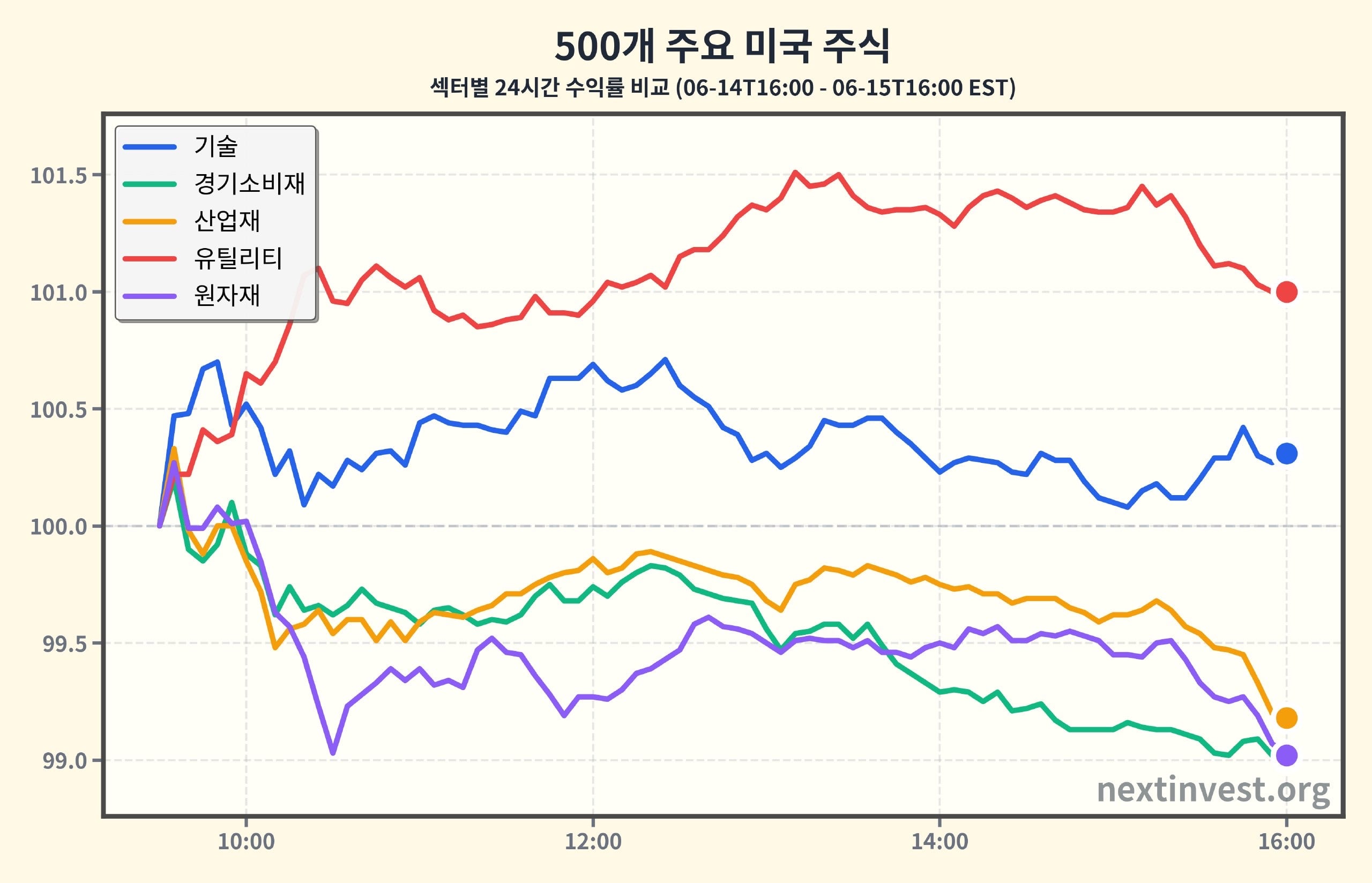
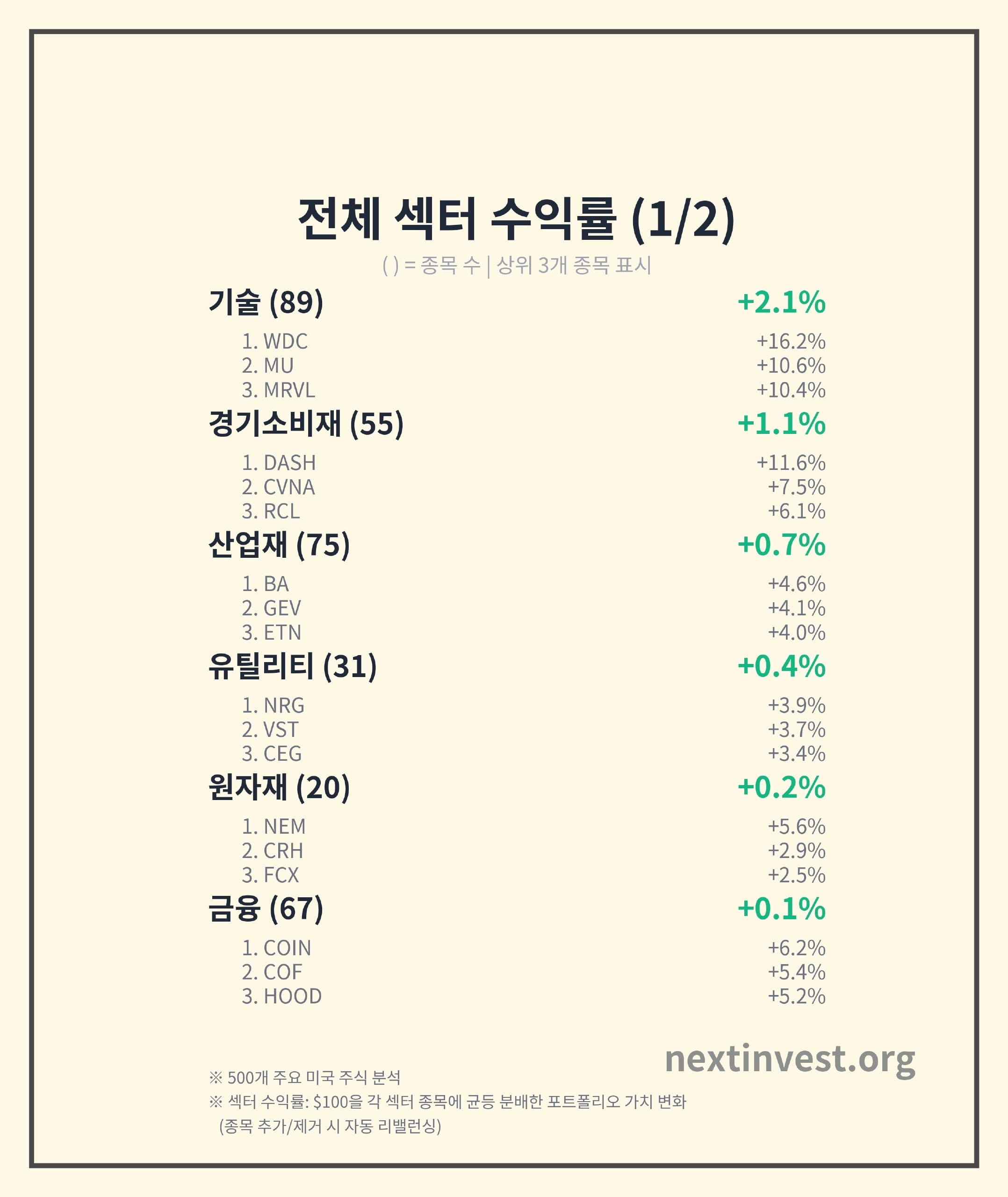
The Technology sector led the pack with a +2.11% increase in just one day, ranking first among the 11 sectors. Individual stocks that performed well included:
- Western Digital(WDC): +16.18%
- Micron(MU): +10.63%
- Marvell(MRVL): +10.42%
Semiconductor/storage related stocks saw a strong surge.
News-wise:
- The tentative peace agreement between the US and Iran, along with the reopening of the Hormuz Strait, led to a 4.8% drop in oil prices → expectations for reduced future inflation pressure grew, making growth stocks and tech stocks, which are relatively burdened by interest rates, more favorable. (apnews.com)
- In the semiconductor industry, which has already established itself as a core growth story thanks to the AI investment cycle, some major companies (such as Micron) saw brokerage firms raise their target prices, further boosting momentum. (marketscreener.com)
### 2-2. Short-Term Trends and Mid-Term Trends
Looking at the short term (7 days):
- 6/10: -2.64%
- 6/11: +2.41%
- 6/12: +1.08%
- 6/15: +2.11%
Following a recent adjustment (-2.64%), the market has seen three consecutive days of positive momentum, with today marking a clear acceleration of that trend.
Looking at the mid-term (approximately 3 months):
- Starting from 100 on March 20th, it has risen to 137.71 today, a +37.71% return.
- The current range since June 10th is an +8.0% increase, showing a recovery of the trend after the early June adjustment.
In essence, it's already in a strong upward trend long term, and today can be seen as a day of renewed acceleration following a short-term adjustment.
### 2-3. Meaning for Individual Investors
- For investors who already hold tech and AI related stocks, this is a signal that "the trend is still alive".
- However, a 30% plus increase in three months is not a trivial movement. Therefore, it's crucial to distinguish between "expected growth" and "prices already reflected", and make selective decisions for each stock.
- Today's surge driven by macro events like the peace agreement and oil price plunge could be a short-term overheating. If you are new to investing, it is advisable to first check whether you can handle split purchases and volatility.
---
## 3. Energy's Plunge: The Peace Dividend
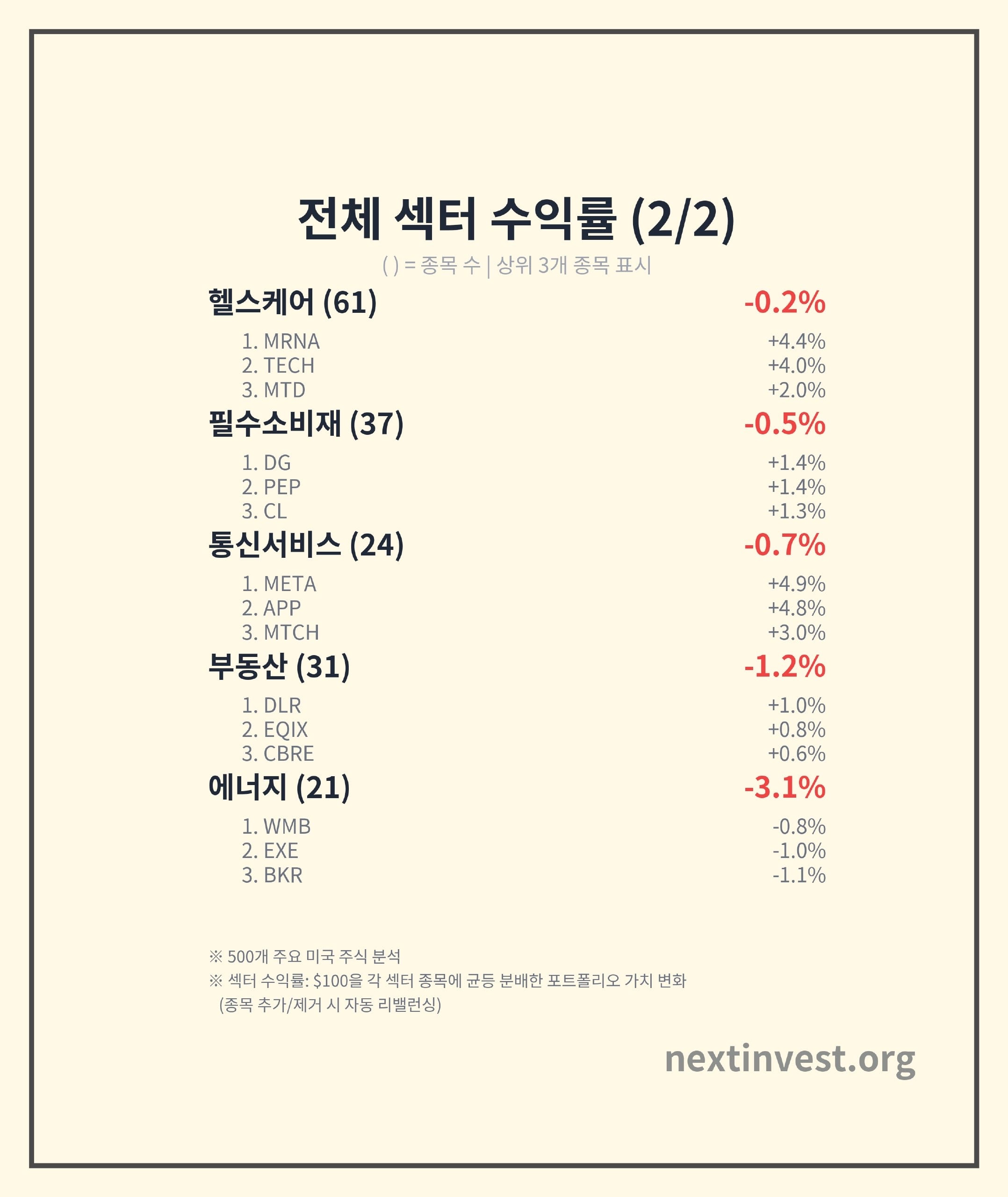
The worst-performing sector today was Energy, which dropped -3.15% for the day. The reasons behind this move are fairly clear.
- The US and Iran reached a tentative agreement to end the war and reopen the Strait of Hormuz, easing supply concerns that had previously driven up international oil prices by 4~5%. (apnews.com)
- Brent crude fell from its highest level since March to near a three-month low, as funds that had bet on a "supply shock" pulled out.
Sector leaders also generally underperformed.
Looking at the medium-term trend:
- 3/20: 100 → Today: 95.64 (Total return -4.36%)
- Down -7.62% since May 18th
In essence, Energy has been in a medium-term downtrend since mid-May, and today's peace agreement and oil price drop intensified that trend.
### Implications for Energy Investors
- In the short term, falling oil prices are a headwind for the energy sector. However, it remains uncertain how quickly the peace agreement will translate into actual supply normalization. Some experts warn that it could take several months.
- Given the significant volatility already seen, consider approaching this sector from a long-term perspective with major oil and gas companies with strong cash flow. If you are engaging in short-term trading, risk management is essential given the expected increase in volatility.
---
## 4. Other Sectors: Winners and Losers
### 4-1. Consumer, Industrial, and Utilities: Beneficiaries of Falling Oil Prices
Today's performance highlights:
- Consumer Cyclical: +1.06%
- Industrials: +0.75%
- Utilities: +0.44%
Looking at representative stocks, the trend is clear.
- Consumer/Leisure: DoorDash(DASH, +11.63%), Carvana(CVNA, +7.49%), Royal Caribbean(RCL, +6.14%)
- Industrials: Boeing(BA, +4.56%), GE Vernova(GEV, +4.08%), Eaton(ETN, +4.00%)
- Utilities: NRG(+3.93%), Vistra(+3.72%), Constellation(+3.39%)
Key Takeaways:
- Falling oil prices reduce costs for industries with high fuel consumption, such as airlines, transportation, cruises, and delivery platforms.
- Simultaneously, easing inflation and interest rate pressures benefit consumer discretionary spending and capital expenditure in industrial sectors.
Connecting this to the 7-day trend:
- Consumer Cyclical saw a rebound after adjusting (-1.94%) with +2.84% on 6/11 and +1.06% on 6/15
- Industrials also recovered significantly from the -3.11% drop on 6/10, posting +2.89% on 6/11 and +0.75% on 6/15.
- Utilities have been steadily accumulating small gains since 6/9 and continued with +0.44% today.
Investor Perspective:
- If your portfolio is heavily weighted towards technology and energy, today's market conditions may signal an opportunity to diversify into consumer, industrial, and utility sectors.
- While falling oil prices negatively impact energy in the short term, they present opportunities for travel, transportation, and durable goods companies.
### 4-2. Communication, Real Estate, and Defensive Stocks: Mixed Performance
- Communication Services: -0.67%
- META was strong at +4.86%, but the plummeting stocks dragged down the entire sector.
- Real Estate: -1.16%
- Consumer Defensive: -0.52%
A notable stock was Fox Corporation.
- FOXA: -17.08%
- FOX: -15.22%
This follows the announcement of a major deal by Fox to acquire streaming platform Roku for $22 billion.
axios.com> The market typically sees the stock price of the acquisition 'target' (Roku) rise and the stock price of the acquirer (Fox) fall. This is because cash outlays, debt burdens, and integration risks all fall on the acquiring company.
Looking at the medium-term trend,
- Communication Services has a total return of +1.05% since 3/20 and is down -3.53% since 5/29.
- Today's Fox plunge can be seen as an additional blow to an already weak sector.
Consumer Discretionary and Real Estate have shown a slight recovery in recent days, but today they are relatively sidelined as risk appetite increases and funds move towards growth stocks and risky assets.
---
## 5. Today's Position in a Weekly Flow
Summarizing the daily sector returns over the past 7 days:
- Technology: Adjusted -2.64% on 6/10, followed by a 3-day rally from 6/11 to 6/15; today was the strongest day of that rally.
- Energy: -1.65% on 6/9, -1.76% on 6/11, and -3.15% on 6/15; a pattern of rebounding and falling but generally trending downward.
- Cyclical Consumer Goods & Industrials: A large surge on 6/11 followed by another rise today, continuing the "cyclical stock revaluation" trend.
- Defensive Sectors (Consumer Staples & Utilities): Have been rising in recent days but are taking a breather today amid strong 'risk asset preference'.
In short, today's picture is "growth, technology, and cyclical stocks that have been suppressed are bouncing back, while energy, which had hoped for oil prices, took an additional hit."
---
## 6. How Should We Interpret Today?
### 6-1. Macro Perspective: War Risk → Inflation → Interest Rates → Stock Market
This Hormuz incident and the tentative agreement show a textbook "macro→market" connection.
1. War/Strait Blockade → Concerns about supply disruptions lead to a surge in oil prices.
2. Oil price surge → Fears of inflation reigniting.
3. Inflation concerns → Delaying interest rate cuts and potential for further increases.
4. Interest rate burden → Pressure on valuations of growth stocks and technology stocks.
5. Today's agreement/oil price plunge → Part of this connection is reversed, leading to a relief rally in technology and growth stocks.
> Even if war news seems distant, it directly affects our wallets and stock portfolios through oil prices, airfares, and shipping costs.
### 6-2. Implications for Individual Investment Strategies
1. The Importance of Sector Diversification is Reinforced
- Energy can be a portfolio hedge during war risks, but it can also fall sharply like today's -3%.
- Rather than betting heavily on one side, such as technology or energy, diversifying into consumer goods, industrials, utilities, healthcare, etc. is advantageous for reducing risk.
2. Don't Be Swayed Too Much by Macro Events
- It is still uncertain how quickly the peace agreement will be implemented and what political variables will emerge in the future.
- Long-term investors should place more weight on a company's competitiveness, cash flow, and valuation, and view today's surge and plunge as "noise".
3. Technology Stocks: The Trend is Upward, but Speed Needs Adjustment
- A 37% increase over 3 months and a further +2% gain today are clear signs of strong momentum.
- However, considering the increasing valuation burden, strategies such as partial profit realization and maintaining the proportion of promising long-term stocks can be considered.
4. Energy·Raw Materials: Fear Amidst Opportunity, But Timing is Crucial
- A significant drop could be an entry opportunity for long-term investors.
- However, this situation involves geopolitical and supply chain changes, so it's important to check fundamentals such as oil prices, inventories, and OPEC policies rather than simply looking at charts.
---
## 7. Conclusion: Three Keywords of the Day
1. Peace (Truce) – A tentative agreement between the US and Iran, along with the reopening of Hormuz, has eased wartime risks, significantly reducing market anxiety. (apnews.com)
2. Oil (Oil) – Brent crude oil prices plummeted 4~5%, alleviating inflation and interest rate concerns, while energy stocks took a direct hit. (apnews.com)
3. Technology (Tech) – The technology sector, which has been strong for three months, confirmed another rally today, reaffirming its position at the center of this market trend.
Investors may view today as a "turning point from fear to relief," but it's also important to remember that "uncertainty has not completely disappeared." It might be worthwhile to spend the day reviewing your portfolio and calculating how exposed you are to different scenarios (continued peace, renewed conflict, oil price rebound, etc.).
This content is for informational purposes only and does not constitute investment advice for any specific security or asset.
Source: https://nextinvest.org/ko
Feel free to share ^^