Original Summary
Recent research has identified a unique variation in the ribosomal RNA of some octopuses that was previously unknown. This variation appears to increase the accuracy of protein production, and interestingly, it is only found in shallow-water octopus species with developed nervous systems and complex behaviors. In contrast, this variation is not observed in deep-sea octopus species with simpler nervous systems.
A Harvard research team reported on August 17th in Current Biology a variation in the ribosomal RNA (rRNA) of octopuses that has never been found in any other animal. rRNA is a molecule that forms the three-dimensional framework of ribosomes, the protein factories of cells.
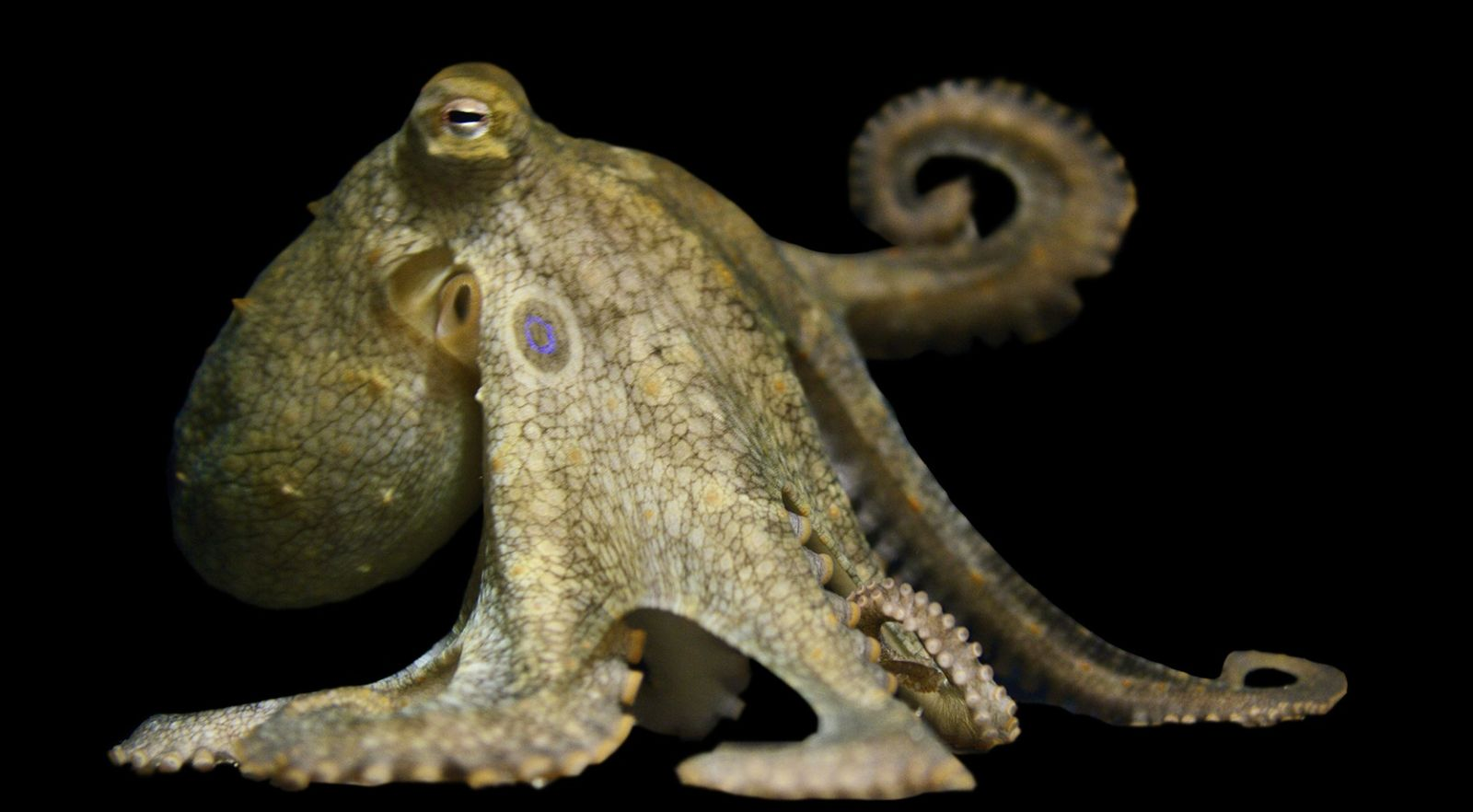
The discovery was accidental. Richard Han, then a graduate student at Harvard Medical School, was examining the rRNA of California two-spot octopus tissue when he noticed that a piece of rRNA that is normally joined together was split into two. Co-author Nicholas Bellono said, "I thought we had extracted the RNA incorrectly" at first.
Verification proved otherwise. When the same type of break was inserted into the ribosomes of E. coli bacteria, the accuracy of protein production doubled.
This feature was not present in all octopuses. Comparing two lineages that diverged 100 million years ago, the split was found in all five species of incirrate octopuses (those with no internal shell) living in shallow waters and having developed nervous systems, while it was absent in cirrate octopuses (those with a shell), which live in deep waters and have simpler nervous systems. It was also not found in squid, which diverged about 300 million years ago.
The research team believes that this variation may be linked to the evolution of the large nervous systems of shallow-water octopuses. Rishav Mitra, a co-author, explained that "this rRNA split could play a role in helping neurons function properly" because neurons are long-lived and particularly susceptible to protein folding errors.
Co-author Amy Lee said, "The most surprising thing is that even the highly conserved ribosome can undergo evolutionary changes that affect its function."
However, there are also cautious opinions. Joshua Rosenthal of the Marine Biological Laboratory, who was not involved in the study, called it "very interesting" but said that further research is needed to prove that this rRNA change led to the evolution of sophisticated brains and behavior.
Potential applications were also mentioned. There is hope that it could be a key to treating diseases such as Alzheimer's and Parkinson's, which involve protein folding abnormalities in the brain. Lee said, "If we can understand the principle by following nature's lead, we may find ways to apply it to human cells."
Source: Smithsonian Magazine, "Why Are Some Octopuses So Smart? The Answer Might Lie in a Never-Before-Seen Mutation That Helps Them Accurately Build Proteins" (Sara Hashemi, August 19, 2026)
▶ Original Source: https://www.smithsonianmag.com/smart-news/why-are-some-octopuses-so-smart-the-answer-might-lie-in-a-never-before-seen-mutation-that-helps-them-accurately-build-proteins-180989319/