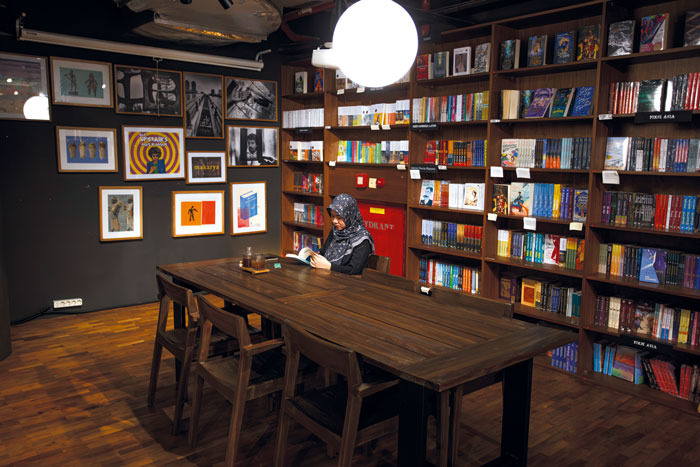
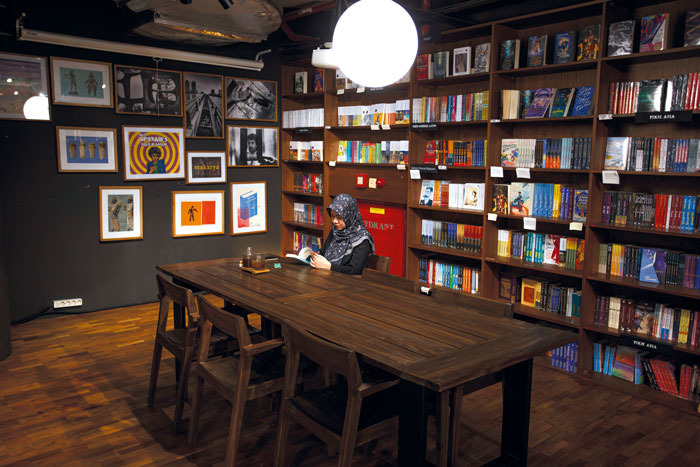
 One of the reading corners at Gramedia Matraman, offering a comfortable space for Jakarta residents and visitors from surrounding areas to browse and discover a wide selection of books. Photo by Des Syafrizal.
Along the roads linking East and Central Jakarta, from Matraman to Salemba and through to Kenari, the city’s literary, intellectual and cultural past continue to have a presence. In these districts, the country’s largest bookshops, a library preserving rare newspapers, centuries-old Bibles, and a museum devoted to a prominent Betawi figure, are all to be found, offering a fascinating journey through books, writing, memory and heritage.
The journey begins in Matraman, East Jakarta, situated between Jatinegara and Salemba. Jl. Matraman Raya has long been associated with Gramedia Matraman, one of the city’s well-known bookshops. For many Jakartans, it is a familiar destination and part of the city’s reading culture. The branch opened after Gramedia’s first bookshop on Jalan Gajah Mada, West Jakarta, in 1970.
Gramedia Matraman has been a popular destination for students from nearby institutions, including Marsudirini School, the University of Indonesia’s Faculty of Dentistry and its postgraduate programme at the Faculty of Economics, as well as local employees and residents. Students from across East Jakarta regularly flock here to browse, discover and read books.
In 2025, the emerging coffee shop Smiljan Makarya opened on the second floor, adding a more comfortable setting for those who want to linger over their reading. Located within the imported-books section, the café offers a natural extension of the bookshop experience, where browsing can easily turn into an unhurried coffee break.
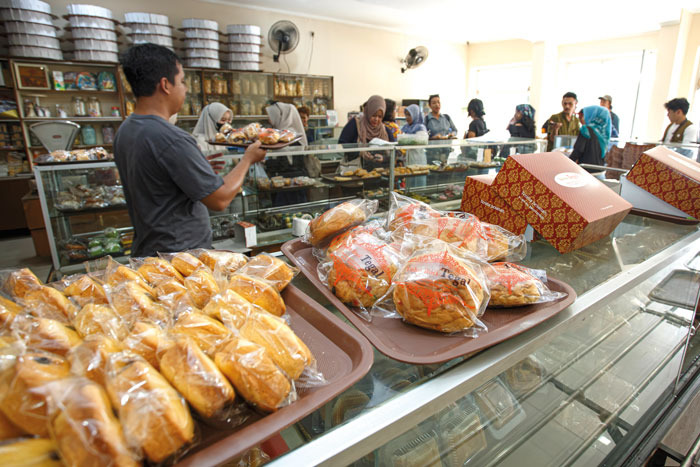 The atmosphere at Tegal Bakery remains lively, with a tempting selection of breads and pastries enjoyed by its customers. It is also remembered as the place where Soe Hok Gie once confessed his feelings to the woman he loved. Photo by Des Syafrizal.
Gramedia isn’t Matraman’s only intellectual landmark, though this next venue’s connection to Indonesia’s intelligentsia is somewhat indirect. Just a short distance from the bookstore is Toko Roti Tegal, a traditional bakery serving classic breads, cakes, traditional market snacks and other nostalgic treats – including its signature kue amandel (a traditional almond and chocolate pastry). The bakery is said to have opened in 1968, although some accounts trace its origins to 1948 when it was originally known as Insulinde.
The bakery’s significance is tied to the life of Soe Hok Gie, an activist and vocal critic of both President Soekarno’s and Soeharo’s governments. He was the son of Indonesian novelist Soe Lie Pit (also known as Salam Sutrawan), and clearly inherited his father’s penmanship: his writings are renowned in their ability to capture Indonesia’s political and social atmosphere of the 1960s. His collected writings were posthumously collated and published into books, including Catatan Seorang Demonstran (Notes of a Demonstrator).
Gie’s connection with Toko Roti Tegal was a personal one. It was where, on 11 December 1969, he met and expressed his feelings for Nurmala Kartini Pandjaitan (or Nurmala Kartini Sjahrir, youngest sister of Luhut Binsar Pandjaitan). Only days later, Gie would leave for Mt Semeru, East Java, where he died on 16 December 1969, a few days before his 27th birthday. The poignant moment in the Toko Roti Tegal bakery was immortalised through Riri Riza’s 2005 film, Gie, inspired by his diaries and writings.
From Matraman, the journey continues to Salemba, Central Jakarta, where a repository of historic archives awaits.
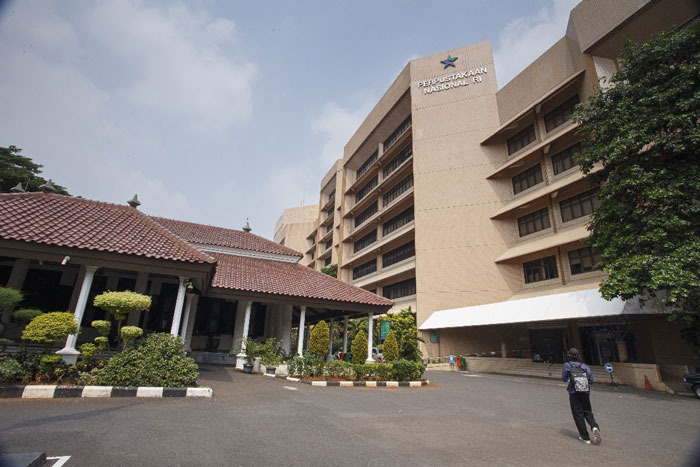
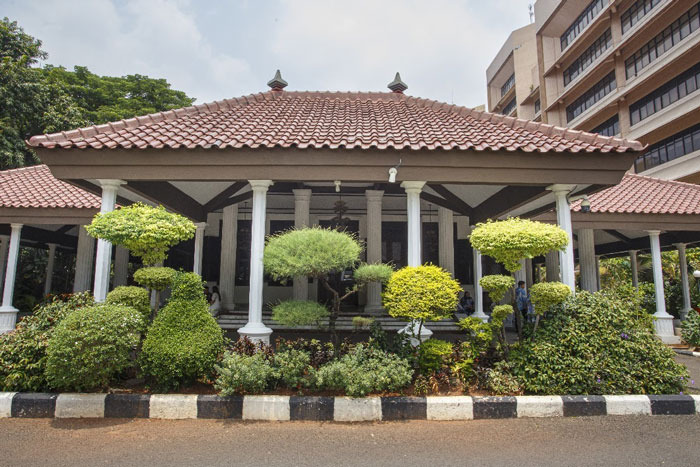
The National Library in Salemba (left) stands alongside the former Koning Willem III School (right), an elegant Indies-style building that now functions as the main secretariat and office of the Library’s head. Photos by Des Syafrizal.
Just off Jl. Raya Salemba stands an elegant Indies-style building, which, juxtaposed against its modern surroundings, immediately catches the eye. This historic venue was once the gymnasium of the Koning Willem III School, built back in 1860 as one of Batavia’s earliest government-run secondary schools. This was where a few select young Indonesians were granted a western education, among them Agus Salim, Achmad Djajaningrat and Mohammad Husni Thamrin. Today, the building is used as the main office and secretariat for the Perpustakaan Nasional Republic Indonesia (Perpusnas RI), or the National Library. Towering above the humble, Joglo-fashioned building, is the old National Library building, known as Perpsutakan Nasional Salemba.
Yet, the National Library as an organisation predates the building itself, its roots date back to the Bataviaasch Genootschap, a scientific institution founded in 1778 and in fact a precursor to today’s National Museum. During the Japanese occupation (1942–1945), its library was known as the Perpoestakaan Moesioem (Museum Library), later dissolved in 1950.
The Republic of Indonesia’s own National Library organisation was formally established on 17 May 1980 by the Minister of Education and Culture, Daoed Joesoef, through the integration of four major libraries in Jakarta; the National Museum Library; the History, Politics, and Social Affairs (SPS) Library; the DKI Jakarta Regional Library; and the Bibliography and Deposit Division of the Centre for Library Development, all located at separate sites.
A major development followed through the initiative of the former First Lady, Siti Hartinah Suharto (also known as Tien Soeharto), who, through the Harapan Kita Foundation, provided land in Salemba and funded a new nine-storey building. On 8 December 1985, Tien Soeharto laid the cornerstone for the dedicated library building. Completed in October 1988 and it was officially inaugurated in 1989. The former school building, meanwhile, became home to the library’s leadership offices and main secretariat.
Decades later, in 2017, a new 24-storey building was built on Jl. Medan Merdeka selatan, which has now become the main National Library. It houses a range of facilities and a more up-to-date and diverse collection. Meanwhile, the Salemba branch is dedicated to older and rare newspapers, as well as books relating to Soekarno and Soeharto.
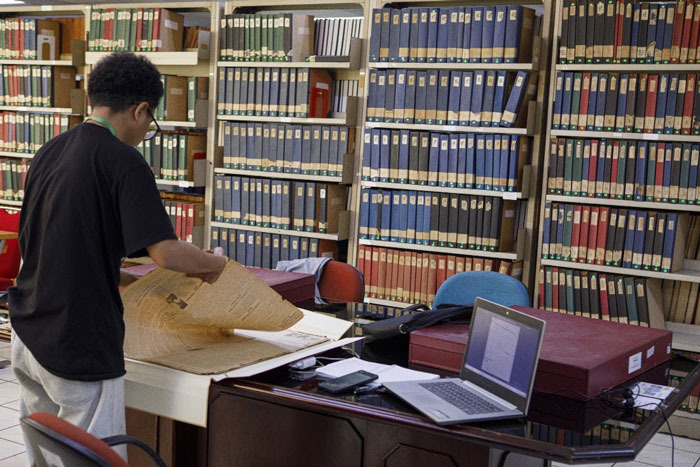
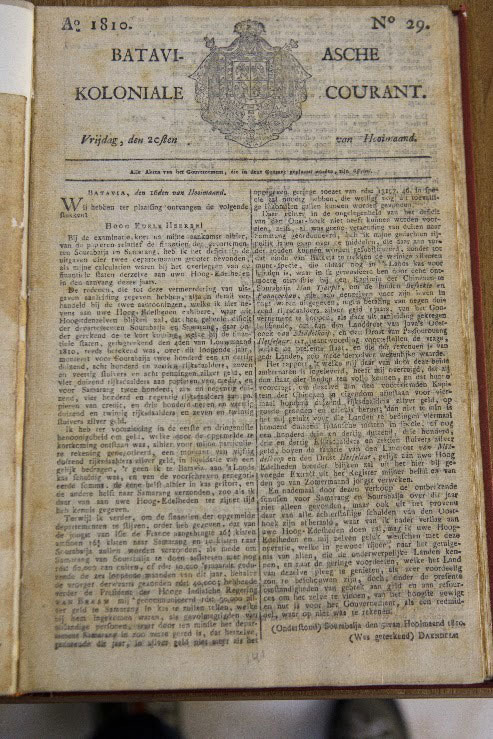
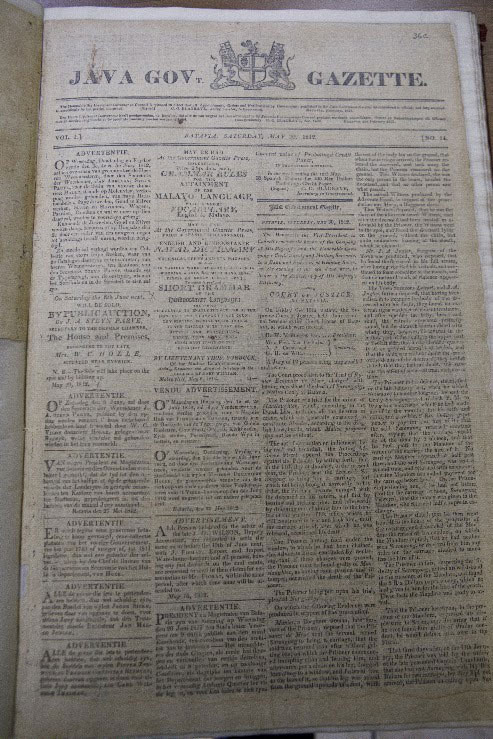
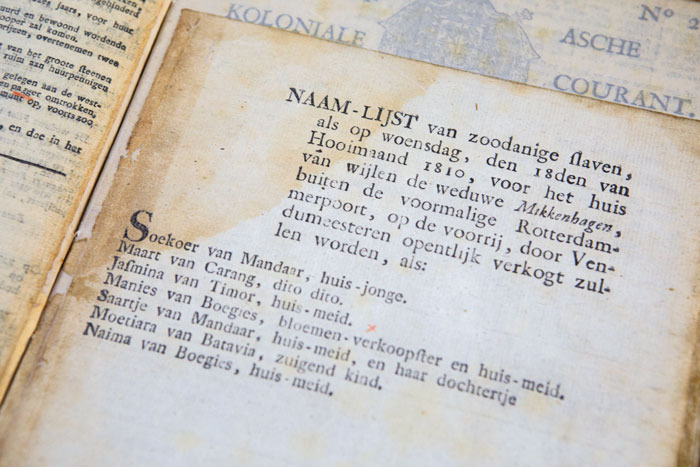
(Above) A visitor looks for the information at the 7th floor of National Library, parts of the library that has collection of rare historic books and newspapers; (Middle-Left) An issue of the Bataviasche Koloniale Courant; (Middle-Right) An issue of the Java Government Gazette; (Below) An advertisement for the sale of slaves in the Bataviasche Koloniale Courant. Photos by Des Syafrizal.
Among the treasures preserved here are old and rare newspapers on the seventh floor, offering a remarkable window into Indonesia’s and Jakarta’s past. Although it was not the first newspaper published in Batavia—the Bataviase Nouvelles appeared in 1744—the library holds Indonesia’s only collection of the Bataviasche Koloniale Courant, first published in 1810. This weekly newspaper appeared during the administration of Governor-General Herman Willem Daendels.
Its inaugural edition featured a story about the Jalan Raya Pos (Great Post Road), a historic highway spanning approximately 1,000 kilometers from Anyer to Panarukan. Its pages also reveal some of the more disturbing realities of the time. Among the advertisements is one for the buying and selling of enslaved people, a practice that was still legal in 1810. It lists the names of enslaved people formerly owned by the late Mikkenhagen, whose possessions were to be auctioned at Rotterdam Fort in Makassar.
Daendels’ main mission in Batavia was to strengthen the city’s defences against the British, but he ultimately failed to prevent them from taking control of Java. The Bataviasche Koloniale Courant lasted only two years and was reportedly suppressed because the VOC feared that its trade news could be read and exploited by commercial rivals in Europe.
In 1812, during the British administration under Thomas Stamford Raffles, the English-language Java Government Gazette was introduced, reflecting a different style of journalism before publication ceased the following year. Today, both newspapers are carefully bound and preserved, protecting these fragile records for future generations.
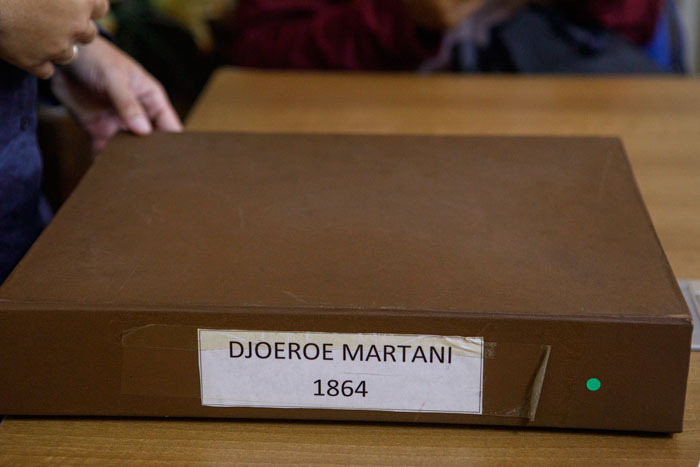
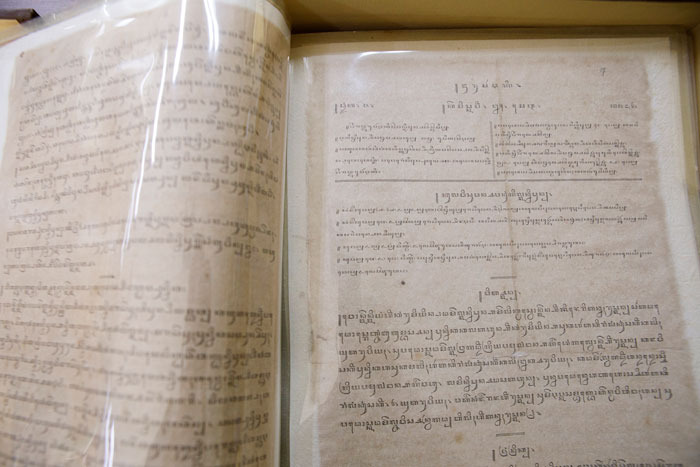
Djoeroe Martani was among the early newspapers published during the Dutch East Indies era to use a local language (Javanese language). Photos by Des Syafrizal.
The library’s collection also includes Djoeroe Martani, published in 1864, recognised as an early newspaper in the Javanese language and script. At the time, printing in non-Latin scripts was a complicated undertaking, as the specialised type had to be manufactured before it could be used.
This collection of rare newspapers is neatly bound, and access to view the physical versions in person is subject to specific conditions. Today, these rare newspapers can be accessed free of charge in digital form through the National Library’s Online Public Access Catalogue (OPAC).
Still in Salemba, about a ten-minute walk in line from the National Library brings us to the Indonesian Bible Society, or Lembaga Alkitab Indonesia (LAI), an institution dedicated to preserving and publishing Christian scripture. Its history dates to 4 June 1814, when it was established as the Java Auxiliary Bible Society under Sir Thomas Stamford Raffles. It operated as an auxiliary branch of the British and Foreign Bible Society, founded in London in 1804. When British rule in Java ended and the Dutch returned in 1816, the organisation was renamed the Nederlands Oost-Indisch Bijbelgenootschap.
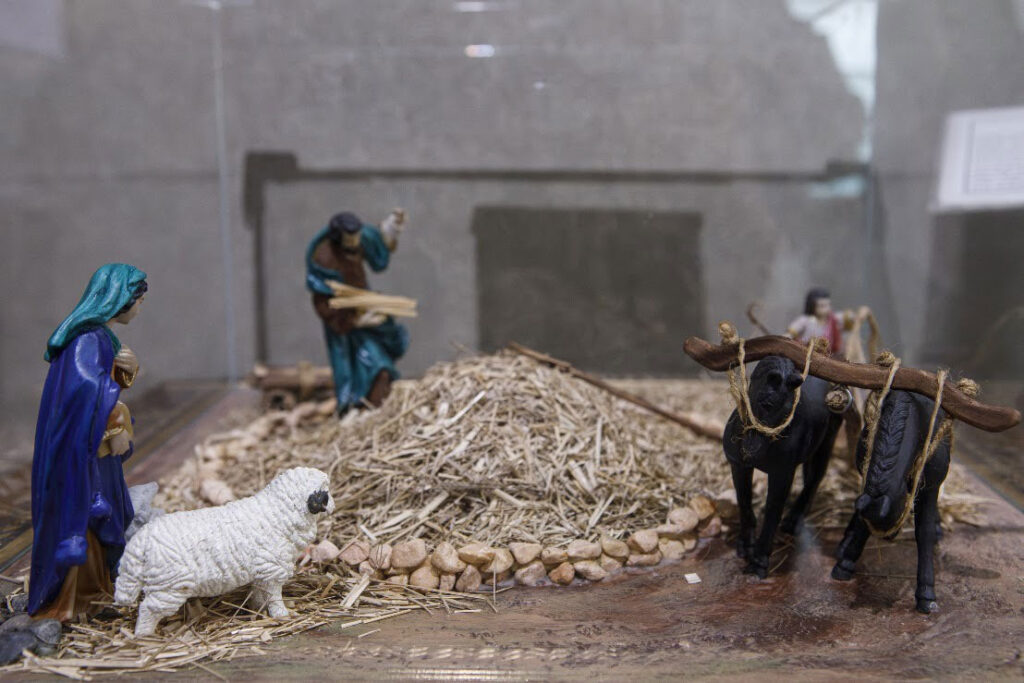
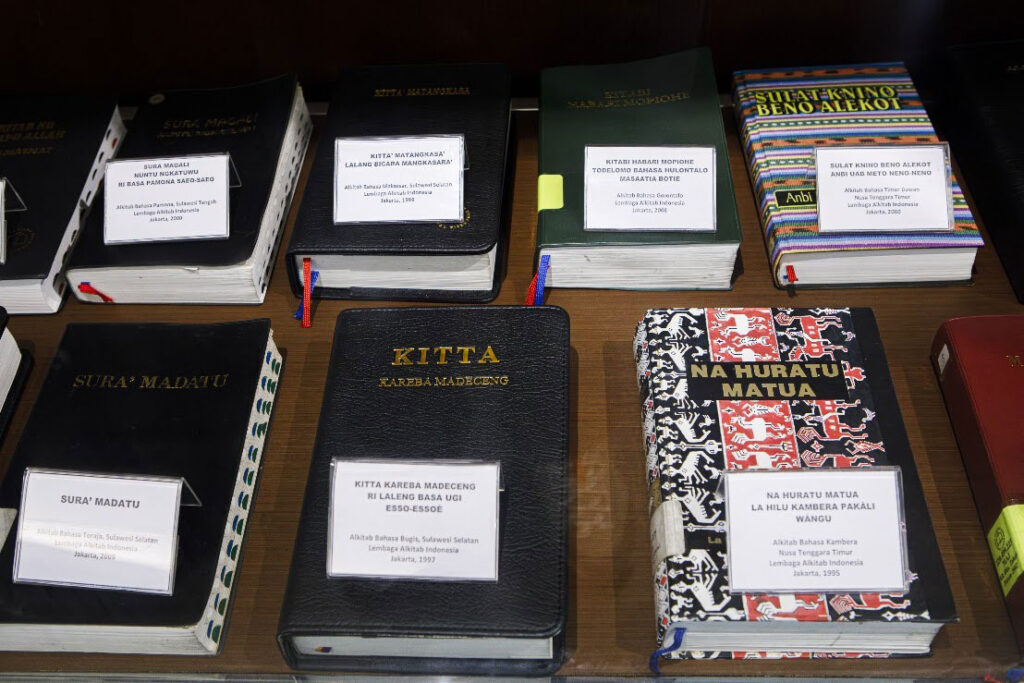
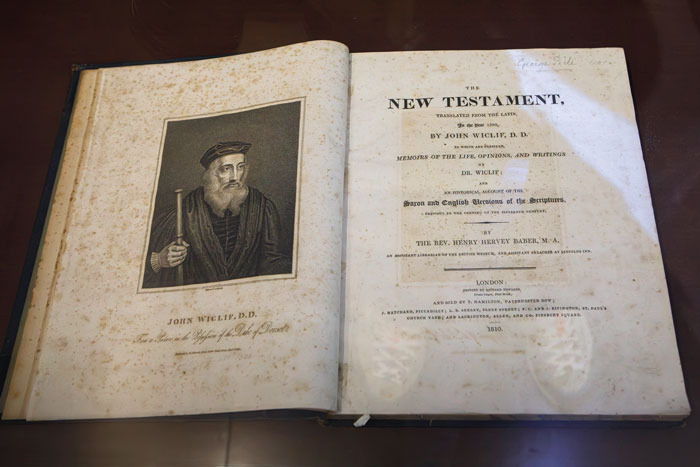
(Above) A collection of memorabilia at the Bible Museum (Indonesian Bible Society), offering insights into the history and development of Christianity; (Below-Left) A collection of bibles in Indonesian regional languages; (Below-Right) One of the collections of old Latin-language bibles. Photos by Des Syafrizal.
The institution was based in Bandung from 1937 to 1945 before moving to Makassar, where it remained until 1950. In 1951, it was officially designated as the authorised body for the publication and printing of Bibles for Christians in Indonesia. Before its collection was moved to Salemba in 2018, where it is now exhibited, the society’s collection and curatorial activities were based in Bogor. The museum opened in the same year, marking the transfer of the collection to its new home and providing a dedicated space for visitors to explore the history of the Bible and its journey in Indonesia.
Inside, visitors encounter a fascinating record of how the Bible travelled across languages, cultures and centuries. The collection covers biblical studies, theology, writing and translation, as well as Bibles in Indonesian regional languages and languages from around the world.
Among the highlights are early Latin and English Bibles, including a 1611 edition of the King James Bible, alongside German, French and Dutch editions.
The story becomes particularly intriguing when it reaches Nusantara. Bible translation into Malay began in the 17th century with Albert Cornelisz Ruyl, whose translation of the Gospel of Matthew was published in 1629, followed by Mark in 1638. Daniel Brouwerius later produced a translation of the New Testament in the Malay commonly used in the region, published in 1668. A complete Malay Bible eventually followed in 1733 through the work of Melchior Leydekker. LAI has published complete Bibles in Indonesian in five editions and complete Bibles in 39 regional languages.
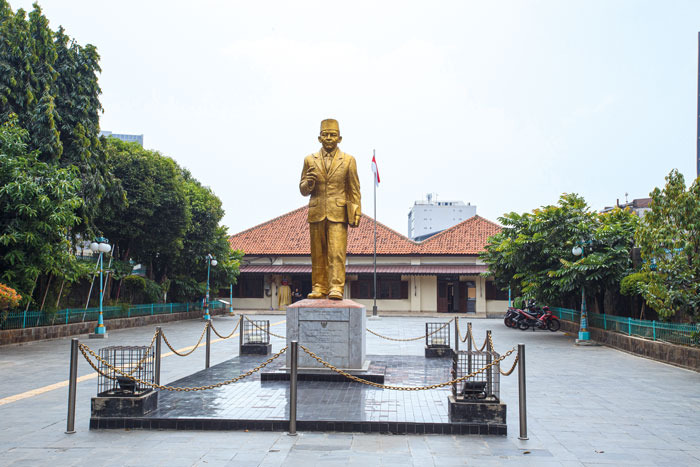
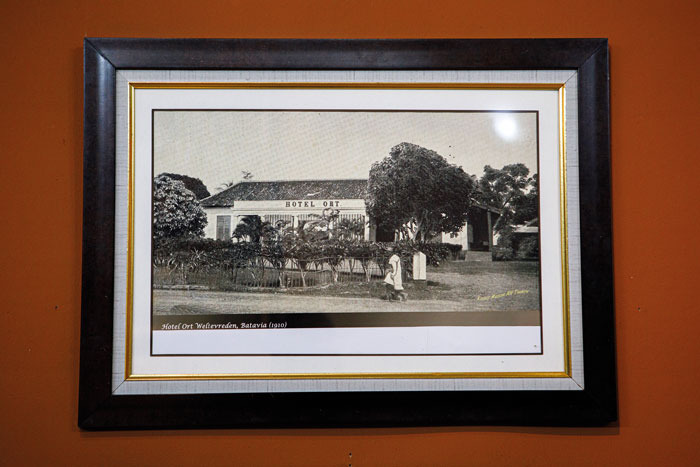
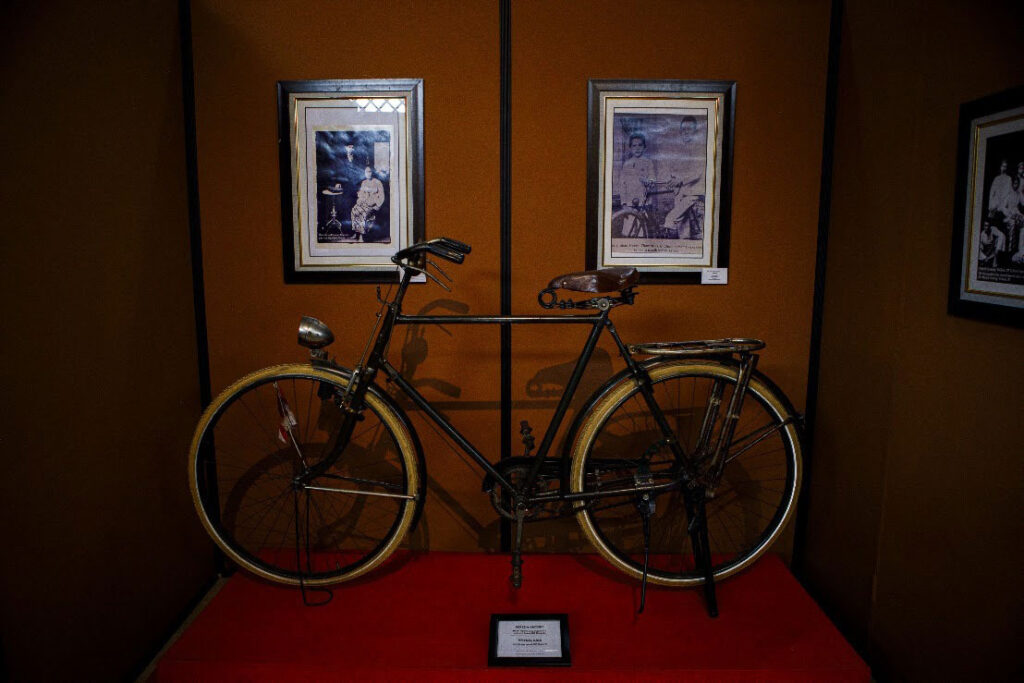
(Above) The M.H. Thamrin Museum comes into view upon entering the museum grounds, with a statue of the national figure standing in front; (Below-Left) The photo shows Hotel Ort, one of the museum’s displayed items; (Below-Right) Thamrin’s bicycle, one of the historical objects preserved in the museum. Photos by Des Syafrizal.
From Salemba, the journey continues towards Kenari in Central Jakarta. Hidden among the area’s busy daily market – selling everything from electrical ware to workshop equipment – is a museum dedicated to the Betawi figure, Mohammad Husni Thamrin.
The museum traces the life of the politician and nationalist. Thamrin’s father, Thamrin Mohammad Thabrie, was a wedana, or district chief, a position that gave the young Thamrin the opportunity to attend the Koning Willem III School. His grandfather, Ort, was of British descent and owned Hotel Ort in Petojo, behind what is now the National Museum. The Hotel Ort no longer stands.
Despite his privileged background, Thamrin grew up among ordinary residents of Batavia. His childhood friends included the children of rice sellers, cart pushers and flower sellers rather than those from the colonial administrative elite.
Thamrin’s contribution —though few people know about it—was improving living conditions in the kampung. He advocated kampoong verbeteringen, or kampung improvements, and supported the development of infrastructure to address flooding along the Ciliwung.
His concern for ordinary residents also extended to sport. At a time when many grounds were reserved for Europeans, Thamrin helped fund land where indigenous and Betawi communities could play football without fear of eviction. The resulting field, known as Lapangan Petojo, was associated with the Voetbalbond Indonesische Jacatra (VIJ), a football association later linked to the birth of Persija Jakarta.
Recognised as a National Independence Hero, MH Thamrin’s legacy lives on in one of Jakarta’s major roads and in his statue stands near Jalan Medan Merdeka Selatan.
The journey through Matraman-Salemba-Kenari reveals a more subtle side of Jakarta. Here, hidden histories live in bookshops, old buildings, faded pages and familiar streets. These places offer a reminder that the city’s literary and intellectual soul is woven into its everyday landscape.