
Since this is a translation of an overseas article, there may be mistranslations.
https://wccftech.com/samsungs-mammoth-20000mah-silicon-carbon-si-c-smartphone-battery-fails-at-960-cycles/
Samsung's 20,000mAh Silicon-Carbon Battery Fails After 960 Cycles
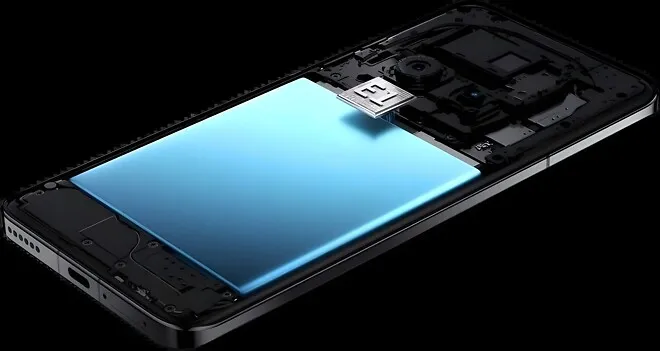
Silicon-based anodes can hold up to 10 times more lithium ions.
Since the 2016 Note 7 incident, Samsung has taken a very conservative approach to smartphone battery experimentation. However, this hesitation has resulted in Chinese OEMs taking the lead with massive silicon-carbon (Si/C) batteries, and the Korean giant is now paying a heavy price.
Against this relatively challenging backdrop, we previously reported that Samsung began testing a massive 20,000mAh silicon-carbon battery in late 2025 but subsequently discontinued it. Now, thanks to leaked documents, we know much more about the failed tests and the smaller 18,000mAh battery tests Samsung is currently conducting.
Samsung's Massive Silicon-Carbon (Si/C) Battery Cell Experiments Continue
As mentioned in a recent dedicated post, silicon-carbon (Si/C) batteries differ slightly from conventional lithium-ion batteries in that they use an anode made of a nano-structured silicon-carbon composite material that is resistant to breakage instead of the usual graphite.
So what are the advantages? Silicon-based anodes can hold up to 10 times more lithium ions, allowing for a dramatic increase in battery capacity while maintaining a very thin overall form factor.
We reported in late 2025 that Samsung SDI was testing a 20,000mAh dual-cell silicon-carbon battery. At the time, the main cell had a capacity of 12,000mAh and a thickness of 6.3mm, while the auxiliary cell had a capacity of 8,000mAh and maintained a thickness of 4mm. However, according to leaked information at the time, the Korean giant quickly abandoned this massive cell in favor of smaller ones.
https://x.com/phonefuturist/status/2031075036958753083?s=20
Current tipster 'Schrödinger' has revealed detailed information, stating that Samsung's initial 20,000mAh silicon-carbon battery cell test failed after 960 cycles. For reference, current lithium-ion smartphone batteries are typically rated between 500 and 1,000 charge cycles.
It appears that Samsung's stringent standards aimed to push the charge cycle limit of the 20,000mAh Si/C cell even further. On the positive side, Samsung is continuing to test a 12,000mAh silicon-carbon battery composed of 6,800mAh and 5,200mAh cells. It is also continuing to test an 18,000mAh battery composed of 6,699mAh cells, 6,000mAh cells, and 5,257mAh cells.
▶ Source: https://wccftech.com/samsungs-mammoth-20000mah-silicon-carbon-si-c-smartphone-battery-fails-at-960-cycles/