This is a translation of an overseas article, so there may be translation errors.
https://www.avpasion.com/mejor-libro-siglo-goodreads-pelicula-mediocre/
Realization of 81-inch Glass Substrate Micro LED TV: BOE Begins Mass Production
A New Competitor Emerges in the Future TV Market
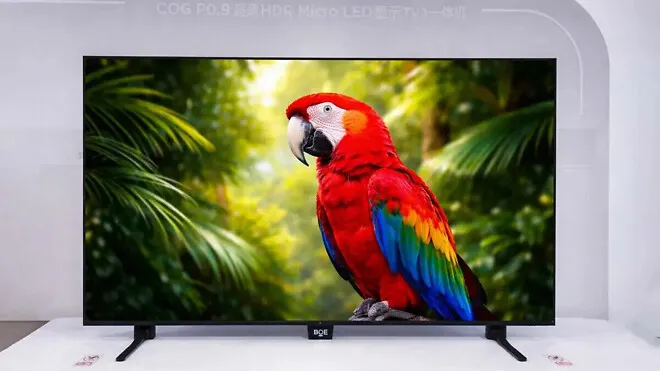
The advancement of micro LED technology applied to TVs seems endless. Every year, we witness models with more and better features. Today, we want to bring you some very exciting news. At the ICDT 2026 conference held in Chongqing, many creations from Chinese brands, in particular, were revealed. They have now crossed the threshold of reality beyond designs on paper, and have transformed from prototypes that existed only in the minds of creators into complete models poised for mass production.
At this event, many amazing things were witnessed, including TCL's 45,000-nit micro LED display designed for automotive use. However, we want to focus on a product that could be the immediate future of TVs: micro LED with popular sizes and increasingly lower prices, with BOE's 81-inch model being a prime example. This model also has a unique feature of being manufactured using a glass substrate, and let's explore what this means.
Micro LED TV Joining the Glass Substrate (TFT) Revolution
As you may have read in our various news articles, most micro LED displays, especially larger models, have used COB (Chip on Board) systems on printed circuit boards (PCBs). While this method is effective for large advertising displays, it has fatal limitations in pixel pitch (distance between pixels) precision, making it very difficult to reduce the pitch to "invisible" levels in a home environment.
Accordingly, BOE attempted a bold challenge and surprised the world by presenting a new micro LED using glass substrate (TFT) instead of COB at ICDT. Through this method, they were able to create an 81-inch panel with a pixel pitch of just 0.9mm. By using glass instead of PCB, perfect flatness can be achieved, heat management is easier, and most importantly, higher pixel density can be implemented without the alignment issues of previous technologies. Until now, it had been impossible to manufacture "smaller" sized micro LEDs for this reason.
Another advantage of this manufacturing system is that existing factories where LCD and OLED TVs are produced can be used as-is. This is because the technological foundation is identical. Not only can factories and materials be recycled, but the cost of manufacturing these screens is much cheaper than using COB systems.
Micro LED TV Looking at the Present: Increasing Advantages and Decreasing Disadvantages
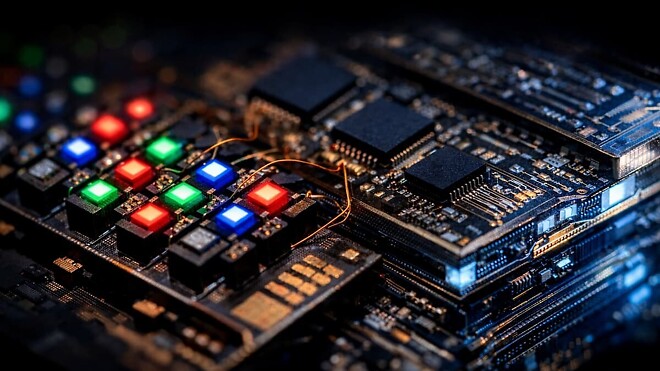
Clearly, we are facing micro LED models, which directly translates to quality. We achieve OLED's picture quality without any of OLED's disadvantages. Now that we can manufacture models smaller than 83 inches, size is no longer an issue. BOE particularly emphasized that their model is a high-brightness unit and can easily exceed 2,000 nits in actual operating conditions.
As expected, because this model uses inorganic technology, its lifespan is virtually permanent, with no burn-in or ghosting effects whatsoever. Additionally, the manufacturer asserted that they newly applied an ACR (Ambient Contrast Ratio) optimization layer to maintain deep contrast even in very bright living rooms.
In the end, this does not appear to be merely another theory. BOE announced that it will begin mass production this very year, 2026. The industry has succeeded in optimizing "Mass Transfer," the critical process of moving millions of micro LEDs to glass substrates while minimizing errors. With this, the factory is ready to fire up its engines.
If everything proceeds as planned, this will be the first successful case of standardizing micro LED panel production lines without using expensive COB systems. By using glass, BOE will be able to mass-produce micro LEDs as easily as stamping out cookies from existing LCD/OLED panel factories with only minor modifications.
▶ Original Source: https://www.avpasion.com/mejor-libro-siglo-goodreads-pelicula-mediocre/