8/31 Market Analysis - Hormuz Strait Tension Drives Oil Prices Up, Utilities Plunge…Energy Sector Alone Smiles at Month-End Market
August 31, 2026 Market Analysis
## 1. What Happened Today
On Monday (August 31st), the US stock market closed out August with a slight decline amid rising oil prices and geopolitical tensions.
- S&P 500: -0.33% (7,686.14)
- Dow: -0.70%
- Nasdaq: -0.12% (marketscreener.com)
The reason is simple. The US airstrike on an Iranian rocket launch site near the Hormuz Strait reignited tensions in the Middle East, causing international oil prices to surge rapidly. Oil prices exceeded $85 per barrel, reviving inflation and additional interest rate hike concerns, which led to a general stock sell-off. (apnews.com)
In summary:
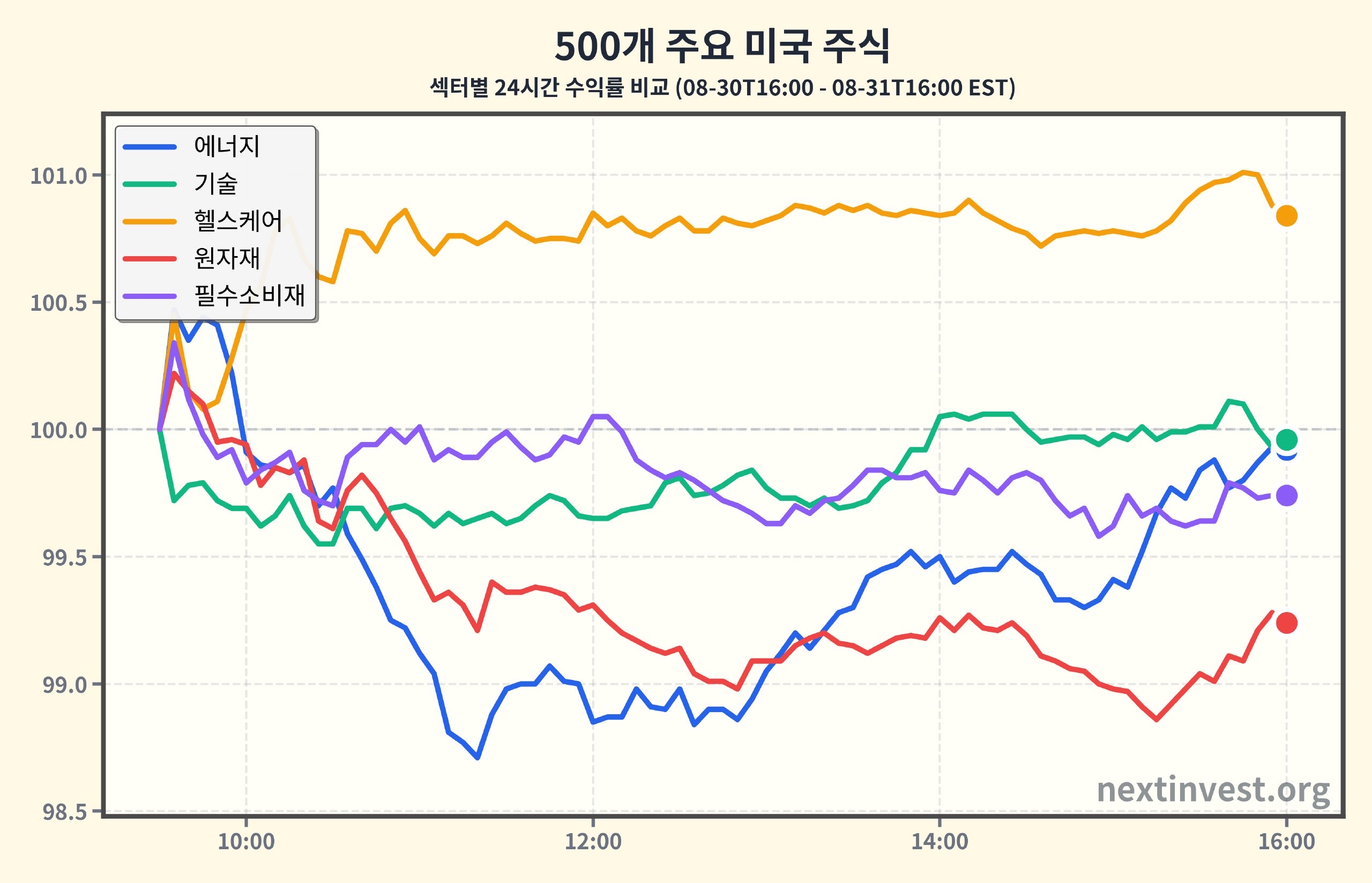
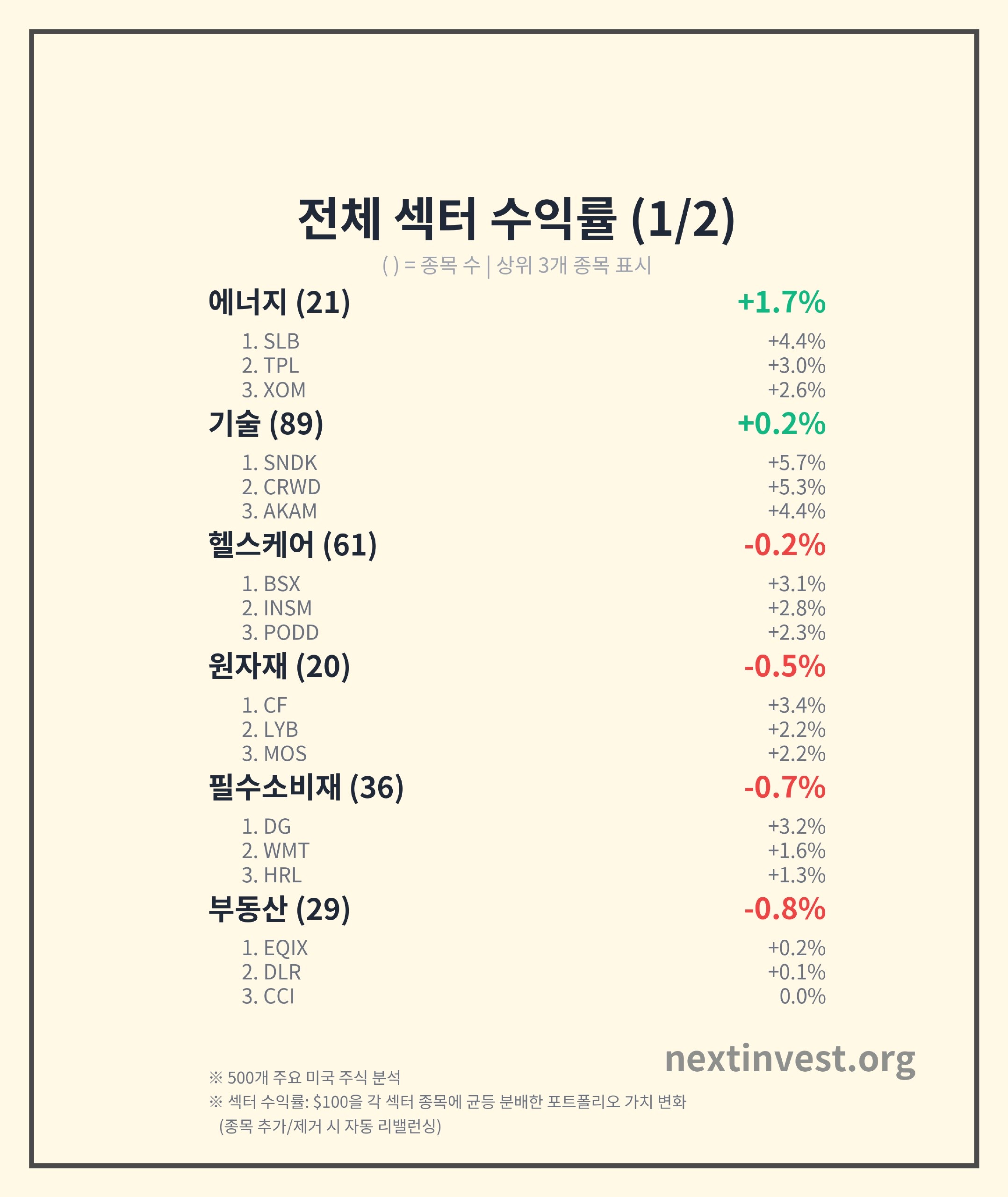
- Energy: Up due to rising oil prices (sector +1.66%)
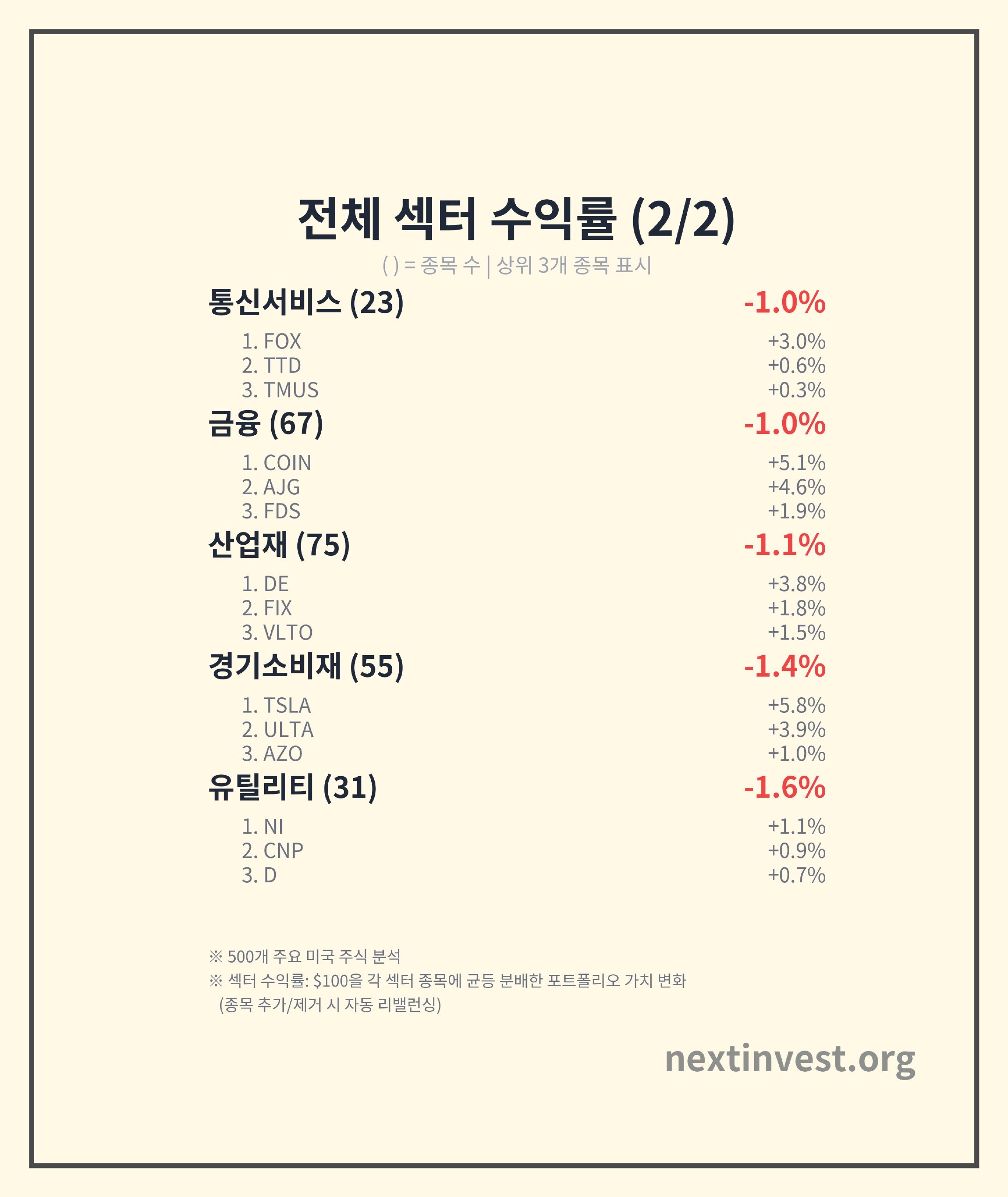
- Utilities: Worst performing sector (-1.62%) compounded by the California wildfire liability bill issue
- Most other sectors: Weak performance due to geopolitical uncertainty and interest rate concerns
Looking at the 7-day performance, today's decline is a continuation of the "slightly uneasy market sentiment" that has been ongoing since late last week. In particular, selling pressure has been steadily accumulating in cyclical sectors (industrials, consumer discretionary, real estate, financials).
---
## 2. Energy: The Only Sector Smiling, But for Uncomfortable Reasons
Today's return: +1.66% (highest in the past 7 days)
Representative stocks:
- SLB(SLB): +4.39%
- Texas Pacific Land(TPL): +3.04%
- Exxon Mobil(XOM): +2.59%
The reason for the rise in oil prices is not due to increased demand, but rather supply risks and geopolitical conflicts.
- The US airstrike on an Iranian rocket launch site near the Hormuz Strait → Sharp increase in security risks for oil transportation routes
- Investors are reflecting potential supply disruptions in prices and buying energy-related stocks (apnews.com)
### Meaning of Today's Movement in the Short-Term Trend
Looking at the 7-day trend:
- August 25th: -1.66%
- August 26th-28th: Slight rebound (3 consecutive days of gains)
- August 31st: +1.66% strong rebound
→ A picture of "adjustment followed by a return to strength."
Looking at the 60-day mid-term trend, the energy portfolio:
- Was weak until late July, but rebounded sharply in August
- Experienced a surge of over +9% between August 6th and 18th, followed by a gradual upward trend
Therefore, today's surge can be seen as "a further boost to the already ongoing energy bull market triggered by geopolitical issues."
### What Matters to Me?
- If you have a significant portion of your portfolio in energy, refining, or service industries:
→ While it may seem like following the trend in the short term, remember that the price increase is due to uncomfortable reasons such as war and tension. This means there is a higher risk of volatility (sharp drops and rises).
- If you have little to no exposure to energy:
→ This oil price surge could impact gasoline and diesel prices in the coming months, putting pressure on living expenses and inflation. Energy stocks can act as a hedge against these risks, but since they have already risen significantly, it's important to approach them with caution and manage risk through diversification.
---
## 3. Utilities: Direct Hit from California Wildfire Liability Bill
Today's Return: -1.62% (Worst among 11 sectors)
Representative Stocks:
- Edison International(EIX): -22.67%
- PG&E(PCG): -19.46%
It's not common to see utilities drop nearly 20% in a single day. Today was a typical case of policy risk materializing.
### What Happened?
- The California legislature passed a wildfire-related bill (SB 492),
→ which omitted the 'liability relief' provision that investors had expected for electric and gas utilities.
- As a result, concerns resurfaced that PG&E and Edison International could still face significant civil liability for wildfire damages. (swingfolio.com)
The market reaction was very direct.
- The S&P 500 as a whole fell only -0.33%,
- But EIX plunged in the -23% range and PCG around -20%
### Why "Defensive Stocks" Are No Longer Defensive
Utilities are typically less sensitive to economic cycles and are called "defensive stocks" due to regulated tariffs and dividends. However, today was a typical day when the regulatory environment turned unfavorable, making the defense mechanism a source of risk.
Looking at the 60-day flow:
- They rose more than +5% until late June, playing the role of defensive stocks,
- But a gradual downward shift after July,
- And a current downtrend (-4.88%) since August 14th
Today's major setback acted as a catalyst, further dragging down this downward trend.
### Implications for Me
- Utilities with significant regulatory and policy risks in specific regions, such as California, are subject to 'black box' risks related to policies beyond simple dividend yield considerations.
- If you use utilities as a stable anchor in your portfolio,
→ Check which region and regulatory structure they are exposed to,
→ And how much climate-related risks, such as wildfires, hurricanes, and floods, are reflected.
---
## 4. Finance: Aon's Large Acquisition and Credit Rating Concerns Send a Message
Today's Return: -1.00%
Representative Stocks:
- Aon(AON): -8.85%
Today, the insurance and brokerage giant Aon was at the center of the financial sector's decline.
### Aon Announces $17 Billion Acquisition of USI
- Aon announced an agreement to acquire insurance brokerage firm USI from private equity firm KKR for approximately $17 billion. (axios.com)
- At the same time, it announced a temporary suspension of share buybacks for the next two years to reduce debt and maintain its credit rating. (tradingkey.com)
- S&P Global downgraded Aon's credit outlook from 'stable' to 'negative'. (spglobal.com)
While the acquisition itself could be a long-term growth story, the market initially reacted to the short-term increase in leverage (debt) and reduction in shareholder returns.
### Implications for the Financial Sector
Looking at the 7-day trend, finance:
- Experienced minor fluctuations,
- Followed by a relatively large decline of -1.00% today
Over the 60-day trend:
- Until August 12th, there was a gentle rise,
- After that, it transitioned into a state of slight decline (-0.21%).
What this means to me:
- It shows an example of how large financial stocks and insurance stocks can fluctuate significantly due to M&A, regulations, and credit rating changes.
- If you hold a financial sector ETF or index,
→ Keep in mind that such large events can increase short-term volatility for the entire sector,
→ But if you are a long-term investor, there is no need to overinterpret individual events as structural problems for the entire sector.
---
## 5. Tech Stocks: No Extreme News, But Still at the Center of the Market
Today's Return: +0.24% (Relative Strength)
Representative Stocks:
- Sandisk(SNDK): +5.70%
- CrowdStrike(CRWD): +5.27%
- Akamai(AKAM): +4.40%
Today, the tech sector successfully defended itself by maintaining a slight plus despite the overall market uncertainty.
### Short-Term and Mid-Term Trends
Looking at performance over the past 7 days:
- August 27th: +2.72% Surge
- August 28th: -1.24% Adjustment
- August 31st: +0.24% Slight Rebound
→ "A picture of a surge followed by a breather adjustment and then a slight recovery."
Looking at the 60-day trend:
- Until mid-July, it was almost stagnant
- After July 24th, a surge of about +14% until mid-August,
- Followed by an adjustment (-3%) and currently in a gentle upward trend (+2.17%).
### Why is This Important?
- On days like today when the market is shaken by geopolitical and inflation issues, investors are still not completely giving up on growth stocks and tech stocks as engines of long-term growth.
- However, since it has been a significant rise after a short period,
→ It is important to note that volatility may increase depending on news about interest rates, oil prices, and inflation.
In summary, tech stocks are still the engine of the portfolio,
- But it is reasonable to see this as a "speed control zone" after a significant rise.
---
## 6. Cyclical Sectors: Quiet but Steady Pressure
### Consumer Cycle, Industrials, and Real Estate
Today's Performance:
- Consumer Cyclical: -1.44%
- Industrials: -1.14%
- Real Estate: -0.83%
7-Day Pattern:
- Consumer Cyclical: Two consecutive days of decline in the -0.5% to -2% range on August 26th and 27th, extending weakness with -1.44% today
- Industrials: Two consecutive days of decline around -0.8% on August 27th and 28th, widening the drop to -1.14% today
- Real Estate: -0.76%, -1.11% on August 26th and 27th, continuing to decline with -0.83% today
In other words, since the latter half of last week, cyclical sectors have been continuously experiencing a "quietly declining phase."
From a mid-term trend perspective:
- The industrial portfolio entered a downward trend of -5.7% since the rise in June and July
- Real estate has declined from its peak in mid-July to mid-August, but then rebounded (-2.95%).
### What This Means for Me
- If you have significant exposure to cyclical industries such as automobiles, airlines, leisure, construction, and commercial real estate,
→ Your sensitivity to macro issues such as geopolitics, oil prices, and interest rates will increase.
- From a long-term investment perspective,
→ Such sectors often provide opportunities to buy at lower prices when others are fearful,
→ We should not forget that it can be directly hit by the risk of simultaneous recession and interest rate hikes.
---
## 7. Healthcare·Consumer Staples·Basic Materials: Adjustments in the Middle Ground
Today's Performance:
- Healthcare: -0.18%
- Consumer Staples: -0.68%
- Basic Materials: -0.49%
Healthcare:
- Is in a strong mid-term uptrend with a rise of +16% or more over the past 60 days.
- Has entered a slight adjustment zone (-1.46%) since August 26th.
- Today's -0.18% can be seen as "catching its breath after overheating."
Consumer Staples and Basic Materials also:
- Are in a gentle adjustment zone with slight declines continuing from the latter half of last week,
- And are maintaining positive trends (7.48% and 3.14%, respectively) over 60 days.
In other words, today's decline is closer to:
- A general risk-off atmosphere,
- Where defensive and material sectors, which had been strong, experienced accompanying selling.
---
## 8. Summarizing Today's Market in One Sentence
1. Geopolitical conflict (Hormuz Strait US-Iran tensions) → Surge in oil prices → Inflation and interest rate concerns reignited → Overall stock market decline
2. Only the energy sector benefited from the surge in oil prices, but this strong performance is uncomfortable due to "war risk."
3. The utility sector suffered a major blow to its defensive image as PG&E and Edison International plummeted due to the California wildfire liability bill (SB 492).
4. The financial sector weakened due to Aon's $17 billion acquisition and credit rating concerns, while technology stocks maintained their relative strength and continued to play a central role in the market.
---
## 9. Message to Investors: What to Check Today
Finally, here are some points for individual investors to check in today's market:
- Sectoral Risk Balance
- Sectors benefiting from geopolitics and prices like energy, defense, and raw materials,
- Growth story sectors like technology and healthcare,
- Sectors sensitive to regulations and policies like finance, utilities, and real estate. It's time to check the proportion of these sectors again.
- Reassessment of Policy and Regulatory Risks
- The California wildfire bill case showed how a single law or regulation change can have a fatal impact on a specific sector or stock.
- Especially for portfolios with a high proportion of regulated industries like utilities, finance, healthcare, and telecommunications, it is important to look not only at simple valuation but also at the regulatory framework (who, what, and how prices are controlled).
- Volatility Management
- In a situation where oil prices fluctuate with war news, the daily rise and fall can be larger than usual.
- It is important to reduce excessive leverage (credit and margin), short-term option bets,
- And confirm your investment period and risk tolerance range.
Today's market was "a day that showed us again where returns and risks come from."
Returns came from energy and some growth stocks,
Risks came from war, policy, and regulation,
And how we mix these two will likely determine the performance for the next few months.
This content is written for informational purposes only and does not constitute investment advice for any specific security or asset.
Source: https://nextinvest.org/ko
Feel free to share ^^