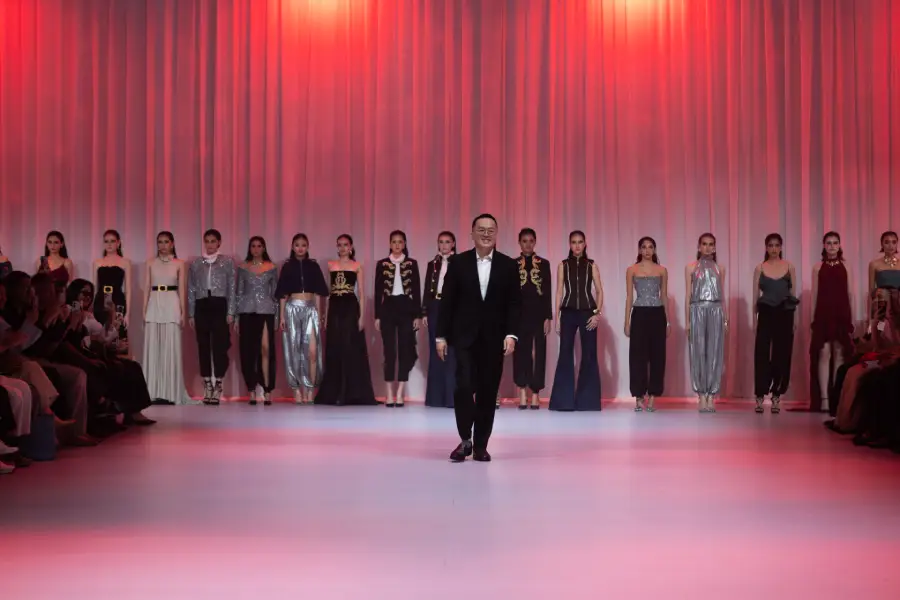
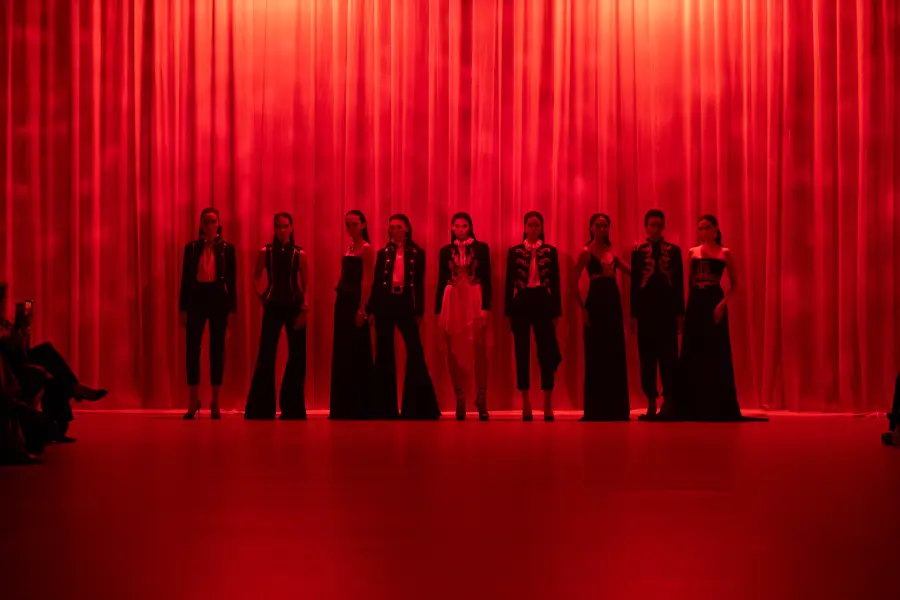
Change does not always mean leaving something behind. Sometimes, it is simply a chance to discover what else is possible. For Yosafat Dwi Kurniawan, that idea became the starting point for “Après la Révolution”, a collection about the freedom that can emerge when established rules begin to change.
Presented at Langham Fashion Soiree at The Langham Jakarta on 13 August 2026, the collection became an opportunity for the designer to look at change from a more personal angle. The event was held in collaboration with the Indonesia Fashion Designers Council (IFDC).
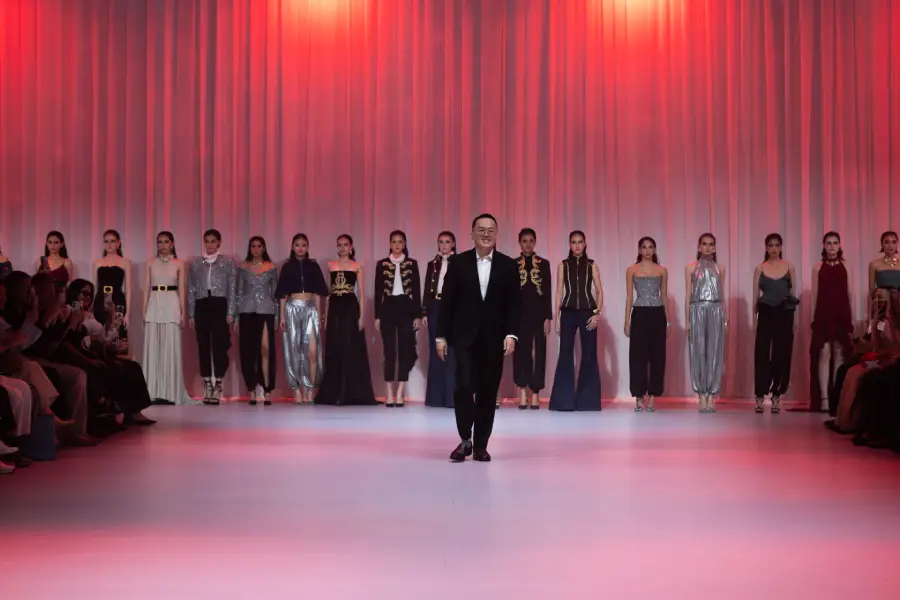
The designer has always had a close relationship with fashion history. This time, however, he was less interested in recreating a particular period than in the feelings that followed it. The French Revolution became one reference point. Once the monarchy fell, aristocratic dress began to lose its place. Clothes became lighter and less restrictive with Grecian influences offering a fresh alternative to the elaborate fashions of the court.
He found another connection in the years after the Vietnam War. The 1970s brought a more relaxed approach to dressing, with clothes that felt practical and free. For Yosafat, these shifts show how fashion can respond to a world that is trying to find its footing again. “For me, this is a revolution,” he says. “Evolution is slow. This is a revolution. I have to adapt and change quickly.”
Perhaps the most interesting part of “Après la Révolution” is that Yosafat applies that idea to himself. His signature has often centred on structured silhouettes and sharply defined waists. This time, he lets go of some of that precision. The clothes fall more freely through loose proportions and draping. They still have a clear sense of femininity, but the wearer is given more freedom within the silhouette.
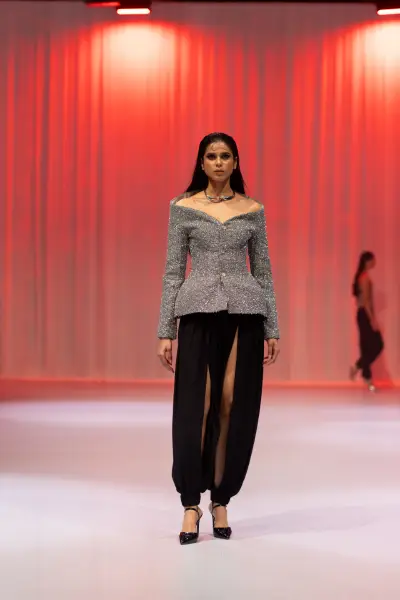
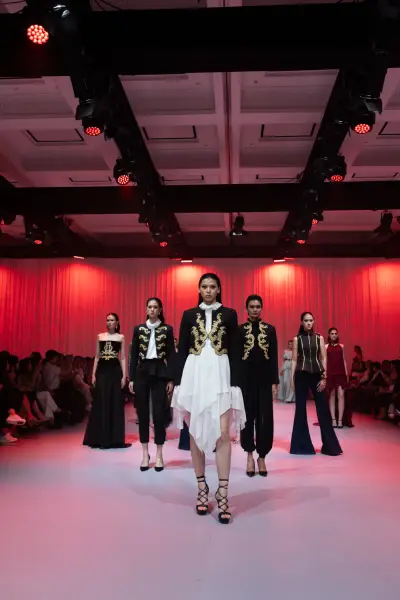
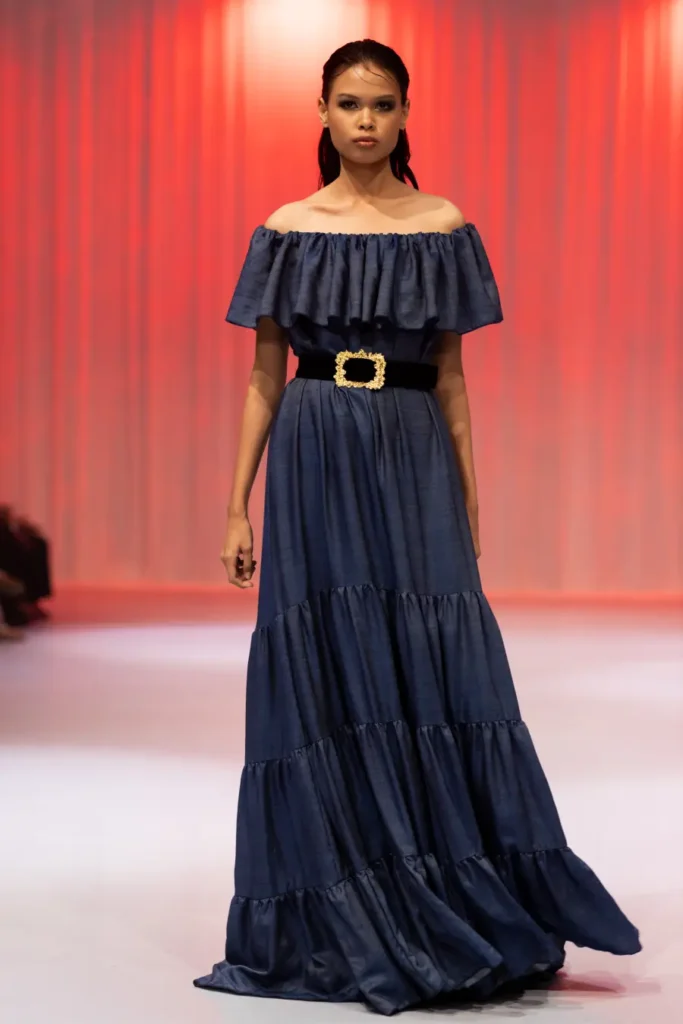
The change is also visible in the palette. Instead of the bold colours he often favours, Yosafat turns to ivory, cream, turquoise, sage, denim blue, red, black, silver and gold. Across 30 looks, the collection moves from the grandeur of Baroque and Rococo references towards silver tones inspired by armour and conflict. The final looks carry the lighter mood of the 1970s and its associations with peace and freedom.
There is less reliance on traditional embellishment too. Sequins take a smaller role, while NOMATEX technology introduces embroidery and laser-cut details. The fabric choices also support the collection’s softer direction. Jersey, voile and tweed are joined by viscose rayon and lyocell from Asia Pacific Rayon (APR). Yosafat chose the fibres for their softness and versatility, as well as their ability to work with draping and more complex construction.
His creative process has changed along with the clothes. Yosafat usually looks towards films and European couture for inspiration. Now, he found himself drawn to the emotional side of historical events. “It is not only interesting but also romantic and melancholic,” he says. There is a reason that perspective feels especially close to home. Yosafat says he has become more conscious of the uncertainty around him and more concerned with questions about the future and how people adapt. Those thoughts have made him more critical of the world and more willing to reconsider his own work.
After 15 years in fashion, Yosafat is giving himself room to question the silhouettes, colours and techniques that have become part of his signature. Whether this new direction continues will depend partly on how customers respond, but for now, he seems comfortable with leaving the answer open. That willingness to explore may be the most fitting part of “Après la Révolution”.
For more on Yosafat Dwi Kurniawan and his latest work, visit yosafatdwikurniawan.com. To keep up with the latest from The Langham Jakarta, follow @langham_jakarta on Instagram.