
Since this is a translation of an overseas article, there may be mistranslations.
https://www.avpasion.com/lg-prepara-flipp-forma-fabricar-oled-mascaras/
LG Display is developing FLiPP, a technology expected to revolutionize OLED panel manufacturing.
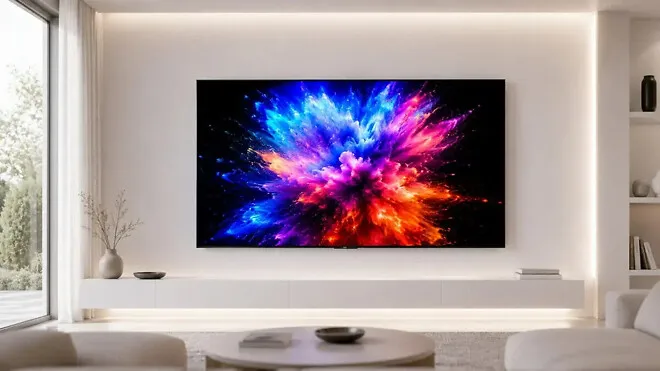
LG Display is preparing a new OLED panel manufacturing method that could solve one of the major problems that has plagued this technology for a long time. Its name is FLiPP, and while it is currently in the development stage, the Korean company LG has already confirmed that it will use lithography techniques to create the pixels on the screen.
Making RGB OLED panels is never an easy task. The organic materials that make up the red, green and blue subpixels are deposited with extreme precision using a very thin metal mask called FMM. It works, but as the size or resolution of the panel increases, the process becomes increasingly complex.
LG wants to completely change this process. Instead of using traditional masks, FLiPP technology will allow them to use a technique very similar to that used in semiconductor manufacturing, where light is used to draw and define the pixels.
FLiPP technology aims to overcome one of the major limitations of RGB OLED.
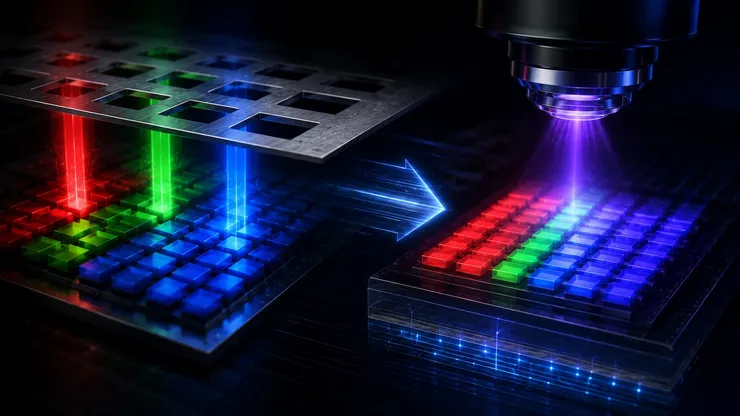
As mentioned earlier, traditional RGB OLED panels use a very thin metal mask with millions of tiny holes. Light passes through these holes to precisely position each subpixel while depositing different organic materials onto the panel.
The problem is that these masks can deform slightly due to their own weight, especially when dealing with very large areas. Even a tiny movement can misalign the subpixels, which reduces manufacturing yield and increases the number of defective panels.
Furthermore, this method requires leaving a certain amount of space between subpixels. This limits the area where the pixels actually emit light, making it difficult to create screens with very high resolutions. In other words, the larger and denser the panel becomes, the harder it is to maintain the required precision.
LG will use light to create OLED panel pixels in the future.
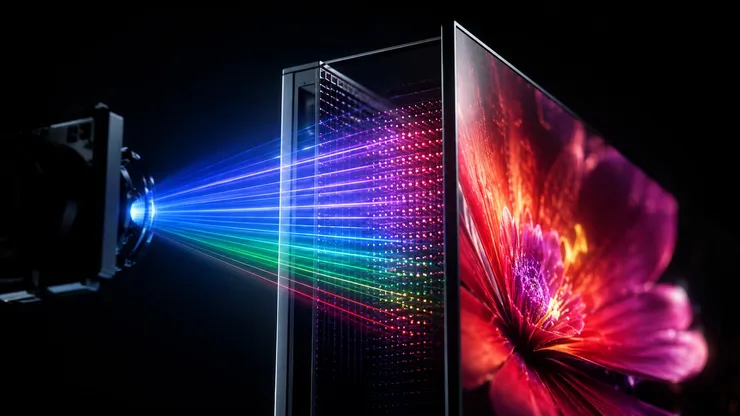
The biggest difference with FLiPP technology is the use of lithography. Instead of relying on a physical mask with holes, it defines the shape and position of each subpixel through light exposure and selective material removal processes.
This allows LG to create much more precise RGB structures and make better use of the available area. A higher pixel aperture ratio means a larger area for emitting light, which can increase brightness without significantly increasing energy consumption or reduce stress on the organic materials.
This can also contribute to extending the lifespan of the panels. If pixels require less energy to reach a certain brightness, degradation will be reduced. Therefore, FLiPP technology offers direct benefits in three key areas: higher brightness, better efficiency, and slower performance degradation.
Similar to eLEAP or ViP but a technology developed by LG itself.
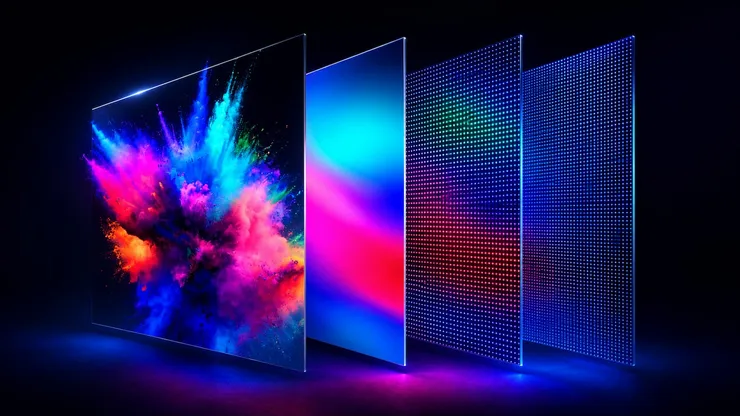
LG Display is not the only one researching this new OLED manufacturing method. Japan Display has been developing eLEAP technology for years, and Visionox also develops a similar solution called ViP. Both technologies aim to remove metal masks and significantly increase pixel aperture ratio.
The difference is that LG has enormous experience in mass production of OLED panels and has secured customers in the television, monitor, mobile device, and automotive sectors. The company has already registered the FLiPP trademark for use in OLED panels of various sizes for televisions, monitors, phones, smartwatches, and flexible screens.
This doesn't mean we'll see LG OLED FLiPP products in stores tomorrow. Currently, the brand has not provided specific figures on brightness, resolution, lifespan, or production schedule. It also hasn't confirmed what type of device this new process will be first applied to.
However, what we can be sure of is that FLiPP technology is now officially part of LG Display's next-generation OLED technology lineup. And if it succeeds in mass production, it could be the missing piece needed to create larger RGB OLED panels without relying on traditional metal masks.
▶ Original source: https://www.avpasion.com/lg-prepara-flipp-forma-fabricar-oled-mascaras/