나이도 먹고 하니 요즘 긴 글을 읽는데 집중력이 많이 딸어진 것 같아서 coding agent용 스킬을 하나 많들어봤습니다. 보통 "요약 해줘" 와는 어쩌면 반대되는 방식이라 생각하면 됩니다.
긴글을 agent가 chunk by chunk로 읽어서 질문을 때리고, 그 질문에 답하기 위해서는 AI가 제시해주는 문장을 무조건 읽고 이해해야 하는 방식입니다.
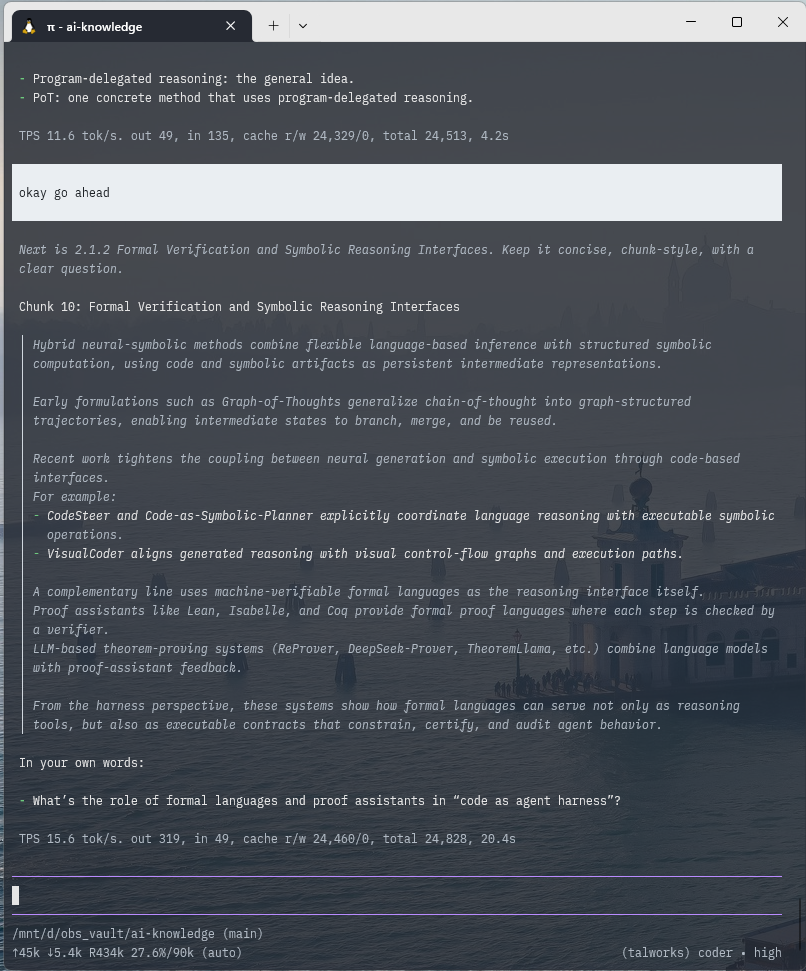
스킬 내용(첨부파일)
Interactive Reading Skill
A patient, interactive reading companion for deep understanding of any text. Breaks long-form content into digestible chunks, checks comprehension at each step, and adapts pacing to the reader.
When to Use
User says "let's read", "reading session", "walk me through", or similar
User wants to study a paper, article, book chapter, or any long document interactively
User shares a file path or URL and asks for help understanding it
Setup
Ask user what to read. Accept:
Load the content and split into chunks:
Papers/articles: one paragraph or subsection at a time
Books/chapters: one logical passage (a few related sentences)
Technical docs: one concept block or code example
Short text: one sentence at a time
Check for progress.json in the same directory as the file (or project root); offer to resume from last_chunk + 1 if found.
Session Flow
For each chunk, follow this loop:
1. Show the chunk
Display it clearly, numbered. Set context when needed:
--- Chunk N: [section heading or brief label] ---
"[the text]"
If the chunk builds on something earlier, add a one-line reminder: _Context: ..._
2. Ask for understanding
Prompt: "Try summarizing this in your own words — however rough. What's the main point here?"
3. Evaluate and expand
Comprehension check: Does the user's summary capture the core idea? Say yes/no clearly. Fill in gaps they missed.
Key concepts: Highlight 1–3 important ideas, terms, or claims. Explain why they matter in context.
Connections: Link back to earlier chunks when relevant. "This contradicts what they said in chunk 3 because…"
Implications: If the chunk has non-obvious consequences, flag them. `"Notice how this assumption affects the conclusion…"
Clarify ambiguity: If the author is vague or overloaded, unpack it plainly.
4. Advance
Ask: "Ready for the next part?" or wait for user to say next, continue, etc.
Controls the user can use
next / n → move to next chunk
skip → skip this chunk, move on
expand → go deeper on this chunk (more detail, background, related concepts)
summarize → summarize everything covered so far in this session
overview → show a high-level outline of the remaining content
back → go back one chunk
quit / q → end session, save progress
Progress Tracking
After each session, write progress.json next to the source file (or in project root if URL-based):
{
  "source": "filename or URL",
  "last_chunk": 7,
  "total_chunks_done": 7,
  "date_started": "2025-01-15",
  "last_session": "2025-01-18"
}
When resuming, load the content and jump to last_chunk + 1.
Rules
One chunk at a time. Don't dump large sections.
Wait for user response. Interactive, not lecture mode.
Be honest but encouraging. If the understanding is off, say so clearly and redirect.
Adapt chunk size. If the user struggles consistently, shrink chunks. If they breeze through, combine smaller units.
Match the user's language. If they respond in Korean, reply in Korean (unless they're practicing English). Same for other languages.
Track recurring confusions. Note patterns — e.g., "keeps missing the distinction between X and Y" — and surface them periodically.
Session length. Target ~15 chunks per session. Adjust based on user's energy and comprehension. Around that mark, ask if they want to wrap up.
Pitfalls
Don't overload with too many key concepts per chunk. Max 3.
Don't correct every minor misinterpretation — focus on the main claim first.
Don't rush. If the user is struggling, slow down and scaffold.
Academic papers pack dense claims. It's okay to re-read a chunk twice or break it further.
Don't assume prior domain knowledge. Ask if a concept needs background.
Don't turn it into a lecture. The user should do most of the talking.