Sophisticated and rustic luxury in remote Indonesia
Nihi Sumba
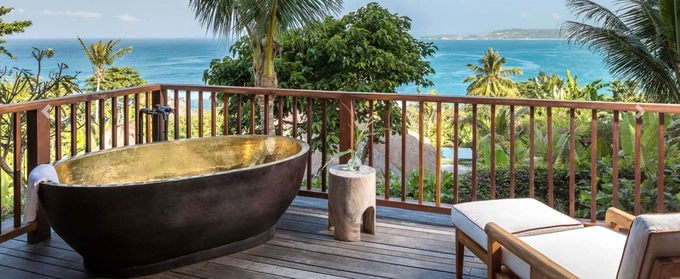
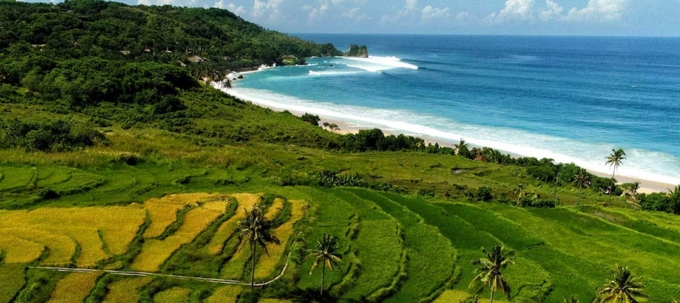
Located on the west coast of Sumba Island, in eastern Indonesia, **Nihi Sumba** offers an experience of **true luxury in nature**. Just a **one-hour flight** from Bali, this remote island awaits you with 567 acres of sprawling **primordial jungle** and **private beaches**. Inspired by **traditional Sumbanese architecture**, the resort features 27 villas designed with **thatched roofs** and **wooden structures**, nestled amidst breathtaking scenery. **
Occy’s Left, a world-renowned surfing spot, is right at your doorstep, making it perfect for those who enjoy surfing or simply relaxing on **beautiful beaches**. However, Nihi Sumba's true charm lies in **more than just being a resort**. It started as a **surfing camp** and still retains its **nature-friendly** and **rustic appeal**. Outdoor showers**, rough stone paths**, surfing, fishing, horseback riding** are still at the heart of it all, but **luxury** is never lacking. All villas feature **private infinity pools** and **teak & marble finishes**, and each villa has a **dedicated host** to ensure your comfort. And there's a strong philosophy of **environmental protection**.
Fresh ingredients** grown in the **organic garden** are used to prepare meals, and **turtle hatcheries** and **water recycling systems** demonstrate a commitment to **sustainable tourism**. Guests can even participate in these activities.
The resort has **three restaurants**.
Nihi Beach Club offers rotisserie and grilled meats, fresh seafood, and the Boathouse Bar for enjoying drinks while overlooking the beach. Ombak Restaurant serves Indonesian barbecue that is simply delicious. And private dinners are also possible, so you can request a perfectly personalized meal whenever you like.
Nihi Sumba's biggest attraction is horseback riding예요. Every morning, you can see horses swimming in the ocean and experience the thrill of riding along the beach. In addition, there are various activities such as yoga, chocolate making classes, and surfing waiting for you. Nihi Sumba is truly a resort where nature and luxury are perfectly combined, making every moment special.
If you want to experience both true relaxation and adventure in nature, this is the place! 🌊🏖️
🔽 Columnist Jo Seong-yeon's article 🔽
Implementing genuine sustainability in the development and operation of hotels and resorts is not an easy task. To become a sustainable hotel, there are many challenges to consider and solve, such as what kind of hardware is needed, what services should be provided to guests, what relationship should be maintained with the local community where the hotel is located, and how to contribute to their lives.
Nihi Sumba is a resort composed of 27 private pool villas with unique designs. The smallest one-bedroom pool villa has an area of 73.5㎡, while the one-bedroom to four-bedroom pool villas range from 158㎡ to 707㎡. The largest villa, the Owner’s Estate, is 5233㎡ in size. From each private pool villa, guests can enjoy breathtaking views of the Indian Ocean and Nihiwatu Beach, while experiencing the warm hospitality of the local Sumbanese people. In addition, Nihi Sumba offers signature programs such as swimming with horses in the ocean and the unforgettable Safari Spa experience.
If you search for Nihi Sumba Resort, you can read various travelogues about luxury resort facilities, breathtaking natural environment, unique programs such as horseback riding on the beach, and butler service starting from the airport. This article will focus on how Nihi Sumba Resort was started, what its development process was like, and what it is doing with the local community.
The Story of Nihi Sumba, Edge of Wildness
It is said that the story of Sumba began centuries ago when the Marapu ancestors, the indigenous people of the Sumba region, settled on a secluded and remote beach. The spirit of the Marapu, who protect the island, plays a role in preserving the historical heritage and long-standing stories of the Sumbanese people, as well as their unique way of life.
The Marapu's quiet island was discovered in 1988 by Claude and Petra Grave, who were searching for perfect waves for surfing. This exploration sparked a vision to create a resort that would share and preserve the beauty of Sumba with those willing to embrace it. The beach named 'Nihiwatu,' meaning 'Mortar Stone,' got its name from the early settlers who saw the shape of rocks carved by the waves. The Grave couple named the resort Nihiwatu Hotel, reflecting the island's history.
In 2012, Christopher Burch*, a renowned American brand entrepreneur, heard about Nihiwatu Hotel's natural beauty and its search for investors to expand the resort. The following year, Burch visited Sumba, and this trip led him and McBride** to acquire Nihiwatu Hotel. This acquisition resulted in significant investments, which allowed Nihiwatu Hotel to evolve into Nihi Sumba Resort, one of the world's best resorts known for its harmonious relationship with the natural environment and the Sumbanese people. Readers of <Travel+Leisure> voted Nihi Sumba Resort as the number one hotel in the world across all categories, earning it the World Best Awards in 2016 & 2017.
--------------------------------------------
Christopher Burch, Owner of NIHI
Chris Burch is the owner and founder of Burch Creative Capital and has been an active investor in various industries for over 40 years. He is also a former board member of Tory Burch, Guggenheim Capital, and Cortinuum Group, and served as the CEO of Pierre Hotel.
James McBride, Partner & CEO, NIHI
James McBride, recipient of Hotel magazine's Independent Hotelier of the World award, is a global hotelier with 25 years of experience leading world-class hotels.
--------------------------------------------
This is how Nihi Sumba started, and it also looked at the two main characters who created what the resort is today. There's an important organization that helps run Nihi Sumba and ensures the sustainability of the Sumba community. The Sumba Foundation was established alongside the development of Nihi Sumba, and projects were launched to actively address the community's problems, such as chronic poverty and disease in Sumba.
The Sumba Foundation
1. Beginnings
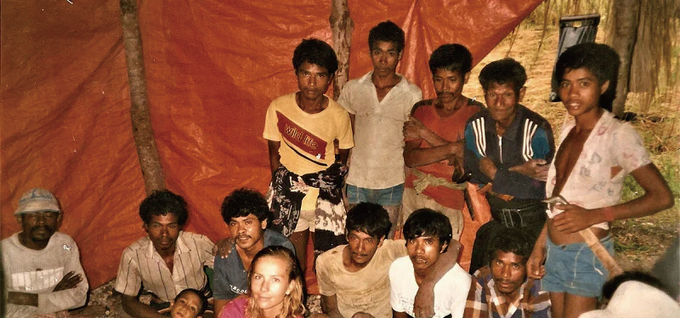
In the early 1990s, Claude&Petra Graves lived alongside the islanders during the initial development of Nihi Sumba. At that time, there was no proper capital, electricity, or even a hospital, and they contracted malaria several times. Claude&Petra Graves decided to find a way to address the serious problems their local neighbors were facing, such as lack of clean water, poor sanitation, malaria, malnutrition, lack of access to medical facilities within a day's reach, and inadequate educational facilities. The means they chose to use for the community was Nihi Sumba. Claude&Petra Graves started a project to receive help from hotel guests to support the local community around the hotel.
In 2001, they met Sean Downs, a guest at Nihi Sumba, who was looking for a more meaningful way to live his life. Sean was impressed by the Sumba Foundation's business plan and decided to help them, leading to the establishment of the Sumba Foundation soon after. The foundation was established as a private, non-profit, and non-governmental organization with the aim of alleviating the burden of poverty on the people of Sumba.
2. Partnership
A miracle began with the participation of hotel guests. Guest support has been and continues to be the foundation for the success of the Sumba Foundation from its inception. Guest donations are directly channeled into specific project fundraising, and donors often get involved in projects themselves. These activities make a trip to Nihi Sumba more worthwhile.
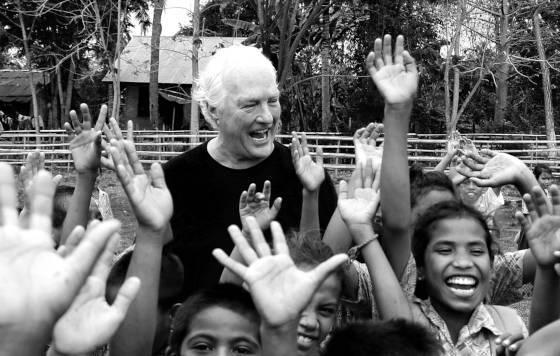
The main role of Nihi Sumba in alleviating poverty in the Sumba region was to become an economic engine for the island of Sumba. Since employment was the most urgent issue for the communities on Sumba Island, who were living in very harsh conditions, the hundreds of jobs created along with the development of the resort became a momentum for their economic growth. The case of the Sumba Foundation and Nihi Sumba is evaluated as a model of collaboration between non-profit organizations and for-profit organizations to eradicate poverty, and won the Tourism for Tomorrow Award in 2007, known as the 'Oscar' in the tourism industry by WTTC (World Travel and Tourism Council). It also won the Gold Award in 2008 from PATA.
3. Philosophy
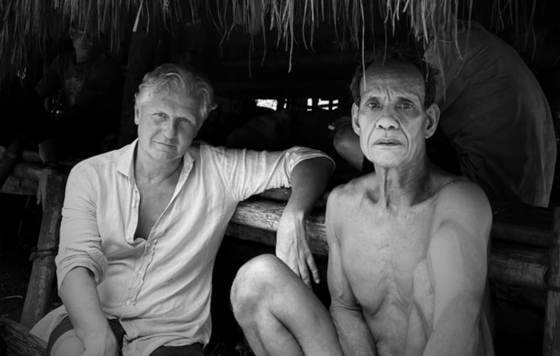
The foundation's support philosophy is not simply to solve problems through financial assistance, but to enable the islanders to become self-sufficient. The understanding based on field experience of the lives and cultures of the islanders has been built up over 30 years and has formed the basis for carrying out the foundation's projects. During this period, the foundation closely observed the islanders' way of life and provided consulting services to meet their most pressing needs and aspirations. Furthermore, anthropologists, foreign volunteers, and specialized support staff were deployed, and government-related information was also gathered to ensure the sustainability of these projects.
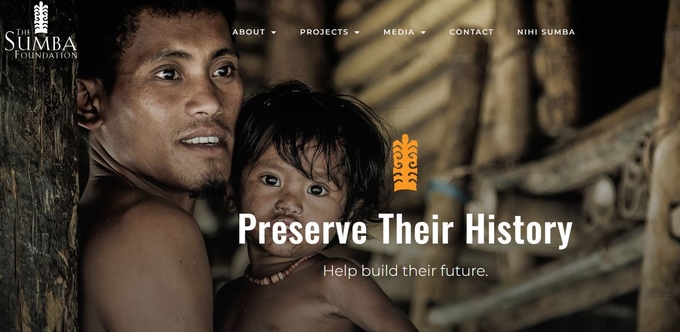
The Sumba Foundation confirms that small projects based on careful planning and effective spending can produce the best results. Furthermore, all activities of the Sumba Foundation are based on the belief that the most effective approach is to start from our lives and our hearts. This means that we, as members of the human community, have a responsibility and obligation to live in the same era. Therefore, the Sumba Foundation's activities are also in line with the UN's Millennium Development Goals, which is a pact for the global community.
4. Impact
Since its establishment, the Sumba Foundation has grown to cover an area of approximately 575 square kilometers in western Sumba, impacting the lives of tens of thousands of local residents and improving their well-being. Through project support such as water sanitation, health and nutrition care, hygiene environment improvement, and educational facility construction, the daily lives of approximately 45,000 local residents have been improved.
In addition to the western Sumba region, which the Sumba Foundation has focused on supporting, it is also helping thousands of Sumbanese people living in other parts of Sumba through various collaborative projects. Furthermore, it is implementing future-oriented support for Sumba's future generations, including better educational institutions and support for new technology education, as well as creating small business opportunities and jobs.
Nihi Sumba Resort is specifically informing travelers visiting Sumba Island about the benefits they can bring to local residents. As a member of Pack for a Purpose*, Nihi Sumba Resort suggests the following items that travelers visiting the resort can bring to help the communities they are visiting.
• General School Supplies : Backpacks, erasers, pencil sharpeners, pencils, pens, rulers, writing & drawing books
• Sports / Outdoor Activity : Badminton sets, ball pumps, soccer balls, volleyballs
• First Aid / Health : Bandages, emergency medicine, magnifying glasses, toothbrushes, toothpaste
• Clothing / Shoes : New or clean baby clothes (under 1 year old, 1-5 years old), baby blankets, new underwear (1-5 years old)
--------------------------------------------
Pack for a Purpose is a coalition of travelers who aim to make a lasting positive impact on the communities they visit. Travelers can share a portion of their luggage space with needed items for schools and hospitals in the communities they are visiting, believing that this small act can have a significant impact on the lives of local residents and children.
--------------------------------------------
Nihi Sumba Boutique
The hotel operates a boutique store that sells specialty products from Sumba Island. The IKAT sold in the boutique is a product made with traditional weaving techniques from Sumba Island. Nihi Sumba Resort not only operates the boutique store but also builds a platform for IKAT production and distribution, providing a livelihood for women who support their families through weaving.
Sumba IKAT Tote Collection
Sumbanese IKAT is a unique and beautiful textile that has been passed down for centuries in Sumba, Indonesia. IKAT textiles have been used in traditional ceremonies such as weddings and funerals, and are also used as everyday wear, to decorate homes, or as gifts.
IKAT is a traditional method of dyeing threads before weaving the fabric, and each piece of fabric creates a complex and unique pattern. To make IKAT, various natural materials such as cotton, silk, and wool are used, and a handcrafted process using natural dyes extracted from trees and flowers is followed before being woven on a loom. The process of creating these beautiful textiles is time-consuming and labor-intensive, with each IKAT taking about three months to complete, reflecting the unique stories of the women who create them.
As the talent for traditional IKAT textiles became recognized, it provided opportunities for economic empowerment and self-sufficiency for Sumbanese women and girls who were previously marginalized. Nihi Sumba Resort provides a platform for these talented artisans to showcase their chic, functional, and versatile products to customers, helping them support their families.
We have looked at the initial development story of Nihi Sumba Resort, the establishment of the Sumba Foundation, and their ongoing efforts to coexist with Sumba Island. Their commitment to preserving the Sumbanese environment and fostering relationships with local communities has been instrumental in securing a high-quality hotel service workforce and positioning them as a luxurious resort nestled in breathtaking natural surroundings. As a result of these efforts, Nihi Sumba Resort has become a choice destination for discerning luxury travelers seeking meaningful experiences, while also establishing itself as a global leader in responsible tourism. Their genuine approach to sustainability has enabled them to carve out a unique position as a hotel that combines luxury with sustainability.