I talked about household accounts before the weekend, and I actually implemented it. It's hard to say it's 100% yet, but I've created it so I can separately manage basic household accounts (personal), sole proprietorships, and corporate businesses, and I've set it up to allow juggling. (?)
And the characteristic of this household account is that you create a family group and invite people to collect each person's Excel, text messages, etc., gathering all data from cards, bank accounts, securities companies, and so on. By using the Hermes agent's functionality, you can basically use the agent's skills as-is. And if you customize those skills for your household and have conversations, it becomes your own household-specific account.
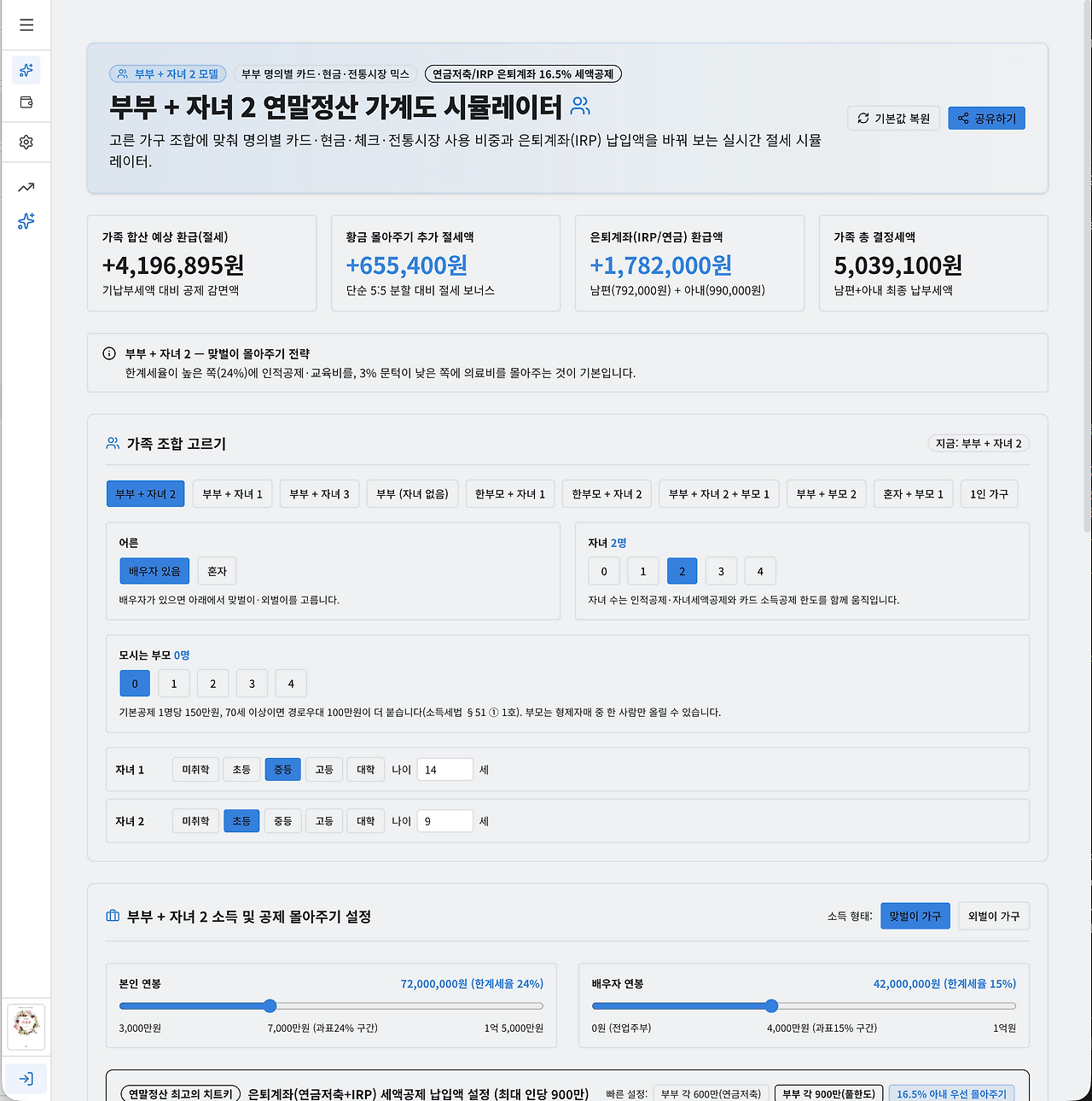
First, with the simulator, if you select couples (single parents) + children (students) + grandparents, etc., it tells you how to advantageously change your spending. These days, as card usage ratios decrease, you'll need to pay attention to transitioning to cash, debit cards, and traditional market gift certificates starting in October. It would be good to simulate who you should prioritize for deductions as well.
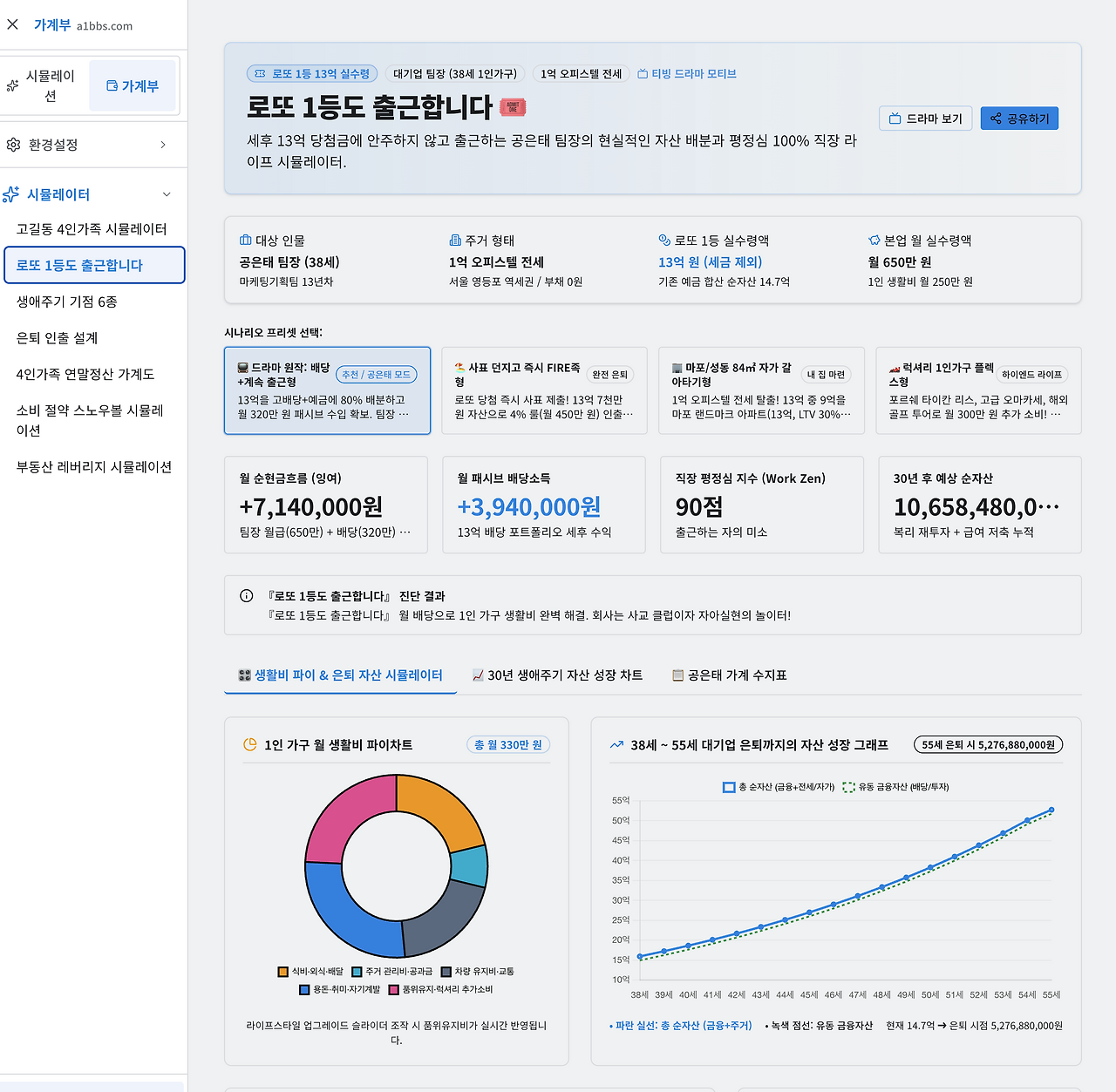
For fun, I've also created scenarios for lottery first prize winners. If you're the protagonist, I've created ideas on how to use a 1.3 billion won lottery prize to build wealth while saving on taxes through real estate investment, savings, or high-yield investment products for the future. Of course, you should view it for fun. After all, I don't buy lottery tickets anyway =3=3=3
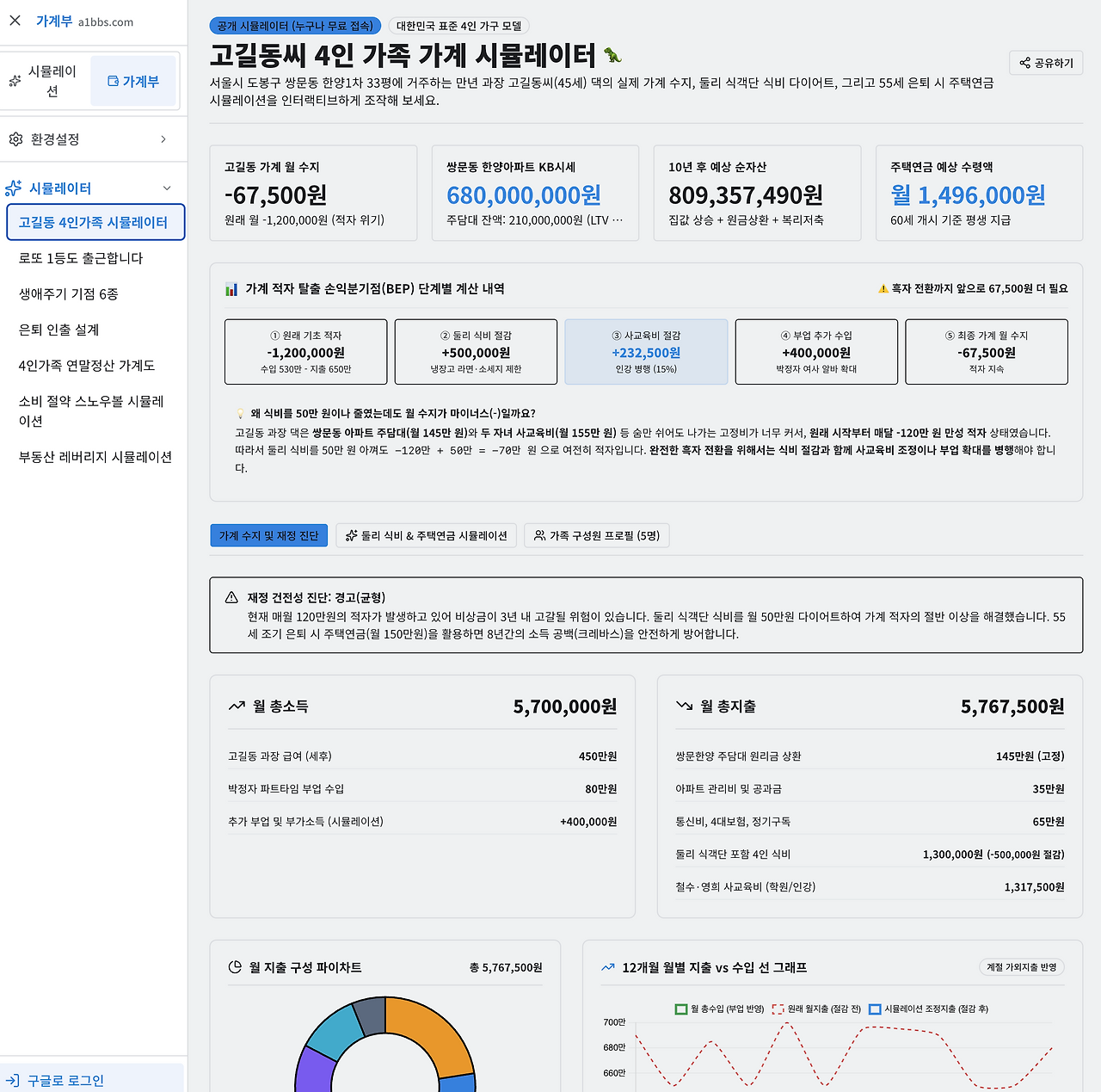
What happened to Go Gil-dong's Ssangmun-dong house—that house which is destroyed by Dooly and friends every time has by now been redeveloped and converted into an apartment. But the money spent on solving children's troubles as they grew has become partially debt, and in a scenario with a mortgage loan, there's the burden of two children's private education fees and household living expenses... I created a simulator to see how to prepare for retirement. This is also for fun, but for the Ssangmun-dong apartment, I used KB Bank's real estate transaction information.
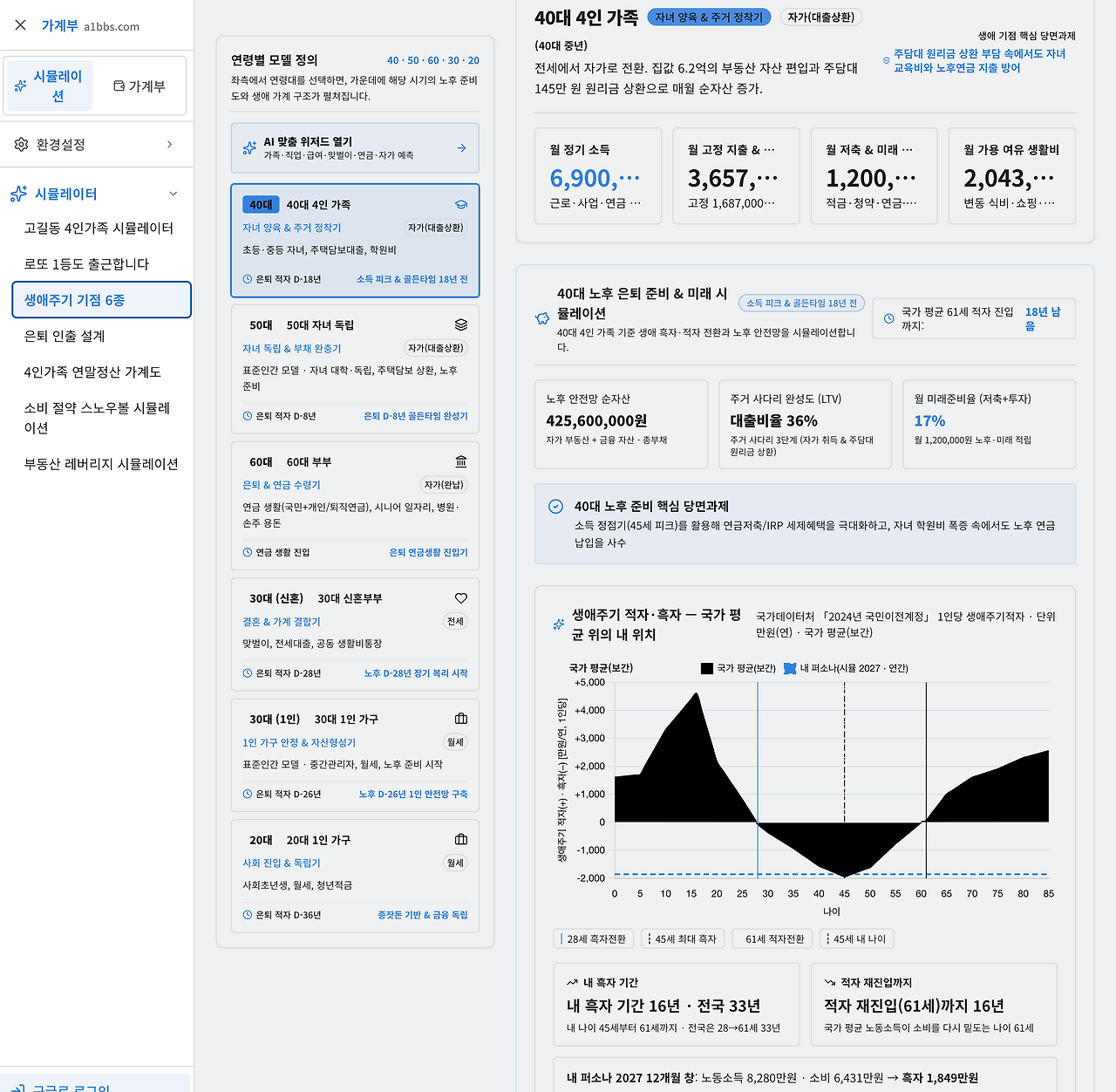
As for the six types of life cycle turning points I mentioned, in this section you can check the proportion when you have children versus when you don't, based on actual national data and average data of citizens' life cycle income.
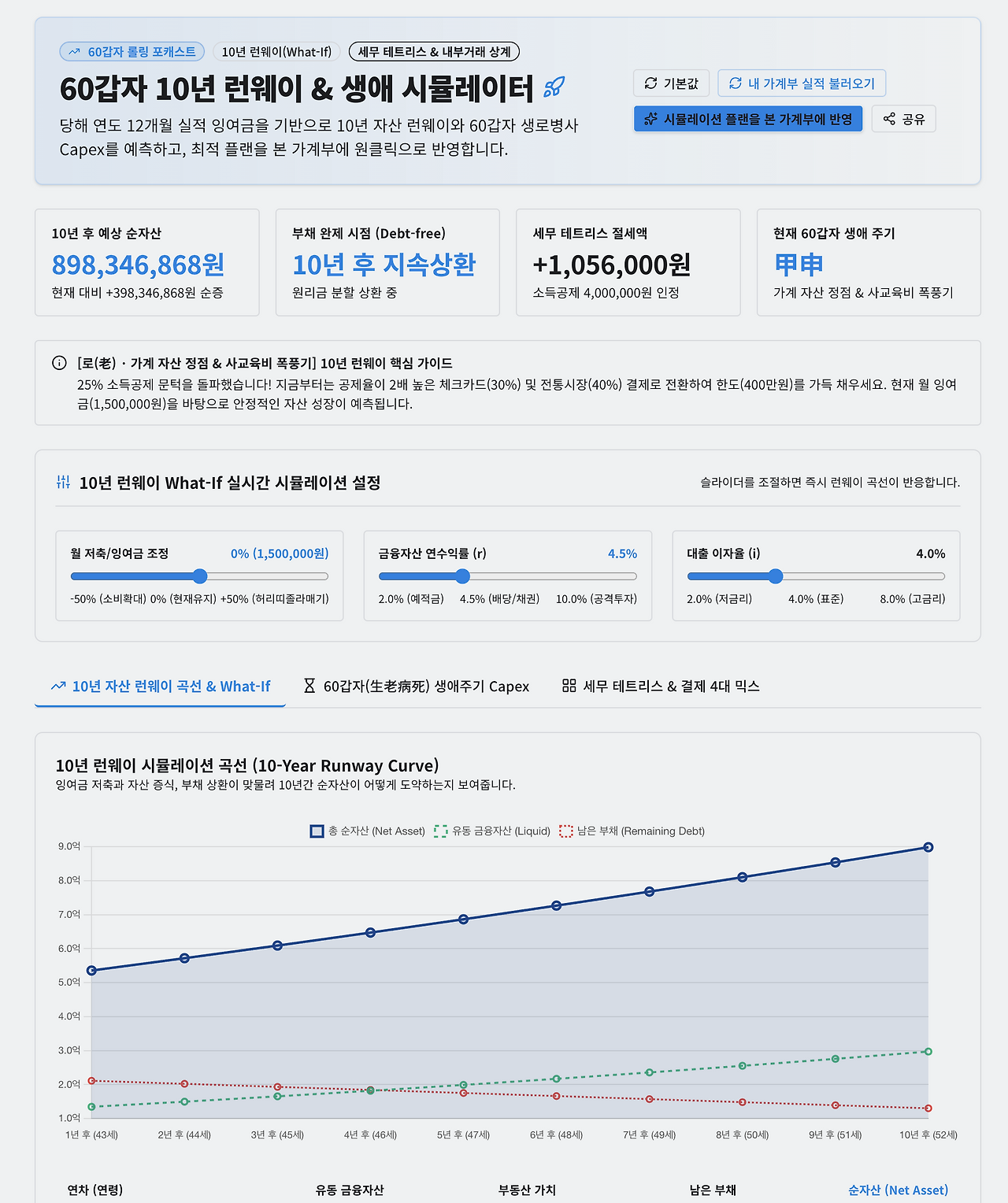
The 60-year 10-year runway life simulator lets you see the flow of money based on birth, aging, illness, and death, and you can practice setting aside earnings from the remaining life ahead and, when you get sick, put everything in literally to play tax Tetris.
I created most of it as a simulator first, and now I've left the investment part remaining. In fact, I'm trying to encompass the households of people who run small shops, individual companies, and corporate businesses in their life journey.
Development was done primarily with DeepSeek v4.1 flash at minimal cost, and I also created it with Gemini 3.8 flash. I just combined the two and run it when I have time, and the production is not starting from zero since I attached the household account section to an existing ERP I had made. There are ongoing updates, and since household accounts use financial information which is personal data, I plan to deploy it as an application that stores nothing on the server.
Since the simulation doesn't contain personal information, you can test it on the web. For various investments, it will be a dashboard that collects and shows only results, and I plan to keep only reflection records at the level of writing a diary.
After consistently making paper household accounts for the past 16 years, this time I've created an (-) expense app, and I will make apps for each function such as pets, cats, household accounts, etc., and deploy as quickly as possible.
I'll create simple functions with inexpensive AI, and since the functionality is confirmed, I'll have people design it and customize it so control can be given through the app and Hermes Agent skills to become a household account suited to each person.
https://a1bbs.com/lotto