
Since this is a translation of an overseas article, there may be some inaccuracies.
TCL Retreats from OLED Strategy and Readopts LG Panels; ASUS Discontinues Use of BOE Panels
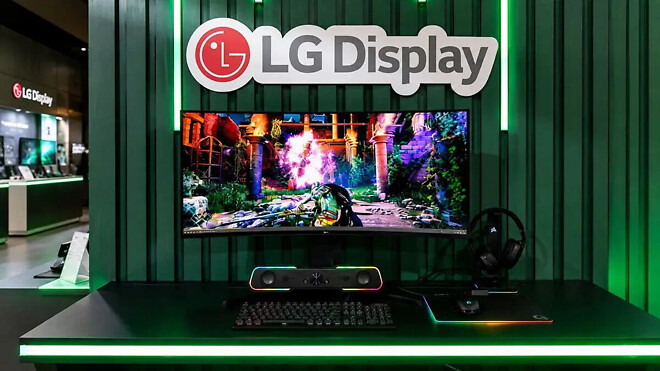
A significant shift has been detected in the Chinese OLED market. TCL CSOT and BOE, which previously dominated the LCD market, have aggressively pursued LG Display and Samsung Display in the OLED market. However, recent news from Korea suggests a reversal of this trend.
On one hand, TCL has chosen to use LG Display's Tandem WOLED panels for its new 27X3B and 32X3B monitor models, despite owning its own panel manufacturing subsidiary, TCL CSOT. On the other hand, ASUS tested BOE's new OLED panels in its gaming monitors but completely withdrew from using them after just one month.
ASUS' case is particularly noteworthy. The company initially planned to produce thousands of units of its OLED panel-equipped product to test market response and performance. However, production was halted before reaching 300 units. Key reasons cited include manufacturing yield, quality, and supply stability issues.
TCL, Which Owns Its Own OLED, Ultimately Selects LG Display Panels Again
TCL's case is particularly interesting. Just a few weeks ago, TCL CSOT announced the mass production of 27-inch 4K 120Hz RGB stripe OLED panels using inkjet printing technology at its 5.5th generation production line in Wuhan. This was considered one of TCL's key technologies for establishing itself in the OLED market.
However, TCL has decided to use LG Display panels again for its new 27X3B and 32X3B monitor models. Both models utilize 4th generation Tandem WOLED panels.
-- TCL 32X3B: Supports 240Hz refresh rate at 4K resolution and 480Hz refresh rate at 1080p resolution
-- TCL 27X3B: Supports 1440p resolution and 280Hz refresh rate
-- Common specifications: Provides a maximum peak brightness of 1,500 nits and 99.5% DCI-P3 color gamut coverage
TCL has not completely discontinued its inkjet printing OLED project. Self-developed panel development is still underway and currently in a small-scale mass production stage. The strategy of relying on LG Display appears to be adopted until the technology fully matures and reaches commercial scale, with key factors being product yield, stable production capacity, and a diverse panel portfolio.
ASUS and BOE: Production Halted After Approximately 300 Units
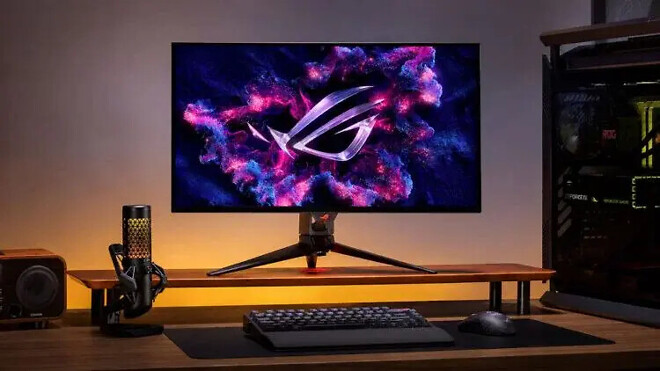
ASUS' decision is even more drastic. In June, ASUS began introducing BOE OLED panels as part of a dual sourcing strategy for its 24.5-inch esports monitor. The initial plan was to produce thousands of units by using both LG Display and BOE panels.
However, this attempt ended abruptly after just one month. According to industry sources, ASUS halted OLED panel supply from BOE after producing only about 300 units. Issues with yield (Yield), quality (Quality), and supply stability (Supply Stability) arose.
Considering that BOE has made significant investments to enter the WOLED market and challenge LG Display's long-standing dominance, this incident carries significant implications. TCL CSOT is also continuing to develop its inkjet OLED technology, indicating that Chinese manufacturers have not given up on vying for OLED leadership.
However, LG Display has once again proven that producing high-performance OLED panels suitable for premium commercial products requires more than just possessing the technology. It necessitates stable and large-scale mass production of high quality.
▶ Source: https://www.avpasion.com/tcl-marcha-atras-oled-vuelve-lg-display-asus-boe/