
Original Summary
Recent data shows that the Earth's sea surface temperature has reached a record high. This is due to a combination of human activity-driven climate change and the El Niño phenomenon. Notably, the average sea surface temperature reached 21.1°C, surpassing last year's March record. Scientists warn that this rise in sea surface temperature could intensify extreme weather events, contribute to sea level rise, and negatively impact marine ecosystems.
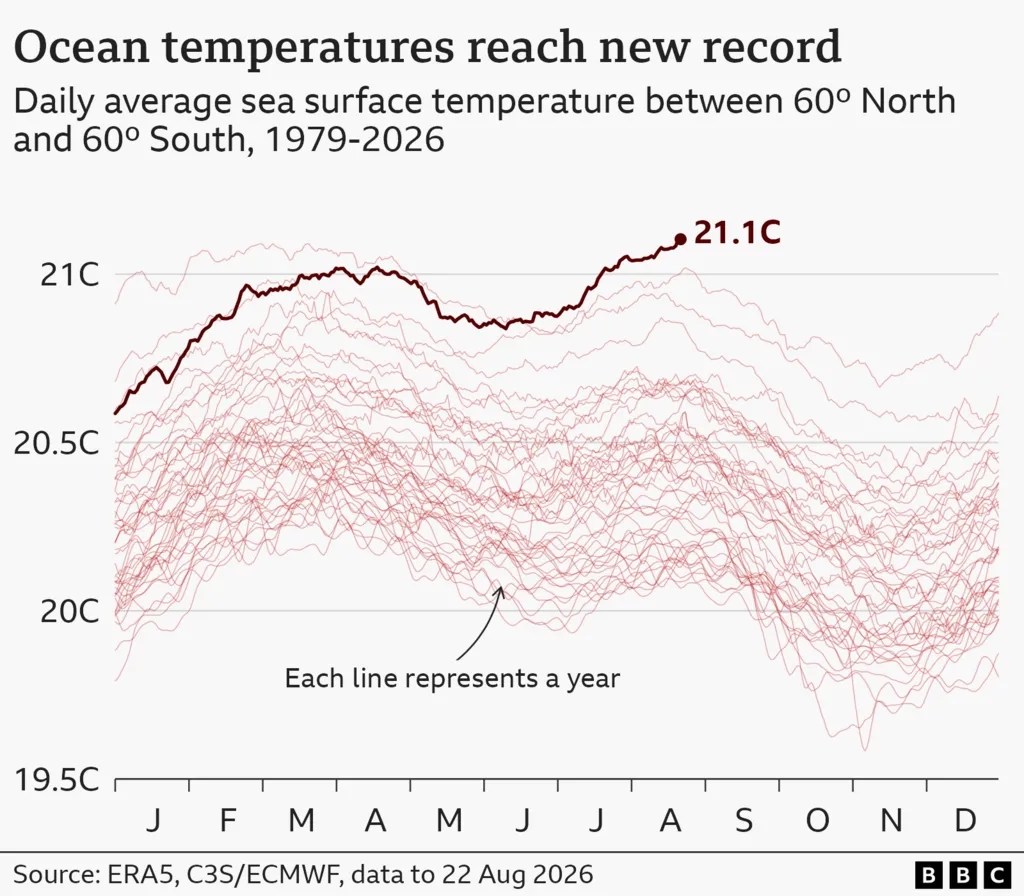
Key Points: The average surface temperature of the world's oceans, excluding polar regions, reached 21.1 degrees Celsius on Saturday. This is a record high, slightly exceeding the 21.09 degrees recorded in March 2024, according to data from the European Copernicus Climate Change Service.
Why is this significant?
Sea temperatures typically peak in March or April, the end of the Southern Hemisphere summer. This record being set in August is unusual. (The Southern Hemisphere has a larger ocean surface area and therefore exerts a greater influence on the average).
Furthermore, this is happening before El Niño reaches its peak. El Niño is expected to continue strengthening until Christmas and scientists warn that it could be the strongest El Niño in centuries.
Dr. Jeremy Grist of the National Oceanography Centre: "The fact that records are already being broken shows us how strong El Niño is becoming". Another record is expected in March or April 2027.
Causes
A combination of human-caused climate change and El Niño. Samantha Burgess, Deputy Director of Copernicus: "El Niño is adding heat, but it's on top of decades of accumulated anthropogenic warming".
Oceans absorb more than 90% of the excess heat trapped by greenhouse gases.
Impacts
Intensification of extreme weather (storms are fueled by moisture and energy), increased sea level rise and coastal flooding risk, destruction of marine ecosystems such as coral reefs.
Seas near the UK and Europe are also extremely warm. The western English Channel has been in a state of marine heatwave for more than three years, with temperatures up to 7 degrees Celsius higher than average in July. Professor Tim Smyth of Plymouth Marine Laboratory describes this as "unprecedented".
Data Source: Sea surface temperature at a depth of 10 meters is measured using buoys, ships, and satellites. The article acknowledges that the record difference is very small and there is some uncertainty in the estimates.
▶ Original source: https://www.bbc.com/news/articles/c62m4gpnp78o