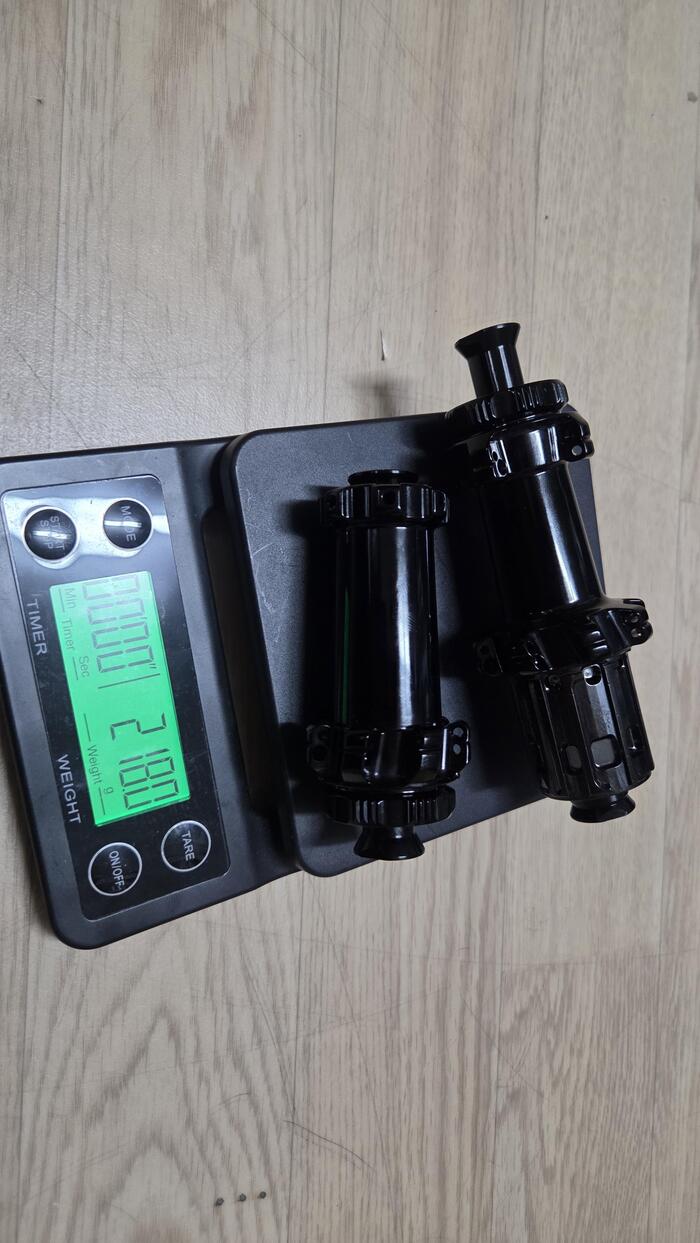
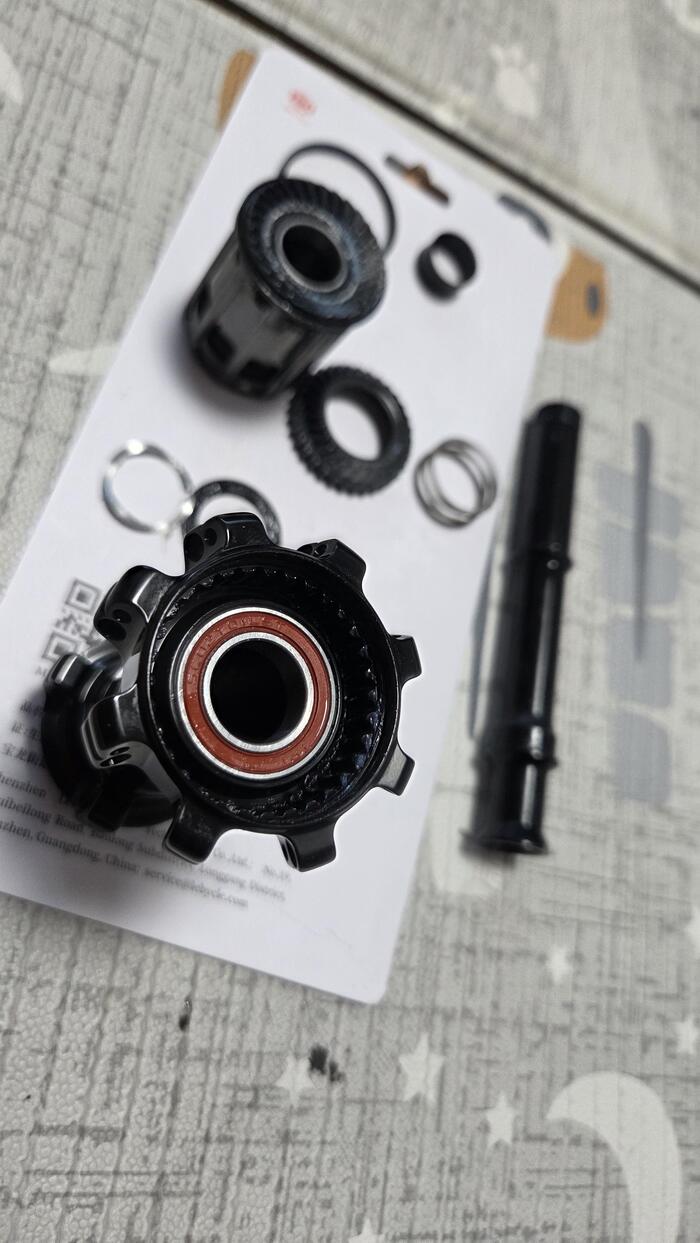
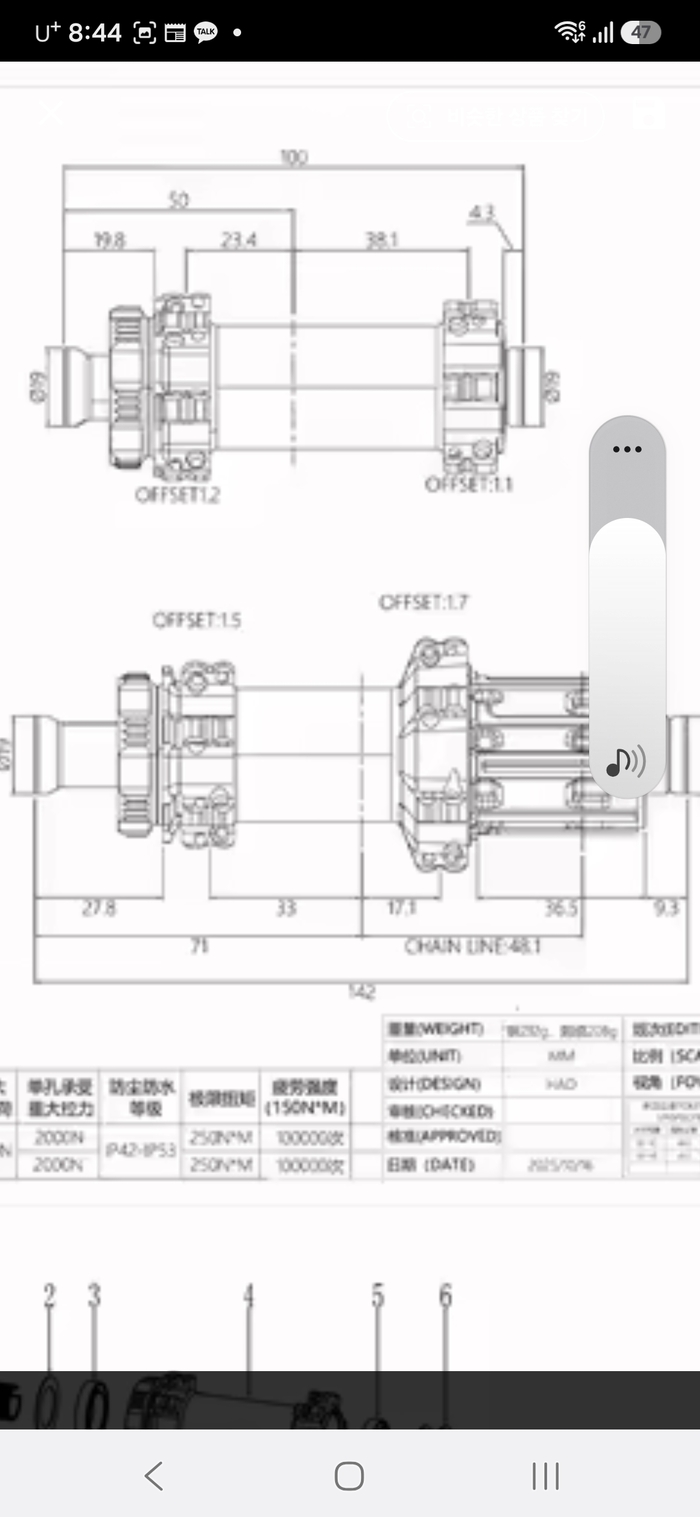
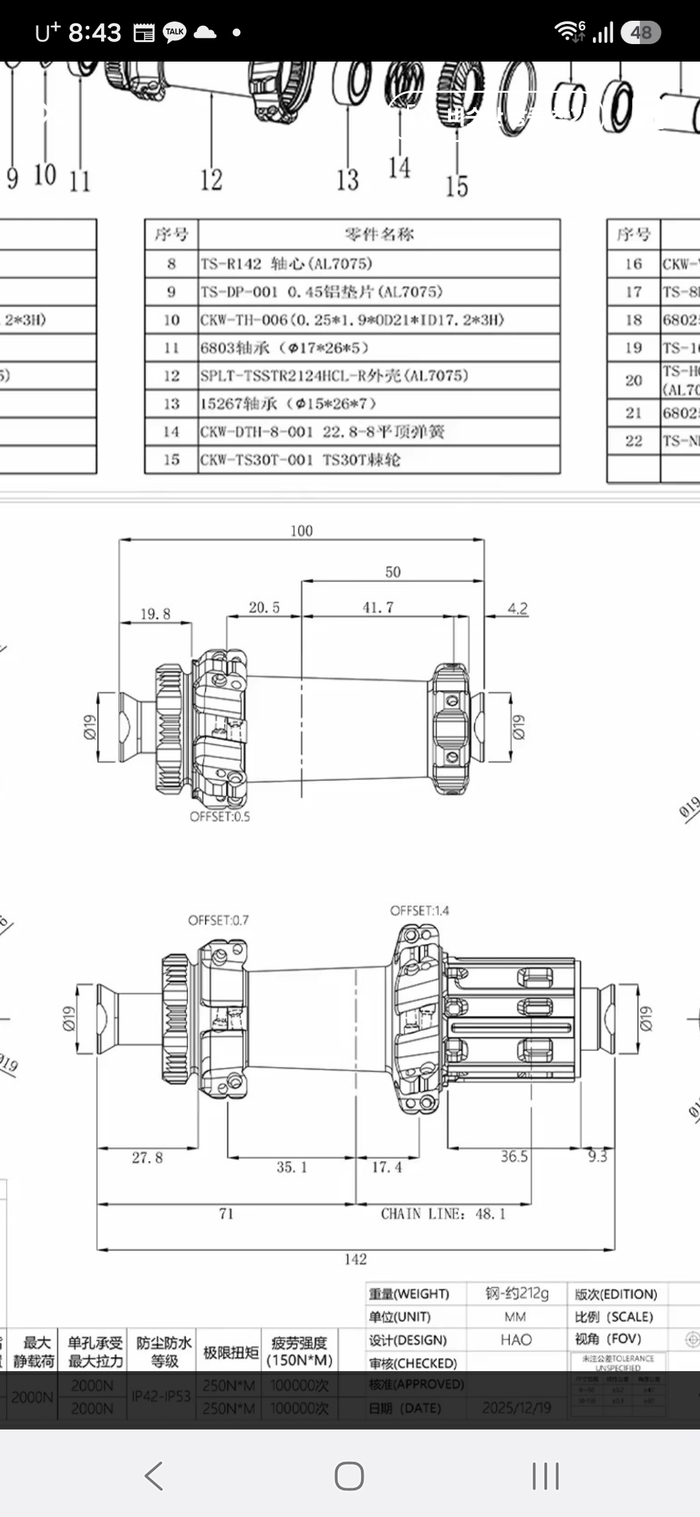
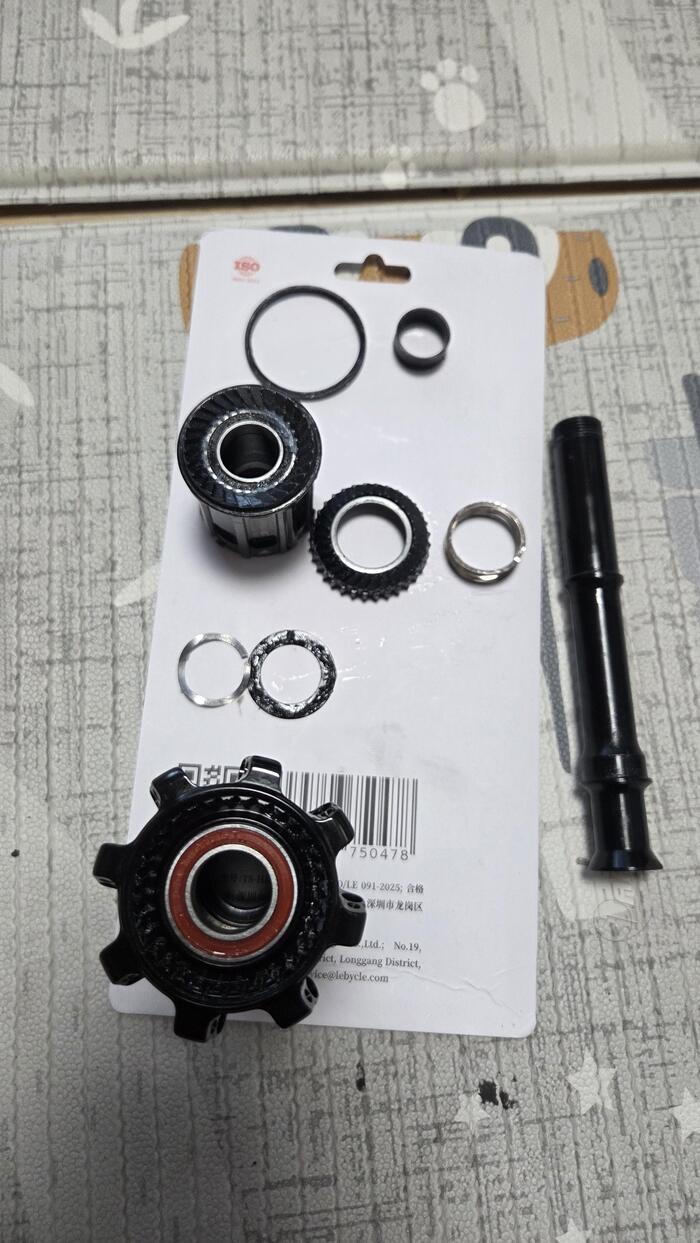
This is a second improved version of the hub, which came out around the beginning of last year. The ratchet side has been improved, and the geometry of the hub shell and spoke pattern have been modified.
I was interested from the beginning because it was a lightweight hub with an interesting ratchet structure. However, the initial model had problems with ratchet skip and breakage, so they released an improved ratchet with a modified water-holding groove and direction.
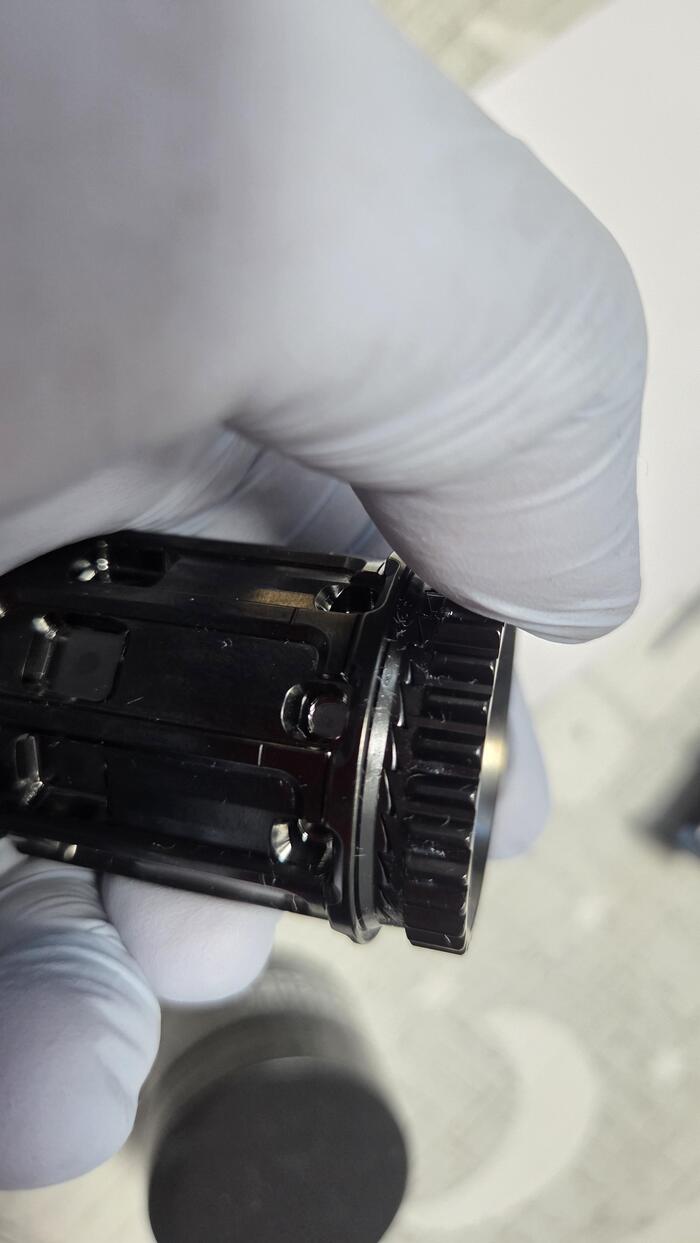
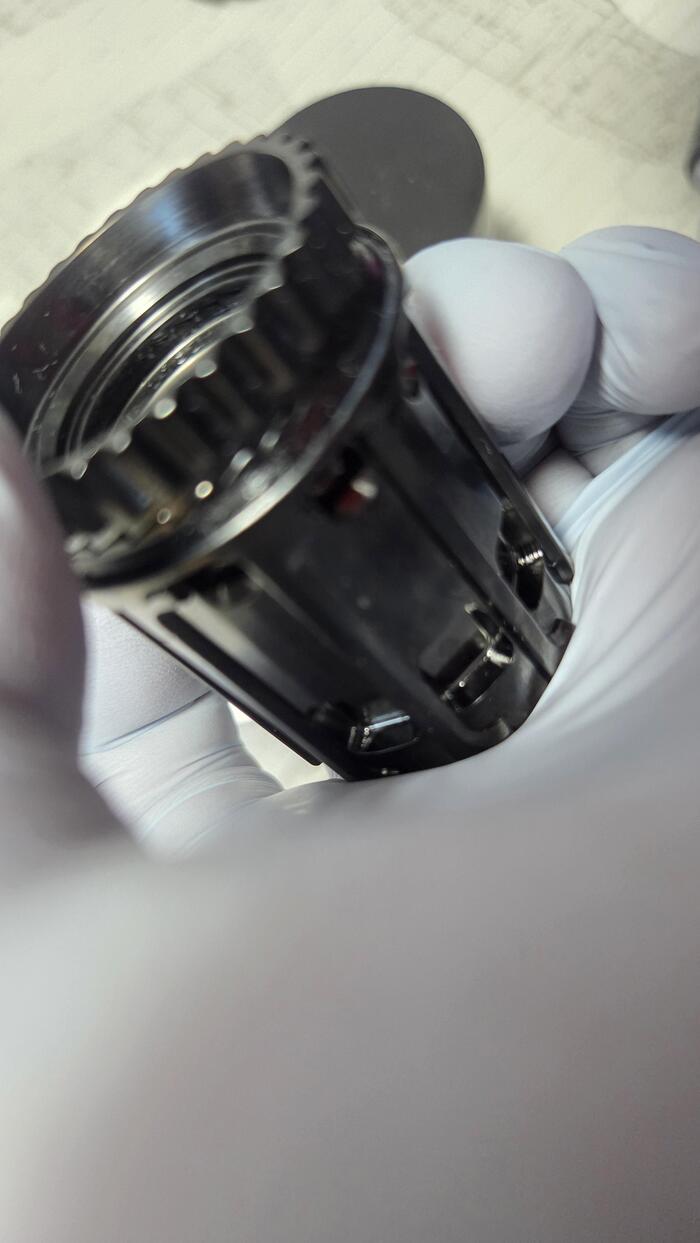
Unlike the initial model without separate treatment, the improved model has a concave gear on the freebody side. The ratchet is helical geared like a diagonal cut, so the contact area is wider. When force is applied, the center automatically aligns and locks tightly like a screw.
The contact surface also has a strong, smooth coating to reduce ratchet wear.
As a third improvement, the geometry of the hub shell has changed. The spoke pattern has changed from a 1:1 pattern to a 2:1 triplet, and the spacing between hub flanges is wider by about 2mm on the rear side and 1mm on the front side.
The gap between the front disc and the rear disc and the drive non-drive gap are also close to 2:1, so the spoke tension ratio will likely be close to 1:1.
The PCD, which represents the flange diameter, is also about 1mm larger overall compared to the old model. The hub body is thicker on the disc side in the front and the sprocket side in the rear, improving torsional rigidity in the areas that receive the most force.
It's similar to DT hubs, but the axle structure is different, so you need two 17mm wrenches to disassemble it.
From a maintenance perspective, it's not ideal because the lightweight design makes it difficult to securely grip the 17mm wrench.
The front bearing uses a 6803 on the disc side and a 6802 on the non-disc side. The disc side has a larger diameter bearing. Both front and rear hubs have wave springs for backlash compensation, so separate backlash adjustment is not required.
Overall, I don't have any major complaints, but I wish the design of the wrenching part of the end cap was different.
The shape of the parts suggests that it shouldn't be tightened too much, unlike typical hubs which are usually tightened by about 10nm. However, it seems like 5-6 turns of tightening are necessary. The design makes it inconvenient to apply force.
It doesn't seem like you can use a regular cone wrench, and you'll probably need to prepare a separate 17mm open spanner with a wide contact surface.
It will take another 3-4 weeks to receive the rims, but since the hub arrived first, I'm writing this post.
By the way, the weight limit for this hub is stated as 80kg system weight. Interestingly, although Riet sells complete wheels and individual hubs with this hub, they don't explicitly state a separate weight limit.
I hope this information is helpful to those who are interested.