7/29 US Stock Market - Fed Concerns Amidst Energy's Rise, Industrial Stocks Plummet...Earnings Season Volatility Expands
July 29, 2026 Market Analysis
## 1. What Happened Today
Looking at the figures, the mood becomes apparent. According to unofficial indicators, the S&P 500 closed down approximately -0.3%, the Dow -1.4%, and the Nasdaq 100 around -0.2%, marking a mixed decline. (reddit.com)
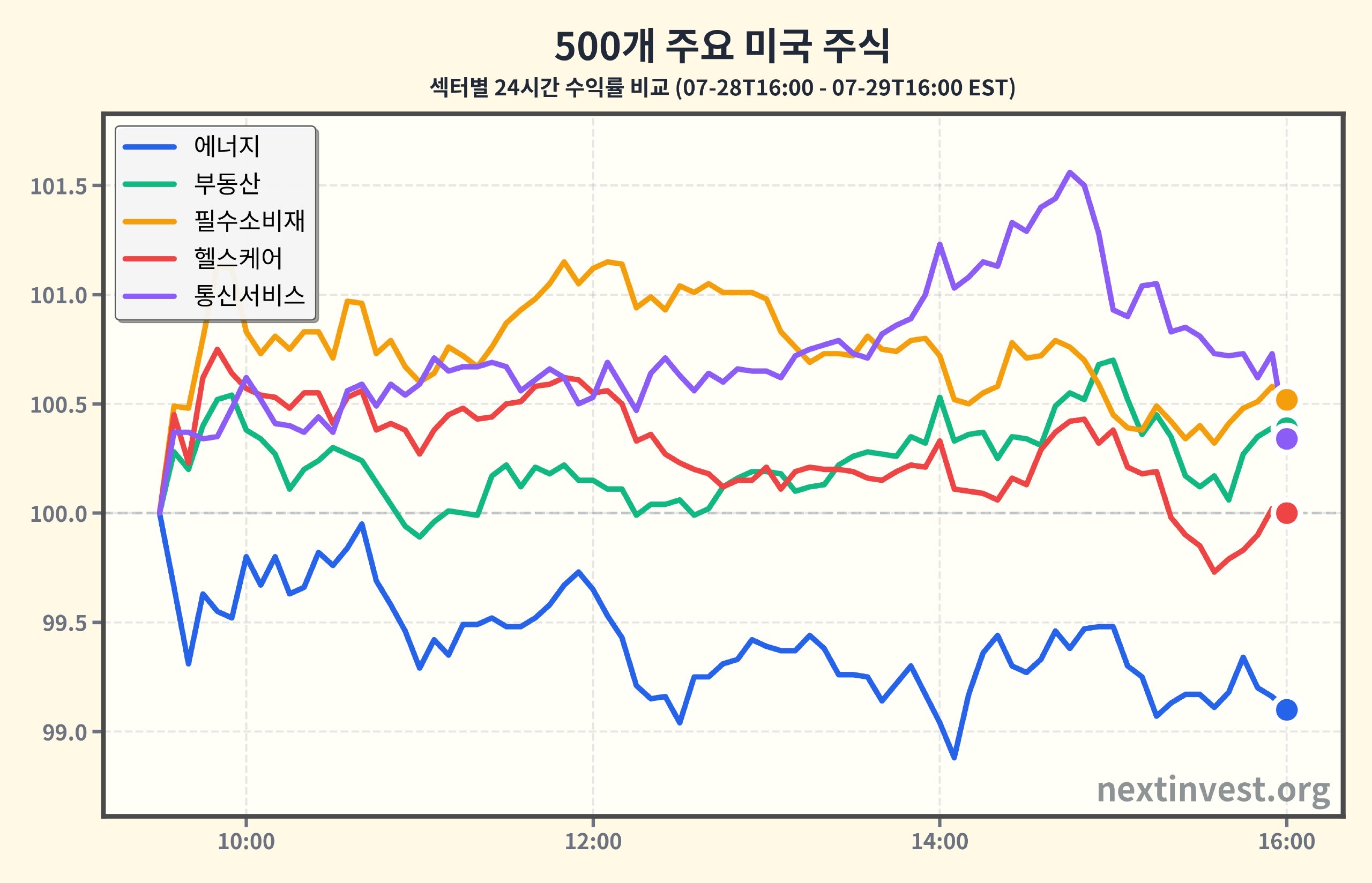
Only 3 out of 11 sectors ended in the positive.
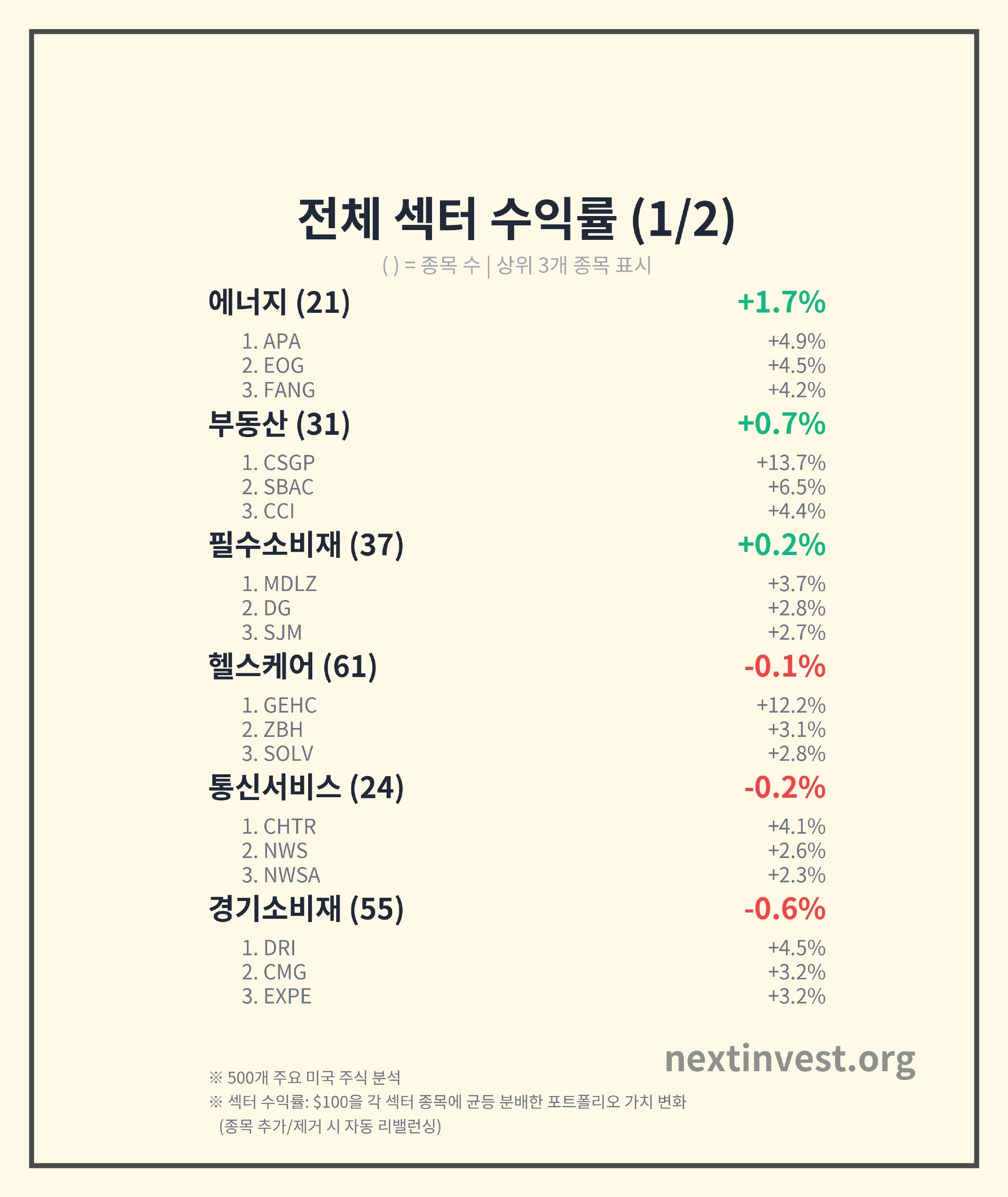
- Energy: +1.70% (Leader)
- REITs/Real Estate: +0.66%
- Consumer Staples: +0.15%
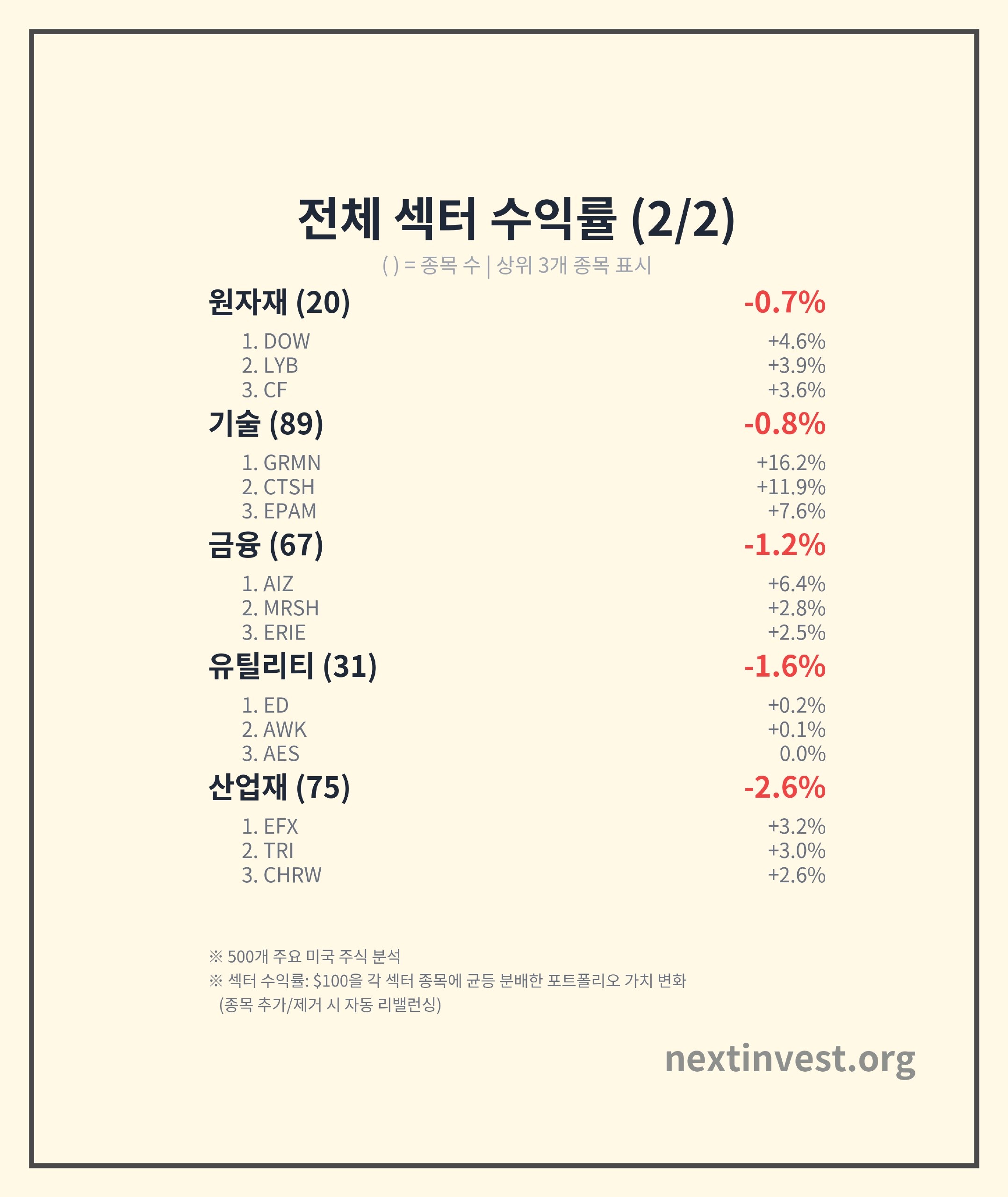
- Weakest Performers: Industrials -2.63%, Utilities -1.56%, Financials -1.23%
Overall, the market sentiment leaned towards "weakness," but rather than a panic-driven collapse, it was more of a day characterized by "avoidance and rotation."
Three main factors underpinned this backdrop:
1. Concerns over the Fed meeting and interest rate path – With Treasury yields already significantly elevated, there's a growing perception that the Fed might be "less dovish" than anticipated. (brecorder.com)
2. Rotation from Mega-Cap/AI Dominance to a Broader Market – Funds are flowing out of some large tech stocks and semiconductors, diversifying into sectors like financials, healthcare, and real estate. This trend has become more pronounced since July. (ig.com)
3. Earnings Season Volatility – Individual stocks like Garmin, Cognizant, CoStar, and GE HealthCare experienced double-digit surges, while Lennox plummeted around 20%, highlighting significant temperature differences across sectors and individual stocks. (kiplinger.com)
The takeaway for investors is this: rather than a simple "stock market crash," the current environment is characterized by extreme variations in returns depending on where you're positioned.
---
## 2. Energy: Short-Term Rebound, Still a "Volatile Leader" in the Long Term
The energy sector led the pack today with a +1.70% gain. Individually, APA, EOG, and FANG surged over 4%, driving the index higher.
### 2-1. Why Did It Rise?
Global news reports suggest that renewed concerns about supply disruptions due to a new attack involving Middle Eastern oil producers led to a surge in oil prices. Some media outlets are reporting that the recent period of tension easing has been broken, and "issues surrounding the Strait of Hormuz (Hormuz Strait) are resurfacing."
- Crude Oil Inventory: API weekly crude oil inventory unexpectedly increased significantly (3.296M vs consensus -2.5M), but the market reacted more to geopolitical risks and potential future supply disruptions than short-term inventory levels. (reddit.com)
- Interest Rates and the Fed: The rise in oil prices could fuel inflationary pressure, leading some investors to worry that "the Fed might deliver a more hawkish message." Today's slight increase of 3bp in the 10-year Treasury yield can be viewed within this context. (reddit.com)
### 2-2. Energy in a 7-Day and 60-Day Perspective
- Recent 7 Trading Days: After experiencing fluctuations of -0.05%, +0.27%, -2.41%, and -1.36% since July 22nd, energy rebounded by +1.70% today. This appears to be a technical and news-driven bounce back following two consecutive days of significant declines.
- 60-day trend: The energy portfolio, which started at 100 in early May, fell more than 10% by July 1st, rebounded to 98.93 in early July, and then fell again to 96.83 (total return -3.17%). The current period (7/23~) is estimated to be down -2.12%.
In summary, today's rebound is characterized by "oil news + short-term overselling," and the point is that it is still difficult to say that a clear upward trend has returned in the medium term.
Meaning to me:
- For investors who have already significantly increased their energy exposure, today's spike can be seen as an opportunity for risk adjustment (partial profit realization).
- For those who have little or no energy exposure, it may be more conservative to wait and see the reaction of oil prices and bonds after the Fed meeting rather than rushing into a buying opportunity.
---
## 3. Industrials·Utilities: A day when interest rate and economic concerns converged
Industrials (-2.63%) and Utilities (-1.56%) were the hardest hit today.
### 3-1. Industrials: Lennox shock and economic sensitivity
- Lennox International (LII), a leading HVAC company, plunged about -20%, casting a shadow of concern over the entire industrials sector regarding construction and equipment demand slowdown. A decline in the -20% range is observed at the market close. (reddit.com)
- Meanwhile, some stocks such as Equifax (EFX), Thomson Reuters (TRI), and C.H. Robinson (CHRW) rose 2~3%, but this was not enough to reverse the overall sector decline.
7-day & 60-day context:
- Industrials fell -2.63% today after four consecutive days of slight gains (+0.99, +0.74, +0.65, +0.34%).
- Looking at the 60-day trend, industrials rose about +9% after adjusting until early May, but have been largely sideways (+0.16%) since July 8th.
In other words, industrials had already recovered significantly in the medium term and were in a "breathing" phase, and today's decline was due to individual earnings shocks and interest rate concerns on top of that.
### 3-2. Utilities: Defensive role weakened
Utilities, which have traditionally served as a "safe haven" during economic uncertainty, failed to defend today (-1.56%).
- Interest rate sensitivity: Dividends are key for utilities, but when the 10-year Treasury yield rises to the 4.6% range (up about +3bp) as it did today, they face strong competition with "risk-free returns." (reddit.com)
- In terms of individual stocks, ConEd (ED) +0.24%, American Water (AWK) +0.07% were successful in defending themselves to some extent, but the overall sector was dominated by selling.
7-day & 60-day context:
- Looking at the past 7 days, utilities have shown a downward trend after small rebounds of +0.40% and +0.24% since late June.
- Over 60 days, they rose sharply until early June (about +8.6%), but have been in an adjustment phase of -3% or more since late June.
Meaning to me:
- Today was a reminder that the equation "dividend stocks = automatically safe" no longer holds true in an interest rate environment above 4%.
- For those with long-term investments in industrials and utilities, it is becoming increasingly important to differentiate between companies with solid earnings and financial structures and those without.
---
## 4. Technology·Communications: AI expectations remain, but a time for selection and focus
### 4-1. Technology: Index down -0.82%, roller coaster inside
The technology sector was down -0.82%, but a closer look reveals contrasting movements.
- Surge stocks:
- Garmin (GRMN): +16.23%
- Cognizant (CTSH): +11.94%
- EPAM Systems (EPAM): +7.55%
- Many of these stocks are either scheduled to report earnings today, or have seen their previous quarter's earnings and guidance reevaluated, leading to a combination of "earnings surprises + valuation adjustments." (kiplinger.com)
Meanwhile, global news has been raising concerns about recent AI investments by US Big Tech. Some market participants are questioning the timeline for when these AI investments will translate into actual profits.
(
brecorder.com)
7-day & 60-day context:
- Over the past four trading days, tech stocks rose +1.48%, +0.28% before falling -0.82% today.
- Over a 60-day period, after a near 20% surge from May to early June, tech stocks have been experiencing a -4.75% correction since mid-June.
In essence, while tech stocks remain a long-term core theme (especially AI), the current market is selectively favoring "tech stocks with proven earnings and cash flow" rather than all tech stocks.
### 4-2. Communication Services: -0.17% relatively defensive
Communication services performed defensively, down -0.17% compared to the market.
- Gaining stocks: Charter(+4.09%), News Corp(NWS, NWSA each +2.6%, +2.3%) were representative.
- Looking at the 7-day trend, after a -2.97% drop on July 23rd, communication services rebounded for three consecutive days (+1.10%, +1.87%, +2.30%), before settling down -0.17% today.
- Over a 60-day period, the sector's total return is still -4.78%, indicating it remains in a mid-term adjustment phase.
My takeaway:
- Both technology and communication sectors demonstrate the validity of the "AI / Data / Content" growth theme. However, today's market showed that stocks with high valuations can experience significant re-ratings based on a single earnings report.
- If you are unsure about selecting individual stocks, consider adopting a "quality and cash flow focused" strategy even within sector ETFs.
---
## 5. Healthcare, Real Estate & Consumer Staples: Quiet but Steady Defensive Plays
### 5-1. Healthcare: -0.10% but recent momentum remains strong
Healthcare was nearly flat today at -0.10%, but individual stocks like GE HealthCare(GEHC) +12.15%, Zimmer Biomet(ZBH) +3.05%, Solventum(SOLV) +2.76% performed strongly.
- Some companies emphasized surgical and medical device demand recovery and cost management improvements through Q2 earnings updates and annual guidance revisions. This aligns with trends already foreshadowed in disclosures and guidance from April to June.
(
investor.gehealthcare.com)
7-day & 60-day context:
- After strong gains of +0.92% and +3.04% over the past four days, healthcare took a breather today (-0.10%).
- Over 60 days, the sector's total return is +14.29%, placing it among the top performers. It has continued its upward trend (+3.67%) since July 23rd.
### 5-2. REITs/Real Estate: Earnings momentum + interest rate burden
The real estate sector ranked second with a gain of +0.66%.
- CoStar(CSGP): +13.72%, SBA Communications(SBAC): +6.49%, Crown Castle(CCI): +4.41% - Data, communication infrastructure and commercial real estate related stocks surged due to improved earnings and guidance.
- However, rising interest rates pose a structural burden on REITs, so today's gains appear driven by company-specific stories and earnings reactions rather than broader market sentiment.
7-day & 60-day context:
- Over the past three trading days, real estate has risen +1.74%, +0.02%, and +0.72%, showing a quiet upward trend.
- Over 60 days, real estate is up +7.81%. After a mid-June correction, it has been on an upward trajectory (+3.8%) since June 23rd.
### 5-3. Consumer Staples: "Everyday Essentials" Regain Attention Amid Inflationary Pressures
Consumer staples saw a slight increase of +0.15%.
- Mondelez(MDLZ) +3.68%, Dollar General(DG) +2.75%, J.M. Smucker(SJM) +2.69% etc., essential food and discount shopping related companies were strong.
- As inflation and interest rate burdens continue, it has been reconfirmed that demand for "cheap essentials" is relatively resilient.
Meaning to me:
- Healthcare, real estate, and essential consumer goods all share the common characteristic of being "relatively resilient areas even in an economic slowdown."
- In the 60-day trend, healthcare (+14%), consumer staples (+10%), and real estate (+7%) are at the top, so a strategy of dividing entry timing is necessary in short-term surges.
---
## 6. Finance, Materials, Cyclical Consumption: 'The Middle Ground of Rotation'
### 6-1. Finance: -1.23%, Still Mid-Term Upward Trend
Financial stocks fell -1.23% today.
- While rising interest rates can lead to increased profits through wider bank margins, concerns about economic slowdown and defaults are also growing, resulting in complex short-term reactions.
- Today, it appears that "risk reduction" driven profit-taking was dominant ahead of the Fed meeting.
However, looking at 60-day data, the finance portfolio is +10.98% in the top group and has continued an upward trend of +1.93% since July 2nd.
### 6-2. Materials (Basic Materials): -0.74%, Searching for Short-Term Lows in the Downtrend
Materials fell -0.74%, but some chemical and fertilizer companies such as Dow(DOW) +4.64%, LyondellBasell(LYB) +3.90%, and CF Industries(CF) +3.60% were strong.
- As of 7 days ago, they rose +0.57%, +0.11%, and +1.73% respectively, before falling back to -0.74% today.
- The total return rate over 60 days is -1.22%, indicating that it is still in a mid-term adjustment phase.
### 6-3. Cyclical Consumption: -0.59%, But Taking a Breather After Recent Strength
Cyclical consumption fell -0.59% today.
- Some restaurant, travel and service companies such as Darden Restaurants(DRI) +4.50%, Chipotle(CMG) +3.21%, and Expedia(EXPE) +3.18% continued to be strong.
- Looking at the 7-day trend, after a -1.79% drop on July 23rd, it rebounded strongly with +2.16%, +2.34%, and +2.43% before its first adjustment today.
- Over 60 days, it is +7.48%, maintaining an upward trend in the mid-term.
Meaning to me:
- Finance, cyclical consumption and materials are "middle ground" sectors that are sensitive to both the economy and interest rates.
- In this segment, it is important to "bet on which economic scenario will play out."
- If you anticipate a soft landing + gradual interest rate cuts, cyclical consumption and finance could be advantageous,
- But if you expect an economic slowdown + high interest rates, it would be rational to increase the proportion of healthcare, essential consumer goods and quality stocks.
---
## 7. Today's One-Sentence Summary & Portfolio Checklist
One-sentence summary:
> “On a day when the Fed's stance and earnings volatility collided, energy and defensive stocks held up while industrial and sensitive stocks were hit hard. This is creating a market where 'where you stand determines your experience entirely.'"
Portfolio Checklist for Tonight/Tomorrow:
1. Fed meeting results and press conference tone
- If the message is "a pause for now, but a slower pace of rate cuts," long-term interest rates could rise + value/defensive stocks could strengthen.
2. Oil prices and Middle East news
- If oil prices continue to surge for several more days, inflationary pressures related to energy and consumption could resurface.
3. Earnings guidance from reporting companies
- For stocks that surged today, such as GARMIN, Cognizant, CoStar, and GE HealthCare, it is important to see how the market interprets their "forward guidance for the next 1-2 years," not just this quarter's numbers.
4. Sector allocation review
- Looking at 60-day data, healthcare, consumer staples, real estate and finance are relatively strong, while energy, communications and utilities are lagging.
- This is a time to consider reducing the concentration of already strong sectors and broadening your interest towards stocks in underperforming sectors with structurally sound growth and cash flow.
Finally, volatility like today's is a signal that "position management" is becoming more important than "direction." If you have a high proportion of leverage or short-term borrowing, it's a good idea to double-check before the Fed event.
This content is written for informational purposes only and does not constitute investment advice for any specific security or asset.
Source: https://nextinvest.org/ko
Free to share ^^