I've been collecting saddles.
I wondered if there really is a huge difference between saddles and how much it affects performance, so I gathered them one by one and used them. It seems like I've tried most of the famous saddles out there.
Since each saddle has a different shape and pursues a different goal, there are bound to be some drawbacks depending on the position, even if it's okay for a specific position. That said, I haven't encountered any saddles that were particularly uncomfortable.
This is all assuming you've found the right height and angle for the saddle.
However, looking at the shape and design, you can get an idea of what it aims to achieve.
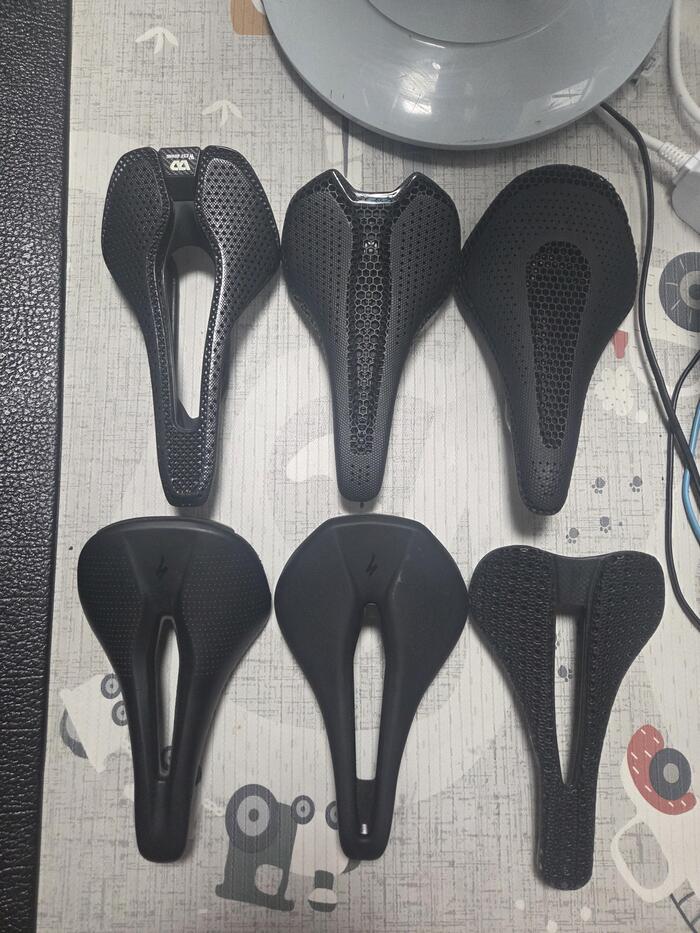
For example, among the six saddles, power saddles or Fizik Argo Vento Adaptive style saddles have a significantly large area where the pelvis rises.
Power Arc is similar, but the area decreases as you go back compared to the Power saddle.
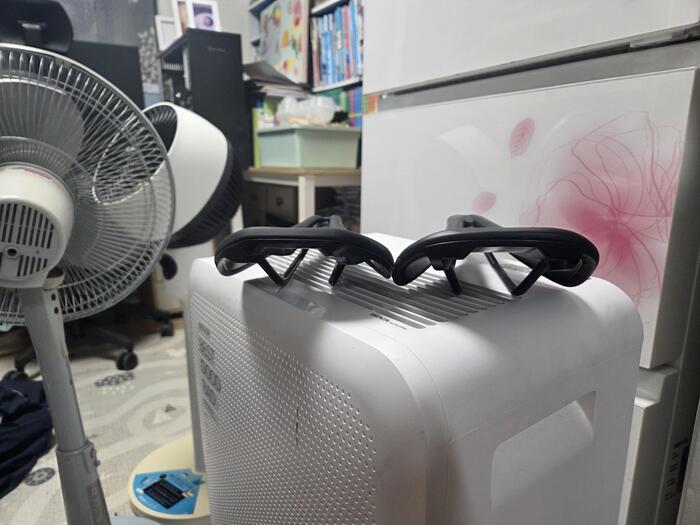
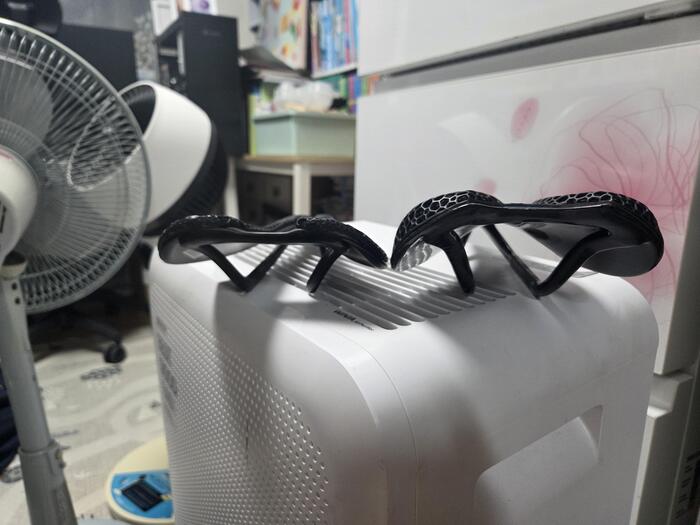
Although the rear shape and side lines look similar, the difference in rear area means that the Power Arc interferes less during pedaling than the Power saddle. You can also utilize the front and rear positions of the saddle more widely. While the general Power saddle has a narrower operating range, it provides a stable support area, making it feel quite comfortable.
If you don't experience discomfort while pedaling, you might find the Power saddle more comfortable than the Power Arc.
The Argo Vento Adaptive saddles have a rounded rear shape overall. They start wide at the back and gradually narrow towards the front, resembling a clamshell. The side lines also show a relatively gentle wave at the back.
This allows for weight to be distributed widely, reducing pressure. However, even a slight difference in angle settings can drastically change the comfort level. Therefore, you need to pay extra attention to the angle adjustment with this saddle.
The Rompin and Setka saddles have similar styles. They both have thin noses and very narrow rear areas, typical for saddles that prioritize smooth pedaling.
Their side lines and rear shapes are also similar.
However, the Rompin has a slightly wider rear and thicker padding.
I initially considered releasing the Setka saddle because I found it uncomfortable. However, after adjusting the angle and consciously paying attention to my pelvic angle, I was pleasantly surprised by its comfort.
Especially since the back is higher, it provided a solid support for my glutes when trying to generate power.
Weighing only 140 grams, it's surprisingly comfortable considering its light weight.
The Westbike saddle has a long and wide nose. The pelvis-resting area is slightly recessed, and the rear is raised. It's crucial to find the exact seating point for this saddle.
You need to sit precisely at the right point to be comfortable.
The shell is quite thick and rigid, so there's minimal shape deformation. Therefore, it's best to set the height slightly lower.
The wide and long nose allows for a wider position during uphill climbs. However, its sensitivity to height and angle settings makes it less user-friendly.
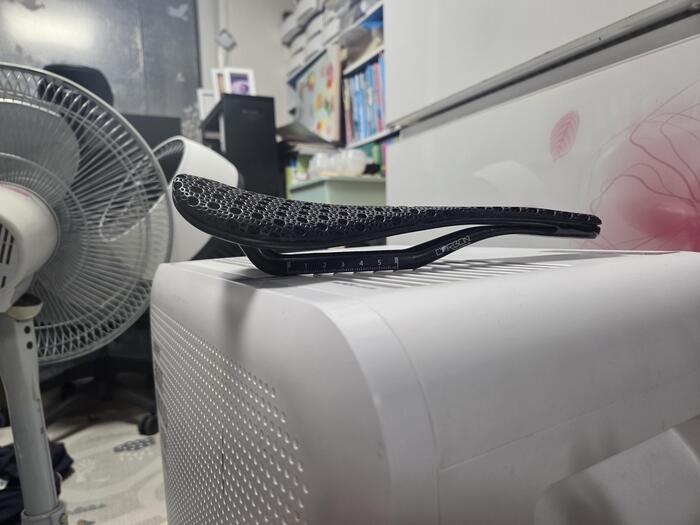
Generally, you can estimate the saddle's character by looking at the side lines and the seating area's shape.
Saddles with raised backs are stable in low and power positions because they provide strong support.
While a larger surface area can provide comfort, it can also make pedaling less smooth when you exert force. In such cases, a smaller surface area might be more suitable as it reduces the burden on your body weight.
In conclusion, I haven't encountered any saddles that are particularly comfortable or uncomfortable.
I believe most discomfort stems from incorrect height and angle settings.